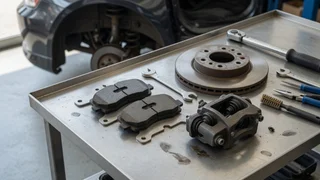
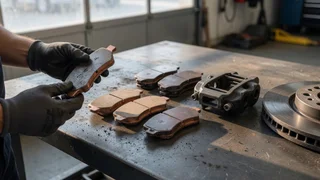
Toyota Camry rear brake pads

Choosing Toyota Camry rear brake pads means balancing friction behavior, rotor compatibility, and how the car is actually driven. The rear axle handles less braking force than the front, but its pads still shape pedal feel, noise, and long-term wear. A direct answer depends on trim, model year, and whether the parking brake acts through the caliper or a separate drum-in-hat shoe. Before buying, match the pad shape to the rear caliper bracket and consider how the friction material interacts with the rotor surface.
The direct answer
The direct answer is that a Camry owner should buy rear pads matched to the exact build configuration of the car, not simply any pad listed for the Camry nameplate. Rear brake designs changed across generations, and a pad set that fits one rear caliper may not seat correctly in another. Check the year range the seller lists against the vehicle’s actual production date and axle code. When the parking brake is integrated into the rear caliper, the piston may need to be rotated rather than compressed during installation, which changes how the pad is selected and serviced.
Ceramic and semi-metallic compounds are common choices, but the correct answer is not a single material. Ceramic pads usually produce less visible dust and quieter engagement, while semi-metallic pads often offer stronger initial bite under repeated heat. For a daily-driven Camry, a ceramic or premium ceramic pad is typically a sensible replacement. For harder use such as loaded highway driving or hilly routes, a semi-metallic or performance-oriented pad may hold up better. The material must also be compatible with the rotor finish because an aggressive pad can accelerate rotor wear.