RV black tank failures: identifying the problem
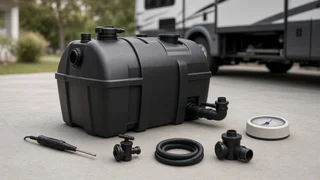
An RV black tank failure rarely appears without warning. Odor, slow draining, or liquid near the termination valve can each point toward a different stage of trouble, from a dry solids stack to a cracked fitting or a failed seal. The black tank collects waste from the toilet and holds it until a sanitary dump station is available, so failures involve both structural integrity and the conditions inside the tank. Understanding the difference between a performance problem and a physical break helps owners decide whether the issue needs cleaning, a component repair, or immediate stopped use.
Essential answer
A black tank failure generally means the waste-holding system has stopped doing its job safely. That can include a tank body that leaks, a valve that will not close fully, a vent that no longer equalizes pressure, or a dense sludge layer that blocks the outlet. The defining sign is uncontrolled waste or odor escaping where it should not. In contrast, a slow-draining but sealed tank is often a maintenance condition rather than a structural failure, provided the dump valve and hose connection remain dry when closed.
The scope of the problem changes with the water supply and tank capacity. Too little rinse water during flushing allows solids to collect near the drop-inlet and dry, while excessive water consumption fills the holding volume early. Flow rate at the toilet matters less than total water added per flush because waste breakdown and drain performance depend on keeping the contents wet enough to flow toward the outlet. Identifying the problem therefore means separating a true leak or valve fault from early blockage that can often be corrected before it causes damage.
Diagnosing a problem
Start by observing the termination area with the valve closed. If liquid appears at the cap or hose connection only after travel or after the tank is filled, the blade seal or cable may be holding the gate slightly open. A dry cap with sewer odor inside the coach more often points to a vent failure, a failed toilet floor flange seal, or a cracked vent stack. Each observation narrows the cause: an exterior drip is a containment problem, while an interior odor can exist even with a fully sealed tank.
A tank that will not drain although the pull handle moves can indicate a disconnected cable or a hard solids cone beneath the toilet outlet. When the handle feels loose or travels too far, the linkage may have separated from the gate. If the handle feels normal but flow stops almost immediately, the drain path is likely obstructed. Stop attempting to force the valve or apply high pressure when the termination point is suspect; a sealed but obstructed system is safer to evaluate than one leaking near the dump connection.