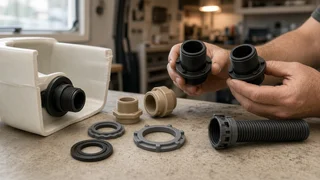
RV Water Tank Covers: What to Check Before You Buy
The short answer
The right RV water tank cover depends on what you're trying to cover. If the exterior fill door or cap on your fresh water inlet is cracked, missing or won't latch, you need a replacement that matches the existing opening and mounting pattern. If you want to protect the tank itself from freezing, you need an insulating cover or a heated tank pad rated for your tank and your RV's power supply. The fill-door route depends on exact fit. The freeze-protection route depends on tank material, tank size and how you camp in cold weather.
Which kind of cover you need
Cover type | What it does | When it fits your situation; Fresh water fill door or hatch | Closes the exterior compartment around the water inlet, often with a lock | The existing door is damaged, faded, missing or the latch has failed; Fill cap | Seals the water inlet spout and keeps debris and insects out of the fill line | The cap is lost, cracked or no longer seals; often sold separately from the door; Insulating tank cover or blanket | Slows heat loss from the tank | You camp in cool conditions and want passive protection; Heated tank pad | Uses electrical power to warm the tank, usually with a thermostat | You camp in freezing conditions and the tank is exposed or poorly enclosed; Underbelly enclosure panel | Encloses tanks and plumbing beneath the floor | Tanks hang below the chassis with little or no shielding
What to check before buying a fill door or cap
Opening size: measure the cutout in the sidewall, not just the outside of the old door. Doors are made to fit specific cutouts. Mounting pattern: check the number and position of screw holes so the new frame lines up without drilling new holes into the sidewall. Inlet type: some fill doors include a gravity-fill spout, some include a pressurized city-water connection, and some include both. Match what your plumbing has. Cap fit: confirm the cap matches your inlet's spout diameter and thread or snap style. Lock and key: decide whether you need a lockable door, and whether you want it keyed alike with your other compartment locks. Material and color: exterior doors are exposed to sun and weather, so look for UV-resistant plastic and a color that matches your exterior trim. Potable-water marking: a clearly labeled fresh water inlet helps prevent anyone putting the wrong fluid into the tank.
What to check before buying an insulating or heated tank cover
Tank material: most RV holding tanks are plastic, and heated pads are generally designed for that. Confirm the pad is rated for your tank. Tank dimensions and capacity: heated pads are sized to tank capacity ranges, and the pad needs a flat, clean surface to adhere to. Power source: heated pads typically run on 12-volt DC from the house battery or on 120-volt AC shore power. Check which your RV can supply and how much battery draw you can tolerate when off the grid. Thermostat control: a built-in thermostat switches the heater on only near freezing, which reduces power use and overheating risk. Which tanks need it: fresh, gray and black tanks can all freeze. Covering only the fresh tank still leaves the waste tanks and valves exposed. Plumbing beyond the tank: lines, valves and the water pump can freeze before the tank does, so a tank cover alone may not be enough for winter use. Installation access: some tanks sit behind panels or in an enclosed underbelly, which affects how hard a pad or blanket is to fit and inspect.
Matching parts to your specific RV
Fit is tied to the specific make, model year and floorplan, not just the brand. Manufacturers can change suppliers or door styles between model years, so two RVs with the same model name may use different fill doors. Before ordering, look for a part number or maker's name on the back of the existing door or frame, check your owner's manual, or ask the RV manufacturer or a dealer's parts department to confirm the part for your vehicle identification number. For heated pads, the tank's capacity and location matter more than the RV model, so confirm those directly.
What this guide can't confirm
No verified product specifications, prices, fitment lists, test results or reviews were available for this guide, so it does not recommend specific products or say what a cover should cost. It also cannot confirm which door or pad fits a particular RV. Use the checks above to narrow your options, then verify fit and electrical ratings with the part maker or your RV manufacturer.
Your next step
Decide whether you are replacing an exterior door or cap, or protecting the tanks from cold. For a door or cap, measure the cutout, note the mounting holes and inlet type, and find any existing part number. For freeze protection, record each tank's capacity and location and your available power, then choose a thermostatically controlled pad or insulation rated for those conditions.