RV Holding Tank Fittings: What to Check Before You Buy
The short answer
The right holding tank fitting for your RV is the one that matches four things on your existing setup: the tank material, how the fitting attaches to the tank, the pipe or valve size it connects to, and the connection method on the other end (threaded, slip or solvent-welded). If any of these does not match, the fitting may not seal, may not fit the valve or pipe, or may not be repairable without cutting into the tank. The most important condition is the tank material: most RV holding tanks are molded polyethylene, which cannot be joined with ordinary plumbing cement, so the fitting must be designed to attach mechanically or by plastic welding rather than by gluing.
Start by identifying the tank material
Holding tanks in motorhomes are usually made from polyethylene, though some older or specialty units use ABS plastic. The difference matters because ABS can be bonded with ABS solvent cement, while polyethylene resists solvent bonding. Check the tank label, the build documentation or the manufacturer's specification for your model year before ordering anything that relies on glue.
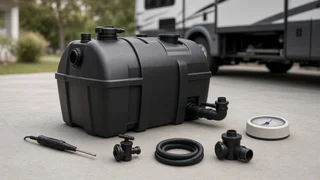
Common fitting types and where they are used
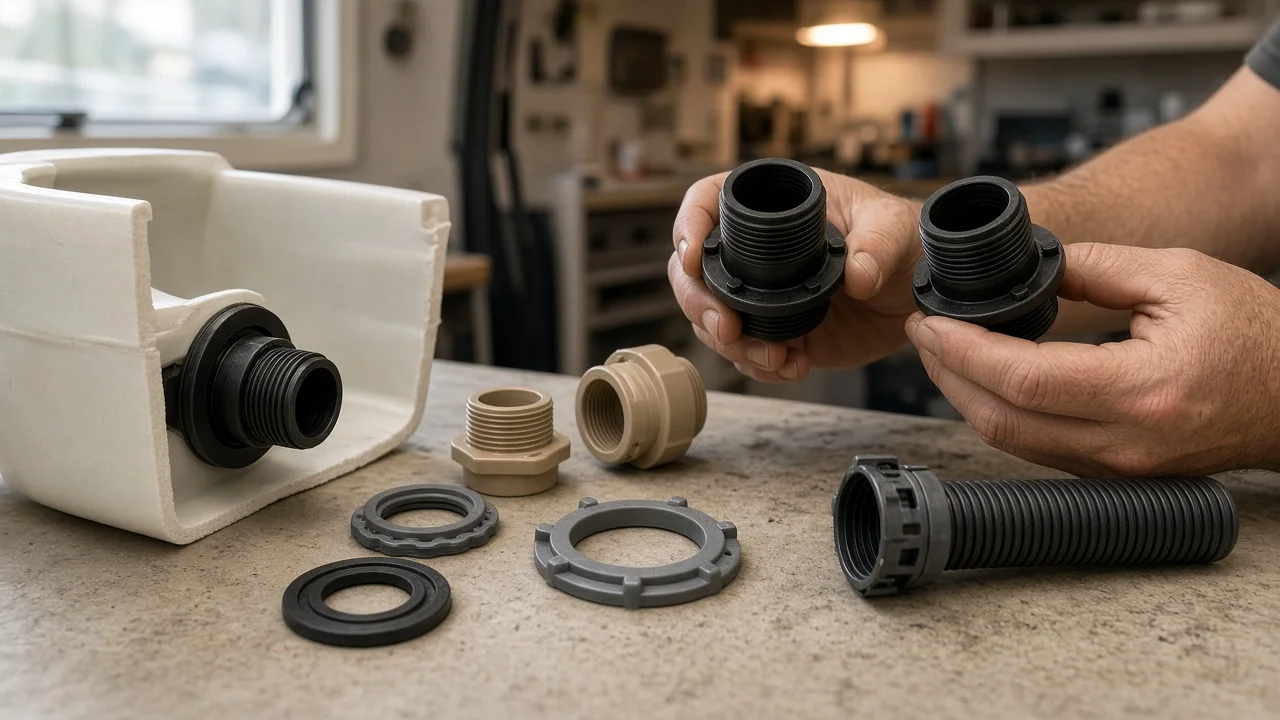
Spin-weld fittings: plastic fittings friction-welded to a polyethylene tank during manufacture or repair; replacement usually requires the correct material and a spin-welding tool or a specialist. Bulkhead fittings: pass through a hole in the tank wall and clamp from both sides with a nut and gasket; often used for repairs because they need no welding. Termination outlets and flanges: connect the tank outlet to the dump valve, typically using a bolted flange and gasket. Threaded fittings: used for vents, flush inlets and some drains; thread type must match the mating part. Tank sensor fittings: hold level-sensing probes through the tank wall and need a watertight seal.
What to check before buying
Tank material and whether the fitting is rated for it. Outlet and pipe diameter, measured on your rig rather than assumed; black and gray tanks on the same RV may use different sizes. Connection style on each end: slip (spigot), hub, threaded or flanged. Thread standard on threaded parts, since tapered pipe threads and straight threads do not seal interchangeably. Flange bolt pattern and gasket type if the fitting mates with a dump valve. Pipe material it joins to, such as ABS or PVC, and the matching cement or a listed transition cement where the two meet. Orientation and clearance under the floor or chassis, especially for elbows and offset outlets. Whether the part is sold as complete with gasket, nut and hardware or as the fitting alone.
Repair versus replacement
If a fitting has cracked where it joins a polyethylene tank, the choice is usually between plastic welding a new fitting, installing a bulkhead fitting through a cleanly cut hole, or replacing the tank. A bulkhead fitting is generally the most approachable option for owners, but it needs a flat area of tank wall and access to both sides to tighten the nut. Welding can restore a factory-style joint but depends on the right equipment and matching plastic. Adhesives and epoxies marketed for tank repair vary in how well they hold on polyethylene, so check the product's stated compatibility before relying on one for a waste tank.
Compatibility caveats
Fitting sizes and layouts differ by manufacturer, model year and floor plan, and the same model can change suppliers between years. Treat any general size guidance as a starting point and confirm by measuring the existing fitting, reading markings on the tank or valve, or checking the RV maker's parts information for your exact unit.
Information not covered here
No verified product specifications, prices, brand comparisons or availability details were available for this guide, so it does not recommend specific parts or quote costs. For those, compare the published specifications from the fitting manufacturer against the measurements and materials you have confirmed on your own tank.