Replacing Cosco Car Seat Straps: What You Need to Know

The Short Answer
Replacement straps for a Cosco car seat should come only from the manufacturer, and only as parts approved for your exact seat model. Cosco is a brand of Dorel Juvenile, so replacement parts and guidance come from that company's customer service. Generic, aftermarket or secondhand straps are not a safe substitute, even if they look identical, because the harness is a crash-tested part of the seat.
An important qualification is that replacing a strap is not always the right fix. If the seat has been in a crash, has passed its expiration date, or has damage beyond the strap itself, the manufacturer's instructions may call for replacing the entire seat. The seat's manual and the manufacturer have the final word for your specific model.
Which Straps This Applies To
Child car seats use several types of webbing (woven strap material). The same manufacturer-parts-only principle applies to each type that belongs to the seat itself.
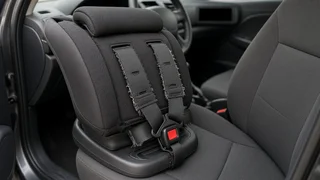
Harness straps: the shoulder and crotch straps that hold the child in the seat, including the buckle and chest clip assembly. Lower anchor strap: the strap with connectors that attach to the vehicle's lower anchors, part of the LATCH system (Lower Anchors and Tethers for Children). Top tether strap: the strap that runs from the top of a forward-facing seat to a tether anchor in the vehicle.
The vehicle's own seat belts and the anchor points built into the vehicle are vehicle components, not car seat parts. Problems with those go to the vehicle manufacturer or a dealer, not to Cosco.
Why Aftermarket Straps Are a Problem
A car seat is certified and crash-tested as a complete system. The strength, stretch and width of the webbing, how it is stitched, and how it fits the seat's slots and adjusters all affect how the seat performs in a crash. A strap that was not tested with your seat may tear, slip in the adjuster or load the child's body differently, and you cannot verify its performance by inspecting it.
US safety guidance generally warns against adding products to a car seat that the seat manufacturer did not supply or approve. Using unapproved parts may also conflict with the seat's instructions and warranty. Straps from another seat model, including another Cosco model, fall into the same category unless the manufacturer confirms they are compatible.
Information to Have Ready Before Contacting Cosco
Car seats carry a label, usually on the side, back or underside of the shell, that identifies the seat. The manufacturer will typically need these details to confirm which part fits and whether a replacement is appropriate.
Model name and model number from the seat's label. Date of manufacture, which also helps determine the seat's expiration. A description of the problem, such as fraying, a cut, a stuck adjuster or a broken buckle. Whether the seat has been in any vehicle crash. Photos of the damaged strap and the seat label, if the manufacturer asks for them.
Seats in the same product line can differ by model number, so the model name alone may not be enough to identify the correct strap.
When the Whole Seat May Need Replacing
Crash involvement: manufacturers and US safety authorities give guidance on replacing a seat after a crash; follow the instructions in your seat's manual. Expiration: car seats have a stated useful life, marked on the seat or in the manual. New straps do not extend it. Shell or frame damage: cracks, stress marks or broken parts on the plastic shell cannot be fixed by replacing straps. Unknown history: a used seat with an unknown history cannot be confirmed safe by swapping in new straps. Recalls: if your model has an open recall, the manufacturer's recall remedy takes priority over any repair you plan yourself.
Damage Versus Normal Adjustment
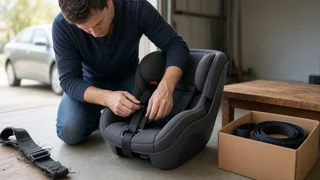
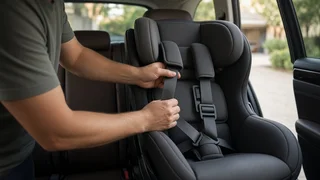
Some strap problems do not require new parts. Twisted straps, a harness at the wrong height for the child, or straps routed through the wrong slots are adjustment issues. Many seats require rethreading, meaning the straps are removed and fed back through different slots when the harness height changes. Other seats have a no-rethread harness that adjusts without removing the straps. The manual for your model explains which type you have and how to reroute the straps correctly.
Cleaning can also damage straps. Many car seat manuals tell owners to surface-clean harness straps with mild soap and water rather than soaking, machine washing or using bleach, because these can weaken the webbing. Check your seat's manual before cleaning. If straps were cleaned against those instructions, ask the manufacturer whether they need replacing.
While You Wait for Parts
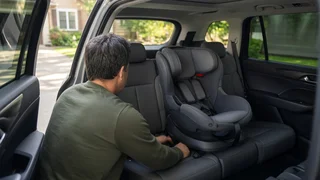
Do not use a seat with a frayed, cut, burned or otherwise damaged harness or anchor strap. Use another seat that fits the child's age and size and is installed correctly until the approved replacement arrives and is installed according to the manual. A certified Child Passenger Safety Technician (CPST) can check the reinstalled harness and the seat's installation in your vehicle.
What We Could Not Confirm
No model-specific evidence was available for this guide. We could not confirm which Cosco models have replacement straps available, the part numbers, prices or delivery times, or whether a given model's replacement is user-installable or needs other steps. These details vary by model and manufacture date, so confirm them directly with the manufacturer for your seat.