Replacing Graco Car Seat Harness Straps: What to Know Before You Order
Graco car seat harness straps can usually be replaced, but only with replacement straps made by Graco for your exact seat model. Generic or aftermarket straps, even if they look identical, have not been crash-tested with your seat and should not be used. Before you order anything, decide whether replacement is the right fix at all: a seat that has been in a crash, has passed its expiration date, or has damage beyond the straps may need to be replaced entirely rather than repaired.
The short answer
Get replacement harness straps from Graco, matched to your seat's model number and manufacture date. Do not buy universal or third-party straps, and do not swap straps between different seats or brands. If the seat has been in a crash, check Graco's crash-replacement guidance in your manual before replacing only the straps. If the seat is expired, replace the seat instead of the straps. After installing new straps, follow the manual's harness routing exactly and check harness fit before driving.
Why only Graco replacement straps are acceptable
A harness is not a generic accessory. Its webbing material, width, stitching, stretch characteristics and hardware are part of the restraint system that was tested as a whole when the seat was certified to US federal standards. Straps that differ in any of those properties can change how the seat manages crash forces, even if the difference is invisible. That is why car seat manufacturers, Graco included, direct owners to use only their own parts and advise against aftermarket products that were not tested with the seat.
Harness designs also vary across Graco's lineup and over different production years. Straps for one model may differ in length, end hardware or attachment method from those for another model, even within the same product family. Matching by model number and manufacture date, rather than by appearance or seat name alone, is what ensures you receive the correct part.
When straps actually need replacing
Strap replacement is appropriate when the harness itself is the problem and the rest of the seat is sound. Common reasons include:
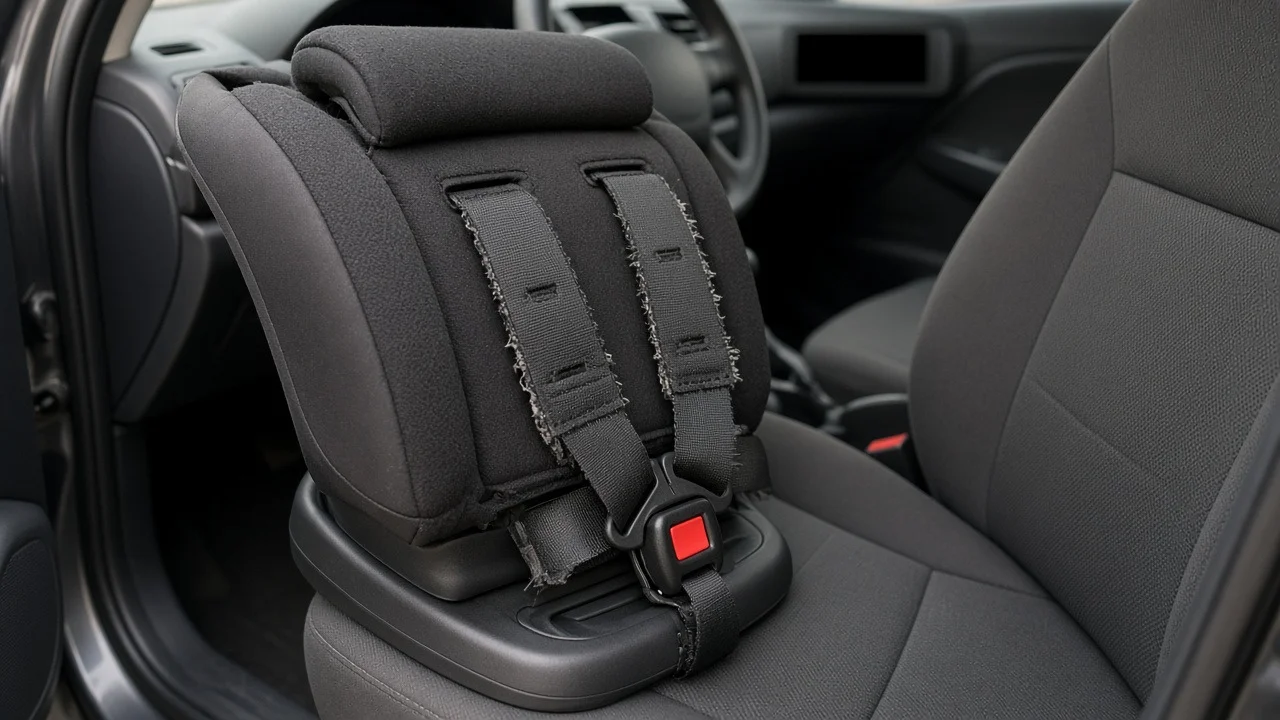
Fraying, cuts, or worn edges on the webbing. Webbing that has been machine washed, submerged, or cleaned with bleach or harsh chemicals, which can weaken fibers. Stains or contamination that cannot be removed with the surface cleaning your manual allows. Straps that have become stiff, twisted permanently, or damaged at the stitching. Straps chewed by a pet or damaged during removal.
Many car seat manuals, including Graco's, advise surface-cleaning harness straps with a cloth, water and mild soap rather than washing them in a machine or soaking them. If straps were cleaned in a way the manual prohibits, replacing them is generally the safer course.
When to replace the whole seat instead
Situation | Strap replacement enough? | What to do; Worn or soiled straps, seat otherwise undamaged and in date | Usually yes | Order Graco straps for your model; Seat involved in a vehicle crash | Often no | Follow the crash-replacement policy in your Graco manual; Seat past its expiration date | No | Replace the seat; Cracked shell, damaged buckle, or broken adjuster | No, unless Graco supplies that part | Contact Graco or replace the seat; Missing labels, unknown history, or secondhand seat with no manual | Uncertain | Treat with caution; replacing the seat is the conservative choice
Expiration dates and the model and manufacture date labels are typically printed on stickers or molded into the plastic on the seat shell, often on the back or bottom. You will need this information whether you order straps or decide to replace the seat.
How to order the correct straps
Find the model number and manufacture date on the seat's label. Note which harness system the seat uses (see below), since this affects which parts are needed. Contact Graco customer service or use Graco's official replacement parts channel and provide the label information. Ask whether any related parts, such as the chest clip, buckle, or splitter plate, should be replaced at the same time. Keep the old straps until the new ones are installed so you can compare routing and length.
Rethread vs. no-rethread harness systems
Graco seats generally use one of two harness designs, and the replacement process differs between them.
Rethread harness: the straps pass through slots in the seat shell. To change harness height, you unthread the straps from the back, move them to a different slot, and rethread them. Replacing straps on these seats usually involves detaching them from a metal splitter plate or yoke at the back of the seat and threading new straps through the correct slots.
No-rethread harness: harness height adjusts by moving the headrest, which carries the straps with it. The straps are routed through the headrest mechanism, so removal and installation can involve more steps and specific routing paths. On these seats, following the manual closely is especially important, because misrouting can be harder to spot.
Exact steps vary by model, so use the manual for your specific seat rather than generic instructions. If you no longer have the paper manual, Graco can typically supply instructions for your model.
Installing the new straps: general principles
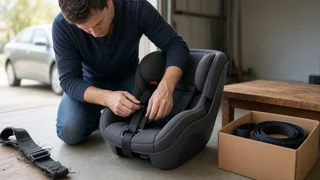
Photograph the existing harness routing from the front and back before removing anything. Remove the seat from the vehicle so you can see and reach all routing points. Route the new straps exactly as the manual shows, through the correct slots or headrest guides. Make sure straps are flat and untwisted along their entire length, including behind the seat shell. Confirm each strap end is fully secured to the splitter plate, yoke, or anchor point as shown in the manual. Thread the chest clip and buckle tongues onto the correct straps and in the correct orientation. Pull firmly on the harness to confirm nothing slips or detaches.
Checking harness fit after replacement
New straps should be checked with the child in the seat before the first drive. These harness fit checks are widely recommended for US car seats and are also described in most Graco manuals:
Harness height: for rear-facing, straps come from slots at or below the child's shoulders; for forward-facing, at or above the shoulders. Tightness: after buckling and tightening, you should not be able to pinch a horizontal fold of webbing at the child's collarbone (the pinch test). Chest clip: positioned at armpit level, not on the belly or at the neck. No twists: straps lie flat over the shoulders and hips. Buckle: latches with a click and holds when tugged.
Reinstalling the seat in the vehicle
Since the seat usually comes out of the vehicle for strap replacement, the restraint installation needs to be redone and rechecked. Install the seat using either the lower anchors or the vehicle seat belt, following the seat belt routing path marked on the seat for the current mode, rear-facing or forward-facing. Most car seat manufacturers advise against using both methods at once unless the manual specifically allows it.
For forward-facing installations, attach and tighten the top tether to the vehicle's tether anchor, as the manual directs. Lower anchors also have weight limits that depend on the seat and the vehicle, so check both the car seat manual and the vehicle owner's manual to see when you should switch to a seat belt installation. A correctly installed seat should not move more than about an inch side to side or front to back when tested at the belt path.
If you are unsure about the installation, a certified Child Passenger Safety Technician can check the seat and harness for you. Many communities offer car seat inspections through fire departments, hospitals, or safety organizations.
Bottom line
Replacing Graco car seat harness straps is a reasonable fix for worn or improperly cleaned straps on a seat that is otherwise undamaged, in date, and has not been in a crash. Use only Graco straps matched to your model number and manufacture date, follow the manufacturer instructions for routing, and verify harness fit and seat installation before your child rides in it again.