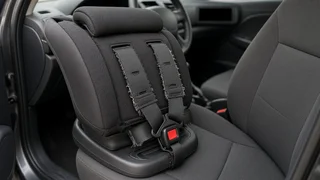
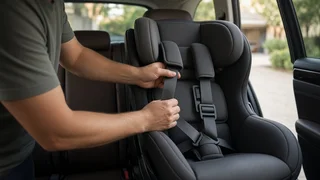
Replace child car seat harness straps
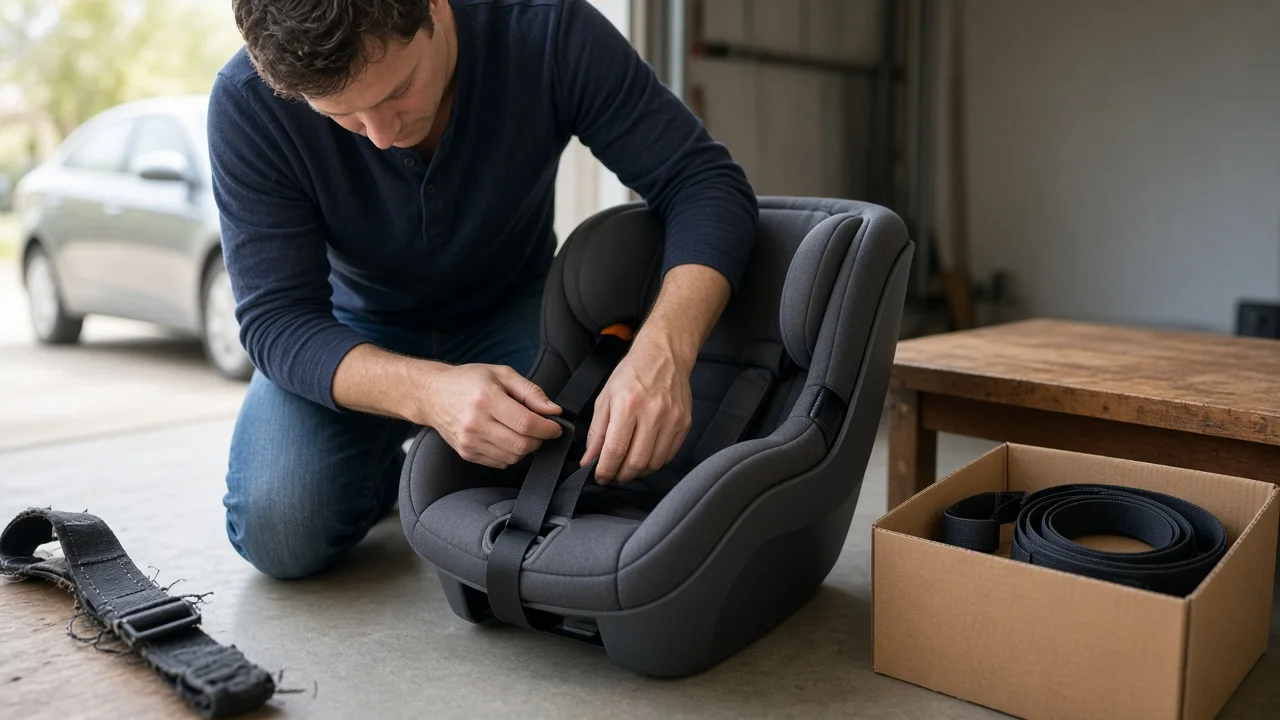
The short answer
You can replace the harness straps on a child car seat only with straps the seat's manufacturer supplies or approves for that specific seat model. Generic or third-party replacement straps are not a safe substitute. The harness webbing, buckle, chest clip and adjuster were designed and crash-tested as one system, and a strap from another source has not been tested with your seat.
Some damage cannot be fixed with new straps. Crash involvement, an expired seat, or damage beyond the webbing can each mean the whole seat must be retired.
Why straps must match the exact seat
Harness webbing is engineered for a particular seat. Its width, thickness, stretch characteristics, stitched loops, and the hardware that joins it to the shell or splitter plate all affect how crash forces reach the child. A strap that looks the same can still behave differently in a crash.
Fit also varies within one brand. Different models, and sometimes different production runs of the same model, use different harness designs. Before ordering a part, confirm it against the model number and manufacture date. Both are usually printed on a label on the seat's shell or base.
How to get approved replacement straps
Locate the label on the seat that shows the model number and date of manufacture. Check the owner's manual for a replacement-parts section or the manufacturer's customer service details. Contact the manufacturer, give the model number and manufacture date, and describe why you need new straps. Ask whether the part is approved for your seat and whether it comes with installation instructions. If the manufacturer says straps are not available or not replaceable for your model, follow that guidance, which may mean replacing the seat.
Prices, availability and part numbers vary by manufacturer and model. No confirmed figures were available for this guide, so get those details from the manufacturer directly.
When a new harness is not enough
Replacing straps fixes damaged or soiled webbing on an otherwise sound seat. It does not restore a seat that should be retired. Treat the following as reasons to replace the entire seat, or at least to consult the manufacturer before using it again:
The seat was in a vehicle crash. In the US, NHTSA advises replacing a seat after a moderate or severe crash, and some manufacturers require replacement after any crash. The seat's manual states which rule applies. The seat is past its expiration date, which is usually printed on the shell or label. The shell, base, buckle or other hardware is cracked, bent or otherwise damaged. The seat is subject to a recall that the manufacturer has not resolved with a repair kit.
Signs your harness straps need attention
Fraying, cuts or worn edges on the webbing; Twisting that will not straighten, or stiff and creased sections; Damage from heat, chemicals or harsh cleaning products; Stitching that is loose, pulled or broken; Straps that no longer adjust or lock smoothly
Some of these problems can be ordinary wear that a simple adjustment fixes. Others weaken the webbing. If you are unsure which you have, stop using the seat until the manufacturer has assessed it.
Cleaning versus replacing
Many manufacturers tell owners not to machine-wash or submerge harness straps, and not to use bleach or harsh cleaners, because these can weaken the fibers. Surface cleaning as directed in the manual is the usual approach. Instructions differ between seats, so follow the manual for yours. If a strap has already been cleaned in a way the manual prohibits, ask the manufacturer whether it should be replaced.
Avoid aftermarket add-ons
The same caution applies to strap covers, harness pads, positioners and similar accessories sold separately from the seat. Unless the manufacturer supplied or approved an item for your model, it has not been tested with the seat and may affect harness fit or performance in a crash.
After installing new straps
Route the new harness exactly as the manufacturer's instructions show, using the slots that suit your child's size and the seat's facing direction. Check that the straps lie flat without twists and that the buckle and chest clip engage properly. Then confirm a snug harness fit. If you have doubts about the installation, a certified child passenger safety technician can inspect the seat. Registering the seat with the manufacturer means you will hear about any recalls.
What this guide could not confirm
No model-specific specifications, prices, part numbers or availability details were available for this article. Which seats offer replacement harnesses, how they are installed, and what each manufacturer's crash policy says all differ by brand and model. Your seat's manual and its manufacturer are the authoritative sources.