Replacing a Brake Pump: Identify the Right Part and Buy for Correct Fitment
The Short Answer
In most US repair conversations, "brake pump" means the brake master cylinder. That is the hydraulic unit, usually mounted on the driver's side of the firewall, that turns pedal force into brake fluid pressure. However, the term is also used for three other parts: a brake vacuum pump, an ABS hydraulic pump, and the pump inside an electrohydraulic brake booster. These parts are not interchangeable, and they differ in cost, diagnosis and installation difficulty. Before you order anything, confirm which component has failed and match the replacement to your exact vehicle, ideally by VIN.
Replacing a master cylinder is a common job that many home mechanics can handle if they can bleed the brakes correctly. Replacing an ABS pump or an electronic booster pump often requires a capable scan tool for bleeding or calibration. On those systems, a professional shop is usually the safer next step.
Which Part Does "Brake Pump" Mean on Your Vehicle?
Part | What it does | Where it is typically found | Typical signs of failure; Master cylinder | Converts pedal movement into hydraulic pressure in the brake lines | Nearly all hydraulic-brake cars and light trucks | Pedal slowly sinks under steady pressure, soft or low pedal, fluid leaking at the rear of the unit or onto the booster; Brake vacuum pump | Supplies vacuum to the brake booster when the engine does not provide enough | Many diesels, some turbocharged gasoline engines, some hybrids and EVs (often electric) | Hard pedal that requires much more effort, warning light on some models, oil leaks or noise from engine-driven pumps; ABS hydraulic pump and modulator | Reapplies and modulates pressure during ABS, traction control and stability control events | Vehicles with ABS and stability control | ABS or stability warning lights, stored ABS fault codes, pump running continuously or not at all; Electrohydraulic booster pump | Generates boost pressure electrically instead of using engine vacuum | Many hybrids, EVs and some newer conventional vehicles | Brake system warning messages, pump running constantly, reduced assist, fault codes in the brake control module
If your owner's manual, parts catalog or repair estimate names the part directly, use that name when shopping. If a shop quoted you for a "brake pump" replacement, ask which of these components they mean and what test confirmed the failure.
Confirm the Fault Before You Buy
Several brake symptoms resemble a pump failure but come from other parts. Ruling those out first can save you from buying the wrong component.
Soft or spongy pedal: Air in the lines, a leaking caliper or wheel cylinder, a damaged brake hose, or old moisture-contaminated brake fluid can all cause this. A master cylinder with internal seal bypass is a common cause when no external leak is visible and the pedal slowly sinks while you hold steady pressure. Hard pedal with little stopping power: This usually points to a loss of boost. Possible causes include a failed vacuum pump, a leaking vacuum hose or check valve, a failed booster, or a fault in an electronic booster. It is rarely caused by the master cylinder alone. Low fluid level: Brake fluid level drops gradually as brake pads wear, because the caliper pistons move outward to compensate for the thinner friction material. A level that drops quickly, or a visible wet spot, indicates a leak that should be located. Pulling, noise or vibration: These symptoms point to pads, rotors, calipers or suspension rather than a pump. Check pad thickness against the wear limits and inspect the rotors for scoring or uneven wear. Warning lights: A red brake warning light may indicate low fluid, an applied parking brake or a hydraulic fault. An amber ABS light points toward the ABS system. Reading the stored codes narrows the search considerably.
What to Check When Buying a Replacement
Vehicle Fitment
Brake hydraulic parts often vary within a single model year. Fitment can change with trim level, engine and powertrain, drivetrain, the presence of ABS or stability control, rear drum versus rear disc brakes, towing or heavy-duty brake packages, and production date. Treat a listing that only says "fits" a year, make and model as a starting point rather than confirmation. Use a VIN lookup where the seller offers one, or compare the OE part number from your old unit or a dealer parts catalog.
Master Cylinder Details
Bore size: This affects pedal feel and pressure output. It must match the original specification for your brake system. Port count, location and thread type: The brake lines must thread in without adapters or force. Inverted flare and bubble flare fittings are not interchangeable. Reservoir: Some units come with a new reservoir and others require you to transfer the old one. Check whether new reservoir grommets are included. Fluid level sensor: Confirm that the connector matches your harness, or that the sensor can be moved from the old reservoir. Mounting pattern and pushrod interface: The unit must match your booster's studs and pushrod design. Some boosters require a pushrod length check during installation. Bleeding accessories: A bench bleed kit, if included, makes installation easier. Some units are sold pre-filled or pre-bled. Read the instructions before removing any shipping plugs.
Vacuum, ABS and Electronic Booster Pumps
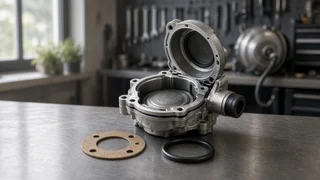
Drive type: Engine-driven vacuum pumps may be driven by the camshaft, a gear or a belt. Electric vacuum pumps require the correct connector and controls. Match the drive type to your engine code. Software and coding: Replacement ABS modules and electronic booster units sometimes must be programmed or coded to the vehicle. Ask whether the part ships pre-programmed for your VIN, or whether programming at a dealer or properly equipped shop is required. Pump only or complete assembly: For some vehicles, the ABS pump motor is sold separately from the hydraulic unit and control module. For others, only the complete assembly is available. Gaskets, seals and hardware: Check whether new O-rings, gaskets or mounting hardware are included or must be purchased separately.
New, Remanufactured or OE
Option | What to know; OE (dealer) | Matches the original design and part number. Usually the most reliable route for electronic units that need coding. New aftermarket | Widely available for common master cylinders. Quality varies by brand, so compare warranty terms and verify the part number carefully. Remanufactured | Common for ABS units, vacuum pumps and some master cylinders. Often involves a core charge that is refunded when you return the old part. Ask what was replaced or tested during remanufacturing.
Before you finalize the order, check the warranty length and terms, the return policy for installed parts, and the core charge conditions. Electrical parts are often non-returnable once they have been connected.
Brake Fluid and Supplies
Use the brake fluid type printed on your reservoir cap or listed in the owner's manual. DOT 3, DOT 4 and DOT 5.1 are glycol-based fluids. DOT 5 is silicone-based and must not be mixed into a system designed for glycol fluid. Buy fresh, sealed brake fluid in a quantity sufficient for a full bleed. You will also need line wrenches (flare-nut wrenches) to avoid rounding the brake line fittings, plus a way to bleed the system: a helper, a pressure bleeder or a vacuum bleeder.
DIY or Shop?
A master cylinder replacement on a vehicle with conventional brakes is generally within reach of a careful home mechanic. The basic sequence is to bench bleed the new unit, install it, reconnect the lines, and then bleed the entire system until the pedal is firm and no air appears at any bleeder. The risks are a soft pedal from trapped air, damaged line fittings, and brake fluid damaging painted surfaces.
Many ABS-equipped vehicles need a scan tool that can cycle the ABS valves and pump during bleeding, particularly if air reaches the ABS unit. Electronic booster systems may also require calibration or a service mode before you can work on them safely. If you lack that equipment, or if the vehicle's service procedure calls for it, choose a shop or dealer. Brakes are a safety-critical system. If the pedal does not feel firm and consistent after the work, do not drive the vehicle until the cause is found.
Related Parts Worth Inspecting at the Same Time
Calipers and wheel cylinders: Check for leaks, seized slide pins or sticking pistons, especially if fluid was low or contaminated. Brake hoses and lines: Look for cracking, swelling, corrosion or wet spots. Brake fluid condition: Since the system is already being bled, flushing out old fluid adds little extra effort. Brake pads and rotors: Compare the remaining friction material with the wear limits and check rotor condition. These parts are separate from the pump but are easy to assess while the wheels are off. Vacuum hoses and check valve: If the issue is a hard pedal, inspect these before replacing a vacuum pump or booster.
Bottom Line
First identify which "brake pump" your vehicle actually needs, and confirm the failure with a leak inspection, a pedal test or fault codes. Then buy using a VIN or OE part number match that accounts for trim, powertrain and brake options. A master cylinder is a reasonable DIY job if you can bleed brakes properly. ABS and electronic booster pumps usually call for professional equipment, so in those cases, getting a shop quote is often the most practical next step.