Replace a brake pump
The short answer
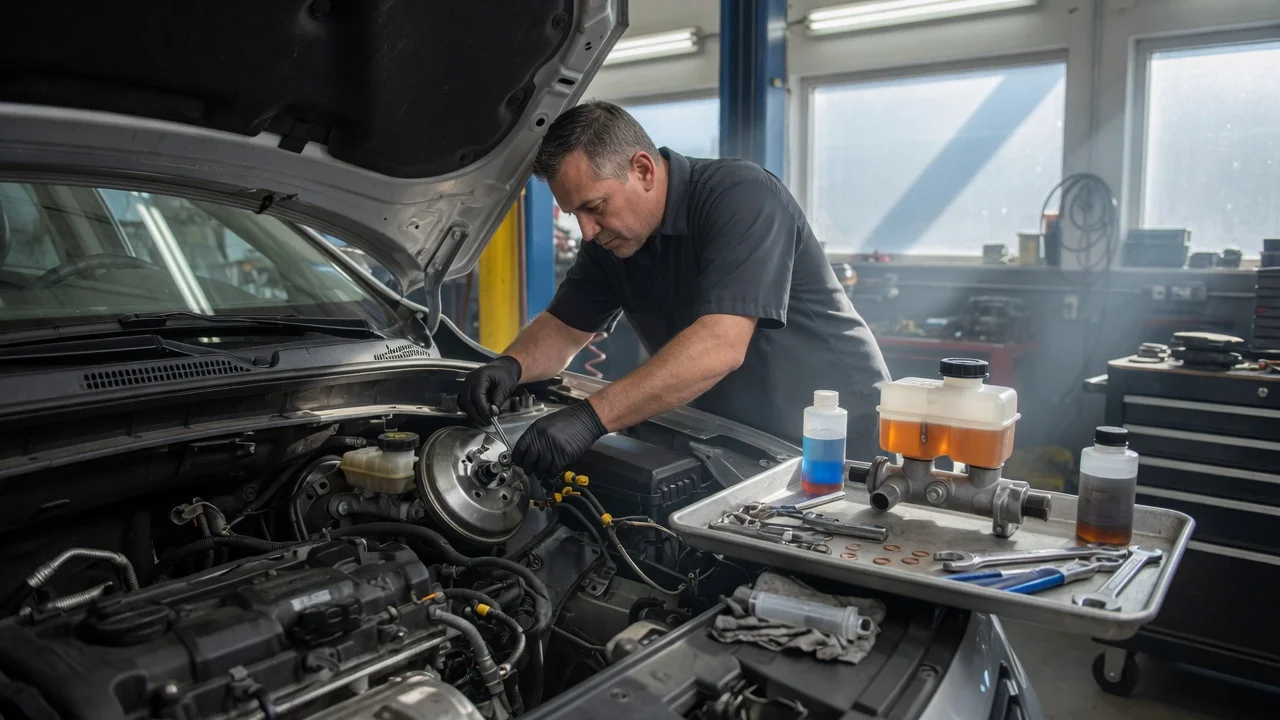
A faulty brake pump can be replaced. Before buying a part, confirm which component "brake pump" refers to on your vehicle, because the term covers three different parts with different replacement jobs. Most often it means the brake master cylinder. It can also mean the vacuum pump that feeds the brake booster, or the hydraulic pump inside the ABS unit. Which one you have, and whether your vehicle uses an electronically controlled brake system, decides the correct part, the difficulty of the job and whether a scan tool is required afterward.
Which part does "brake pump" mean?
Brake master cylinder: the hydraulic unit, usually mounted on the driver's side of the bulkhead with the fluid reservoir on top. It converts pedal force into hydraulic pressure. This is what most people mean by brake pump. Brake vacuum pump: supplies vacuum to the brake booster on engines that do not produce enough intake vacuum. It is common on diesels and found on some turbocharged petrol engines, hybrids and electric vehicles. Some are driven mechanically by the engine; others are electric. ABS or stability-control pump: an electric pump built into the ABS hydraulic unit (modulator). It builds pressure during ABS, traction-control or stability interventions. Depending on the vehicle, the motor may or may not be sold separately from the hydraulic block and control module. Integrated electro-hydraulic brake units: some newer vehicles, including many hybrids and EVs, combine the master cylinder, pressure generation and control electronics in a single assembly. These usually need dealer-level software for replacement and setup.
Symptoms that point to each part
Master cylinder: the pedal slowly sinks while held under steady pressure, the pedal feels soft or spongy after bleeding, fluid leaks where the cylinder meets the booster, or the fluid level drops with no leak at the wheels. Vacuum pump: the pedal is hard and needs much more effort, especially soon after starting, sometimes with a brake-assist warning. Mechanical pumps can also leak oil where they mount to the engine. ABS pump: the ABS or stability warning light stays on, a stored fault code relates to the pump motor, or the system makes no buzz or self-test sound at startup when it normally would. These symptoms overlap with other faults such as a failed booster, a leaking line or caliper, or air in the system. Confirm the diagnosis before replacing parts.
Matching the replacement to your vehicle
Brake components often differ within a single model name. Look up the part by the vehicle identification number (VIN), or by the part number on the old unit, rather than by model alone. Differences to check:
Model year, including mid-year changes. A vehicle built late in one model year can use the parts specified for the next. Market. Vehicles sold in different regions may use different brake hardware. Trim and brake package. Larger brakes, performance packages or towing packages can change the master cylinder bore or the booster. Powertrain. Diesel, petrol, hybrid and electric versions of the same model often use different vacuum supplies and brake units. Transmission. On many manual-transmission vehicles the clutch shares the brake fluid reservoir, which changes the reservoir or cylinder design. ABS, traction and stability equipment, which affects the master cylinder ports and the ABS unit's part number. No vehicle details were supplied for this article, so specific compatibility cannot be confirmed here. If a parts catalogue lists more than one option for your model and it is unclear which applies, compare the part number on the fitted unit or ask a dealer parts department to check by VIN.
What the job involves
Master cylinder: the reservoir is drained or the lines are capped, the brake lines and any sensor connector are disconnected, and the cylinder is unbolted from the booster. A new cylinder is normally bench-bled before fitting to remove trapped air, then the whole system is bled. On vehicles with ABS, the procedure may require a scan tool to cycle the ABS valves so that air does not stay in the modulator.
Vacuum pump: an electric pump is usually unbolted and unplugged. A mechanical pump is driven by the engine, often from the camshaft. Replacing one means removing it from the engine, fitting new seals or gaskets and aligning the drive correctly, which makes it more of an engine job than a brake job.
ABS pump or modulator: the hydraulic unit is disconnected from several brake lines and its wiring. Many replacement units must be coded or configured to the vehicle and then bled with a scan tool. Integrated electronic brake units generally need manufacturer software for calibration.
Doing it yourself or using a workshop
Replacing a master cylinder on an older vehicle without complex electronics is within reach of a home mechanic who has the right tools, a proper bleeding method and the vehicle's service procedure. A workshop is the safer choice when the vehicle needs scan-tool bleeding, ABS coding or brake-system calibration, when the vacuum pump is engine-driven, or when you are unsure of the diagnosis. Brakes are safety-critical, and a small mistake such as air left in the system can make the vehicle unsafe to drive.
Precautions
Use the brake fluid specification shown in the owner's manual or on the reservoir cap. Do not mix silicone-based DOT 5 fluid with glycol-based fluids. Use fresh fluid from a sealed container. Brake fluid absorbs moisture once it is opened. Keep brake fluid off paintwork and rinse any spills straight away, because it can damage paint. Use a flare-nut (line) wrench on brake line fittings to avoid rounding them off. Tighten fittings and mounting bolts to the manufacturer's torque values from the service information. After the repair, check for a firm pedal and look for leaks with the engine off and running. Clear any warning lights, then road-test at low speed in a safe area before normal driving.
What this guide cannot tell you
Part prices, labour times, part availability and procedures for a specific vehicle were not supplied, so they are not covered here. For those details, refer to the service information for your exact model year, market, trim and powertrain, or ask a parts supplier or workshop for a VIN-based quote.