Replacing the Brake Calipers on a 1998 Chevy Blazer
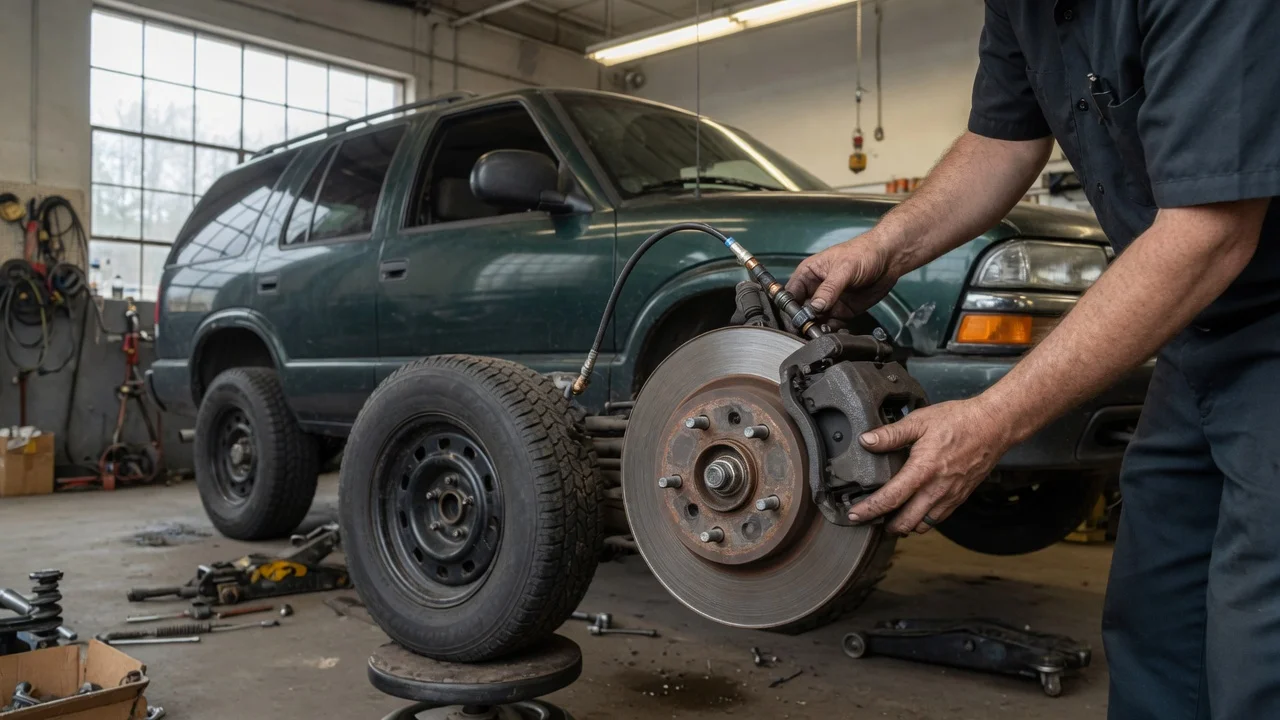
Replacing a caliper on a 1998 Chevrolet Blazer is a bolt-off, bolt-on job. You remove the old caliper, fit a replacement matched to the vehicle, reconnect the brake hose, bleed the hydraulic system and confirm a firm pedal before driving. The work itself is not complicated. The critical part is getting the correct caliper for your specific truck and tightening every fastener to the factory specification.
Which Blazer this guide covers
For the 1998 model year, the Blazer name refers to the compact, S-series-based Chevrolet Blazer. The full-size truck that once carried the Blazer name was sold as the Tahoe by then, so its parts are not interchangeable with this vehicle. Make sure any parts listing you use refers to the compact 1998 Blazer and not a full-size model.
Details that change which caliper you need
Caliper fitment can differ within the same model year. Confirm these points before you buy parts:
Drivetrain: two-wheel-drive and four-wheel-drive versions may use different front brake hardware, so select the matching drivetrain when you look up parts. Axle position: front and rear calipers are different parts, and each axle has its own left-side and right-side caliper. The bleeder screw must sit at the top once the caliper is mounted. Rear brake type: check whether your truck has rear disc brakes or rear drum brakes before you order rear parts. Drum brakes use wheel cylinders, not calipers. VIN and production details: when a parts catalog lists more than one option for a 1998 Blazer, decode the VIN or check the original equipment codes to narrow the choice.
What the job generally involves
The steps below describe the usual sequence for a floating disc-brake caliper. They are an overview only. Use them together with a service manual written for the 1998 Blazer, not in place of one.
Raise the vehicle safely, support it on jack stands rated for its weight, chock the opposite wheels and remove the wheel. To limit fluid loss, clamp the flexible brake hose with a proper hose clamp tool or plug the line once it is disconnected. Remove the banjo bolt or line fitting at the caliper. Discard the old sealing washers, because they are normally replaced with new ones. Remove the caliper mounting bolts or pins and lift the caliper off the rotor. Inspect the pads, rotor, hardware and flexible hose. A swollen, cracked or collapsed hose can cause problems that look like a failed caliper. Fit the pads and the new caliper with clean, lubricated slide hardware where the design calls for it, then tighten the mounting fasteners to the factory specification. Reconnect the brake hose with new sealing washers and tighten it to specification. Bleed the brakes until the fluid runs free of air. Top up the reservoir with the brake fluid type listed on the cap or in the owner's manual. Pump the pedal until it is firm before moving the vehicle, then test the brakes at low speed.
Replacing one caliper or both
Many mechanics replace calipers in pairs on the same axle so that braking force stays even from side to side. That is a common recommendation, not a requirement. If only one caliper has failed and the other works properly, replacing just the failed one is possible. Check the remaining caliper for sticking, leaks or a torn boot first.
Remanufactured or new calipers
Replacement calipers for older trucks are commonly sold as remanufactured units, and many are priced with a refundable core charge for returning the old caliper. Some are sold loaded with pads and hardware already fitted. Others come as a bare caliper. Read the listing carefully so you know exactly what is in the box and whether a core return is expected.
ABS and bleeding
If your Blazer has anti-lock brakes, check the service manual's bleeding procedure before you start. Some ABS systems can be bled the conventional way after caliper work, as long as air never reaches the ABS unit. Others need a specific sequence or a scan tool to cycle the ABS valves. Do not let the master cylinder reservoir run dry while you bleed the system.
Specifications to confirm before you start
No verified figures were available for this guide, so it does not list torque values, part numbers or a bleeding sequence for the 1998 Blazer. Get the caliper bolt torque, the brake hose fitting torque, the wheel lug nut torque, the correct brake fluid type and the bleeding order from a factory service manual or a reputable repair database for your exact drivetrain. Under-tightened or over-tightened brake fasteners can fail, so do not guess at these values.
When to leave it to a shop
Have a qualified technician do the work if any of these apply: • Fasteners are badly seized. • Brake lines are heavily corroded. • You cannot get a firm pedal after bleeding. • The ABS warning light stays on. • You lack the tools to support the vehicle safely and tighten fasteners to specification. Brake work directly affects stopping ability, so a test drive should confirm straight, even braking before the truck goes back into normal use.