Rebuilding Brake Calipers: What It Involves and When It Makes Sense
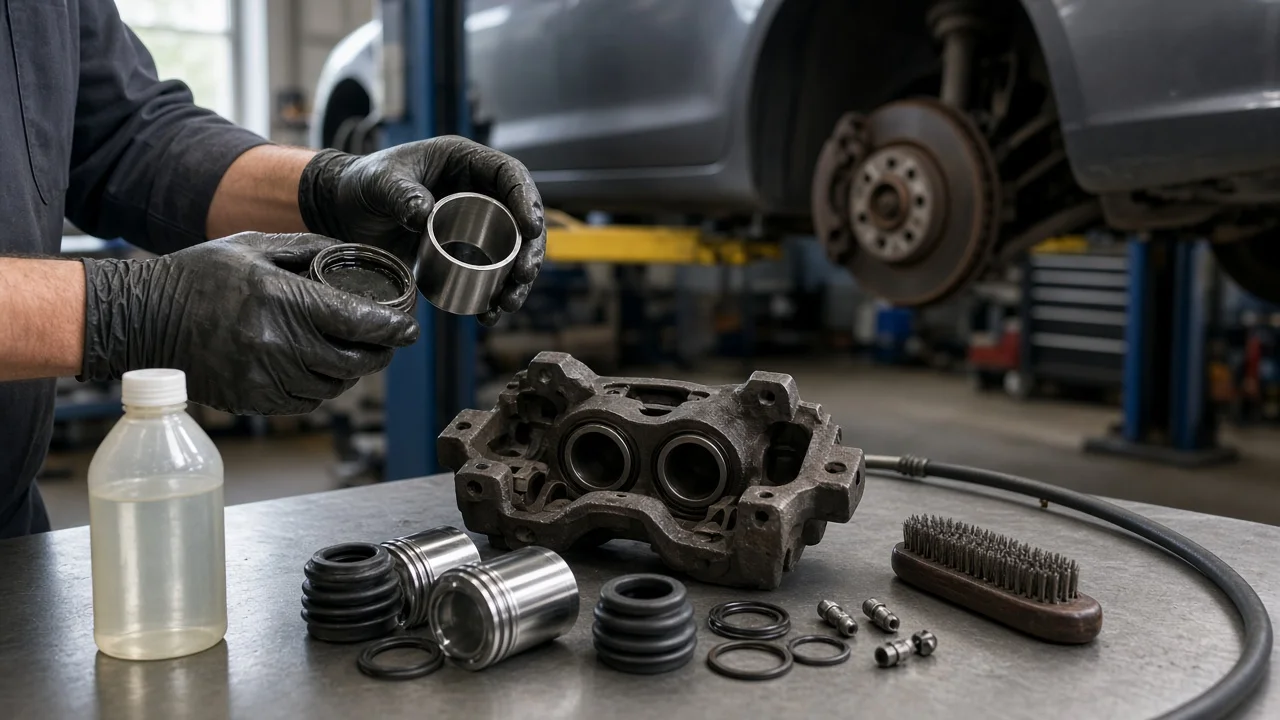
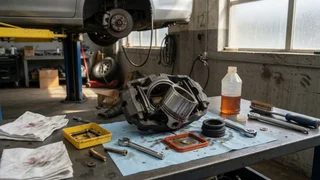
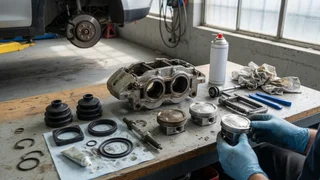
Rebuilding a brake caliper means taking the caliper apart, cleaning it, and replacing the rubber and wear parts that seal the hydraulic piston. These parts include the piston seal, dust boot, and often the piston, bleeder screw, and slide-pin hardware. The cast caliper body is reused. A rebuild can restore a caliper that leaks, sticks, or has a torn boot, but only if the piston bore and body are still sound. If the bore is pitted or the casting is damaged, a rebuild will not work. In that case, a remanufactured or new caliper is the correct repair.
The Short Answer
Caliper rebuilding is a practical repair when the problem is limited to seals, boots, or a corroded piston, and the bore underneath is smooth and clean. It is less practical when corrosion has reached the bore, when the caliper has an integrated parking brake mechanism that is worn, or when a rebuilt or remanufactured unit costs little more than a kit plus your time. Many professional shops replace calipers rather than rebuild them for this reason. Home mechanics and owners of older or less common vehicles often rebuild, especially when replacement calipers are hard to find.
What a Caliper Does and What Wears Out
A disc brake caliper straddles the brake rotor and holds the brake pads. When you press the pedal, brake fluid pressure pushes one or more pistons outward. The pistons clamp the pads' friction material against the rotor. When you release the pedal, the square-cut piston seal flexes back slightly and pulls the piston away from the pads, which lets the wheel turn freely.
Over time, the parts that wear or degrade are mostly rubber and sliding surfaces:
Piston seal: hardens or loses its shape, which can cause leaks or poor piston retraction. Dust boot: cracks or tears, letting water and grit reach the piston and bore. Piston: steel pistons can rust and phenolic (plastic composite) pistons can chip, either of which can damage the seal or cause sticking. Bleeder screw: can corrode or seize in the body. Slide pins and pin boots (on floating calipers): can lose lubrication, corrode, or bind, causing uneven pad wear.
Floating vs. Fixed Calipers
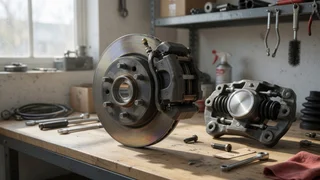
Most mainstream cars and light trucks use floating (sliding) calipers. These calipers have pistons on one side only and slide on pins so they can apply both pads. Rebuilding these is usually straightforward. Performance and some heavier-duty vehicles use fixed calipers, which have opposed pistons on both sides of the rotor. Fixed calipers have more pistons and seals to service. Some are built as two halves bolted together. Manufacturers generally advise against separating the halves, so check the service information for your caliper before attempting it.
Aspect | Floating caliper | Fixed caliper; Pistons | Usually one or two, on the inboard side | Multiple, on both sides of the rotor; Moving hardware | Slide pins, pin boots, bushings | Pistons only; body is rigidly mounted; Rebuild complexity | Generally simpler | More seals and pistons; split-body designs may need special care; Common failure points | Seized slide pins, sticking piston, torn boot | Individual sticking pistons, seal leaks
Signs a Caliper Needs Attention
The vehicle pulls to one side under braking. One wheel is noticeably hotter than the others after a drive, or the brake drags. Pads on one side, or one pad within a caliper, wear much faster than the rest. Brake fluid is visible around the caliper, the wheel, or the inside of the tire. The dust boot is torn or missing. The brake fluid level drops with no other visible leak. The pedal feels soft or spongy after other causes have been ruled out.
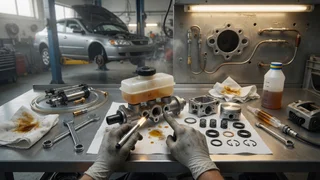
Several of these symptoms can also come from a collapsed brake hose, a seized slide pin, or a problem with the master cylinder. Confirm that the caliper itself is at fault before deciding to rebuild it.
Rebuild, Remanufactured, or New?
Option | What you get | Typical reasons to choose it; Rebuild your own caliper | Your original body with new seals, boot, and optionally new piston and hardware | Bore is in good condition; replacement is scarce or expensive; you want to keep original parts; Remanufactured caliper | A used core that a supplier has cleaned, inspected, and rebuilt, usually sold with a core charge | Faster repair; your bore is damaged; you prefer a unit inspected by the supplier; New caliper | Newly manufactured body and internals | Remanufactured units unavailable or inconsistent; you want new castings
Prices and quality vary widely by vehicle and supplier, so compare the actual options for your car. A rebuild kit is the cheapest parts option, but it assumes the bore will pass inspection. If you discover pitting after disassembly, you will need a replacement caliper anyway. Brake components are commonly replaced in axle pairs, so keep braking even from side to side whichever option you choose.
When a Caliper Can Be Rebuilt
The deciding factor is the condition of the piston bore, especially the groove that holds the square-cut seal and the bore wall that the seal contacts. Light surface staining can often be cleaned off. The guidance on honing caliper bores varies by manufacturer and kit maker, and many advise against it, because the piston seals on the bore wall. Deep pitting, scoring, or corrosion in the seal groove usually means the body should be replaced.
Generally rebuildable: the piston was sticking because of a damaged boot or rusty piston, the seal leaks, or the slide hardware is worn, and the bore is smooth. Generally not rebuildable: the bore or seal groove is pitted, the casting is cracked, the threads for the bleeder or banjo bolt are stripped, or the mounting surfaces are damaged. Use caution: aluminum calipers corrode differently from cast iron, and corrosion can be harder to see. Inspect them closely.
Calipers with Integrated Parking Brakes
Many rear calipers include a parking brake mechanism. On mechanical versions, a cable-operated lever is inside the caliper, and the piston usually has to be screwed back in with a wind-back tool instead of pushed straight in. Rebuild kits for these calipers may not cover the internal adjuster, and a worn mechanism is a common reason to choose replacement instead.
Vehicles with electronic parking brakes use a motor on the caliper. These systems often must be put into a service or maintenance mode with a scan tool or a specific procedure before pads are changed or the piston is retracted. The requirements differ by make, model, and model year, so check the procedure for your vehicle before starting.
What a Rebuild Involves: An Overview
Procedures vary by caliper design. The outline below describes a typical single-piston floating caliper. It is meant to help you understand the job, not to replace the service information for your vehicle.
1) Get the correct rebuild kit and any replacement piston for your vehicle. Confirm vehicle fitment by year, model, axle, and brake package, because one model can use more than one caliper. 2) Remove the caliper. Cap or clamp the brake line so you lose as little fluid as possible and dirt stays out of the system. 3) Remove the piston. Shops often do this with low-pressure air through the fluid inlet. Keep fingers away from the piston, and pad the caliper so the piston cannot fly out. 4) Remove the dust boot and seal with a non-metallic pick so the seal groove is not scratched. 5) Clean the body with brake cleaner or the cleaner recommended in your service information. Do not use petroleum solvents, because they can harm brake rubber. 6) Inspect the bore, seal groove, and piston. Replace the piston if it is pitted, chipped, or scored. Replace the caliper if the bore fails inspection. 7) Lubricate the new seal and piston with clean brake fluid or the assembly lubricant supplied in the kit, then fit the seal, piston, and boot. 8) Service the slide pins and boots with a brake-specific lubricant that is compatible with rubber, and replace any worn hardware. 9) Reinstall the caliper. Tighten bolts to the specified torque, using new sealing washers on banjo fittings where required. 10) Bleed the brakes, check the pedal feel, check for leaks, and road test at low speed before normal driving.
Pads, Rotors, and Brake Fluid During a Caliper Job
A caliper rebuild is a good time to inspect the rest of the brake corner. Replace brake pads if fluid or grease has soaked into the friction material, because contaminated pads usually cannot be cleaned reliably. Also replace them if they are at or near their wear limits. A dragging caliper can overheat and wear the brake rotors unevenly. Measure the rotors against the minimum thickness stamped on the rotor or listed in the service information, and check them for scoring or heat damage.
Opening the hydraulic system means you will have to bleed the brakes. Use the brake fluid type specified for your vehicle, usually printed on the reservoir cap or listed in the owner's manual. Do not mix incompatible fluid types, especially silicone-based fluid with glycol-based fluids. Brake fluid absorbs moisture over time. If the old fluid is dark or overdue for service, flushing the whole system is often worth considering while the brakes are apart. Brake fluid can also damage paint, so wipe up spills right away.
Tools and Skills to Expect
A basic rebuild needs ordinary hand tools, a torque wrench, line clamps or caps, picks, brake cleaner, a bleeding setup, and a safe way to support the vehicle. Rear calipers with parking brake mechanisms may need a wind-back tool. Electronic parking brakes may need a scan tool. Brakes are safety-critical. If you are not confident in judging bore condition, tightening fasteners correctly, or bleeding the system completely, have a qualified technician do the work or install a remanufactured or new caliper.
Bottom Line
Rebuilding brake calipers is worth doing when the caliper body and bore are in good condition and the fault is in the seals, boot, piston, or slide hardware. It keeps your original parts and can save money, particularly on older or hard-to-source vehicles. Once the bore is pitted, the casting is damaged, or a parking brake mechanism is worn, replacement is the better choice. Whichever repair you choose, confirm the parts fit your specific vehicle, inspect the pads and rotors, use the correct brake fluid, and bleed the system thoroughly before driving.