Brake Caliper Repair: Rebuild Kits and Cost Factors
The short answer
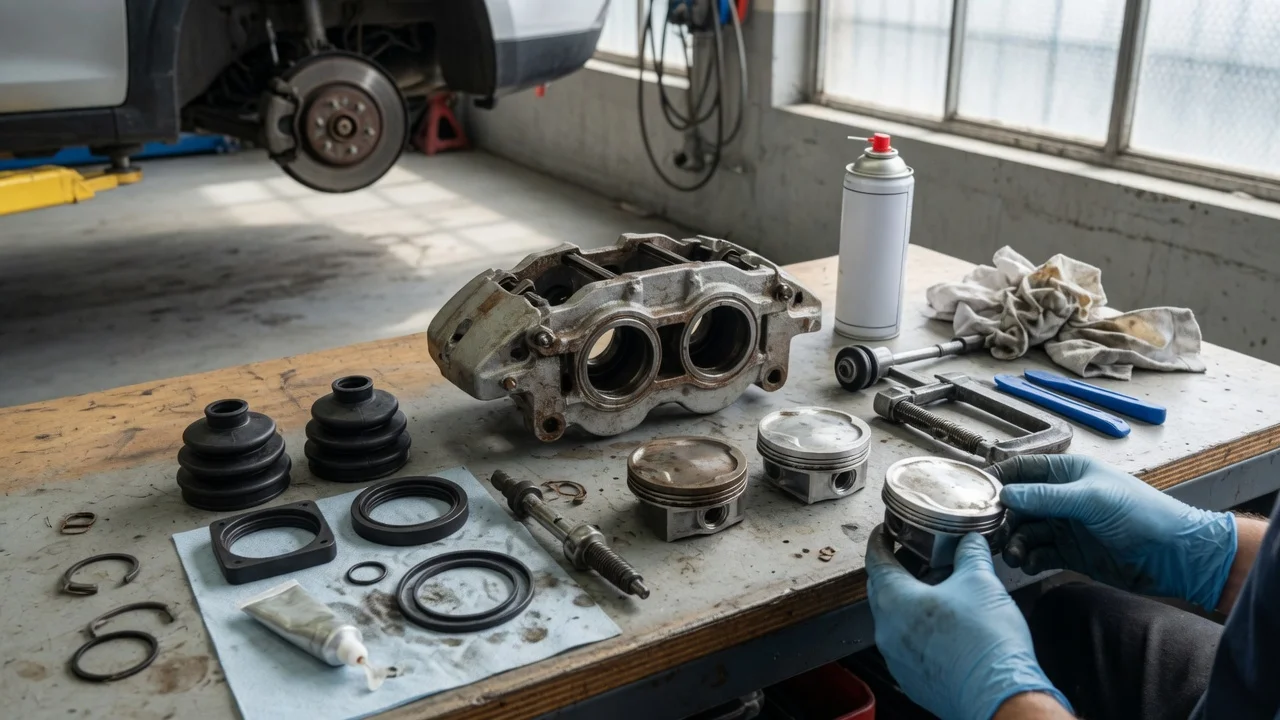
A brake caliper can often be repaired by rebuilding it with a kit that replaces its seals, dust boots and sometimes its pistons and slide hardware. This works only if the caliper body is still sound. If the piston bore is pitted or corroded where the seal sits, the body is cracked, or the threads are damaged, a rebuild kit will not fix it. In those cases, replacing the caliper with a remanufactured or new unit is the realistic choice.
Two conditions change the answer most. The first is caliper design. Rear calipers with an integrated electronic parking brake, and multi-piston fixed calipers on performance brake packages, often need specific procedures, tools or parts that make a do-it-yourself rebuild less practical. The second is the condition of the parts around the caliper. Worn pads, damaged rotors or deteriorated brake hoses can add to the job whichever route you take.
Brakes are a safety-critical system. If you are unsure whether a caliper body can be reused, or you are not confident bleeding the brakes afterward, have a qualified technician inspect it before you buy parts.
What "caliper repair" usually means
A disc brake caliper is the clamp that holds the brake pads. When you press the pedal, hydraulic pressure pushes one or more pistons out of their bores and squeezes the pads against the rotor. A rubber seal around each piston holds the fluid in and helps pull the piston back slightly when you release the pedal. A dust boot keeps dirt and moisture out of the bore.
Over time these rubber parts harden or tear, moisture gets in, and pistons or slide pins can corrode or stick. Repair means one of three things: rebuilding the existing caliper, swapping it for a remanufactured unit, or fitting a new one. Separately, many floating calipers only need their slide pins and pin boots serviced. That is a smaller job than a full rebuild.
What a caliper rebuild kit contains
Kit contents vary by manufacturer and application, so check the listing for your specific kit. Common kit types include:
Seal and boot kit: piston seals and dust boots only. This assumes the original pistons are reusable. Kit with pistons: seals and boots plus replacement pistons, which is useful when the originals are pitted, scored or corroded. Slide pin or guide pin kit: pins, pin boots and sometimes bushings, used on floating calipers. Hardware kit: abutment clips, anti-rattle springs and similar parts. These are often sold with pads rather than as part of a caliper kit. Bleeder screw: included in some kits. A seized or snapped bleeder can turn a rebuild into a replacement.
A rebuild may also call for things the kit does not include: fresh brake fluid of the type your owner's manual specifies, an approved assembly lubricant for the seals and slide pins, and cleaning supplies. If the caliper is disconnected from its hose, you will also need new sealing washers for a banjo-type fitting, if your car uses one.
Matching a kit to your vehicle
Caliper parts are not always shared across a model line. The same model in the same model year can use different calipers depending on trim, engine, brake package, drive layout or the market it was built for. Front and rear calipers differ, and some vehicles changed brake suppliers partway through a model year.
Confirm model year, trim, engine and whether the vehicle has an optional or performance brake package. Confirm front or rear, and note whether the rear caliper has an integrated parking brake mechanism or electronic parking brake motor. Where possible, match the caliper's casting number, manufacturer marking or part number rather than relying on the vehicle description alone. Check the piston diameter and piston count against the kit specification. Seals are sized to the bore. Note piston material. Steel and phenolic (resin) pistons are not always interchangeable within a kit listing. If a parts catalog lists more than one option for your vehicle, resolve the difference before ordering. Do not guess.
When a rebuild is not the right choice
A rebuild depends on the bore surface where the seal rides being smooth and free of pitting. Light surface deposits may clean up. Deep pitting or corrosion in the seal area usually means the body should not be reused. Some caliper bores, particularly aluminum ones, should not be honed or abraded. Follow the vehicle's service information on what cleaning is permitted.
Other signs that point toward replacement include cracks in the casting, damaged or stripped threads, a bleeder screw that cannot be removed without damage, and corroded or worn mounting bracket surfaces. Electronic parking brake calipers add another layer. On many of these systems the piston must be retracted with a scan tool or a defined service procedure, and the motor unit is often serviced separately or not at all.
Rebuild, remanufactured or new: how the options compare
Option | What you get | Main advantages | Main drawbacks; Rebuild kit | New seals, boots and possibly pistons for your existing caliper | Lowest parts outlay when the body is sound; keeps the original caliper | Labor- and skill-intensive; outcome depends on bore condition; not suited to every design; Remanufactured caliper | A previously used caliper that has been cleaned, inspected and fitted with new wear parts | Often ready to install, sometimes with bracket and hardware; quicker job | Usually involves a core charge refunded when you return the old caliper; quality and warranty vary by supplier; New caliper | A newly manufactured unit, either OEM (original equipment) or aftermarket | No prior wear history; may be the only option for some applications | Typically the highest parts outlay; availability varies by vehicle
What drives brake caliper repair cost
No price data was supplied for this article, and costs depend heavily on the vehicle, the region and the supplier. For actual figures, get parts quotes using your exact vehicle details and labor quotes from local shops. These are the factors that move the total:
Repair route: a rebuild kit, a remanufactured unit with a core charge, or a new caliper. Caliper type: single-piston floating calipers are generally simpler than multi-piston fixed calipers or rear calipers with parking brake mechanisms. One side or both: many technicians recommend servicing calipers in axle pairs so braking stays balanced side to side. Ask whether that is advised for your vehicle. Related parts: pads, rotors, hardware, slide pins and brake hoses are commonly replaced at the same time if they are worn or damaged. A sticking caliper often damages the pads and rotor on that wheel. Brake fluid and bleeding: opening the hydraulic system means bleeding the brakes, which adds fluid and time. Some vehicles with ABS or stability control require a specific bleeding procedure or a scan tool. Seized fasteners and corrosion: stuck bleeders, bracket bolts or hose fittings add labor time and may add parts. Electronic parking brake: a service procedure or scan tool may be needed to retract the piston and recalibrate afterward. Labor: shop rates and the time allowed for the job vary by vehicle and region. A rebuild usually takes more labor than bolting on a remanufactured unit, which can offset the cheaper parts at a shop.
Choosing your next step
If you are doing the work yourself, the caliper is a common floating type and the bore inspects clean, a rebuild kit matched to your caliper's part number is a reasonable, economical option. If the bore is pitted, the caliper has an integrated electronic parking brake, or you are paying shop labor, a remanufactured or new caliper is often the more practical choice.
Either way, inspect the pads, rotors and hoses at the same time. Confirm the replacement parts against your exact model year, trim and brake package before ordering. After the job, bleed the system correctly and verify a firm pedal before driving.