Brake Caliper Repair: Rebuild Kits, Work Involved and Cost Factors
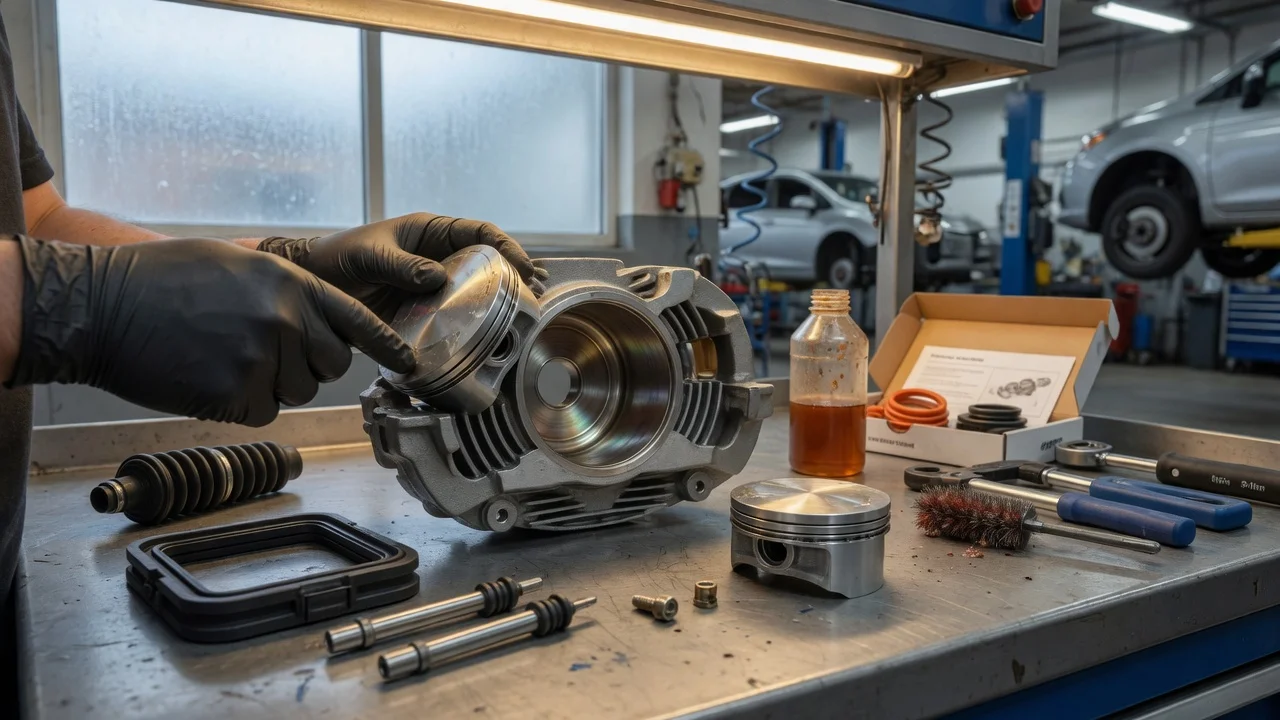
A leaking, sticking, or seized brake caliper can often be repaired with a rebuild kit when the body, piston, and bore are still serviceable. Rebuild means fitting new hydraulic seals and dust boots—and, on a sliding caliper, restoring the pin boots and related hardware—then cleaning, lubricating, and bleeding the circuit. A new or remanufactured caliper is the usual path when the housing is cracked or heavily corroded, the piston or bore is pitted, threads or mounts are damaged, kit support is thin, or a complete unit costs less than the labor to rebuild. Electronic parking-brake calipers and many multi-piston fixed calipers are commonly exchanged as complete units because of extra retract procedures and limited rebuild support.
What caliper repair means
The caliper is the hydraulic clamp at each wheel. Pedal pressure sends brake fluid from the master cylinder into the caliper, where one or more pistons push the pads against the rotor. A floating, or sliding, caliper usually has piston force on one side and moves on slide pins so both pads apply. A fixed caliper has opposing pistons and stays bolted in place. The piston seal holds pressure and, as it rolls in its groove, helps the piston retract a small amount when you release the pedal. The dust boot keeps water and grit off the piston. Repair targets those sealing and sliding surfaces. It does not restore a cracked, distorted, or thread-damaged casting.
What a rebuild kit includes
A repair kit is matched to a specific caliper family. Confirm the kit against the vehicle’s model year, market, trim, and brake package, including standard versus performance hardware and whether an electronic parking brake is fitted. Left and right, front and rear, and even trims of the same model can use different bodies.
Square-cut or similarly specified piston seal or seals; Piston dust boot or boots; Slide-pin boots, and in some kits the pins or bushings, for floating calipers; A bleeder screw in some kits; A replacement piston in some kits; in others the piston is sold separately; Any small hardware the kit lists for that caliper
A kit renews the rubber and, where included, the piston and slide parts. It leaves a pitted bore, a piston that will not come out cleanly, damaged threads, and a cracked body unaddressed. Those conditions call for a remanufactured or new caliper. Gap: catalog listings and box labels still need a parts-counter or VIN-level check; unresolved trim and brake-package differences should be treated as a no-fit until confirmed.
Work involved
Whether you rebuild or replace, the vehicle is supported, the wheel comes off, the brake hose is disconnected, and the caliper is unbolted. Banjo fittings typically get new crush washers. The circuit is opened, so it must be bled afterward until the pedal is firm and the hose and bleeder are dry.
On a rebuild, the piston is removed, the bore is cleaned and inspected, a new seal is seated fully in its groove, the boot is fitted, and the piston is returned using clean brake fluid of the type specified for the vehicle as the seal lubricant. Slide pins and their bores are cleaned and coated only with the high-temperature grease specified for caliper slides. Pads soaked with fluid, rusted abutment hardware, and seized pins are commonly renewed in the same visit. Both calipers on an axle are often done together so clamping stays even side to side. Brake fluid absorbs moisture, so a flush is frequently combined with the job.
Electronic parking-brake calipers usually need a scan tool or the maker’s retract procedure before the piston can be moved. Without that step, forcing the piston can damage the mechanism. Gap: the exact labor time, tool list, and torque values are vehicle-specific and belong in the service information for that model year.
When rebuild is suitable, and when a complete caliper is the better buy
Condition found Usual course; Housing intact; bore and piston smooth; a matching kit exists Rebuild with the correct kit; Cracked or badly corroded body; pitted bore or piston; damaged threads, slides, or mounts New or remanufactured caliper; Electronic parking-brake unit, or no current kit for that body Complete caliper in most shops; Quoted rebuild labor plus kit exceeds a quality complete unit for that vehicle Complete caliper
Inspect the body, piston, bore, slides, hose, and mounts before you commit to a kit. A kit ordered on a leaking caliper that later shows a scored bore becomes wasted parts on top of a replacement caliper.
Cost factors and checks before you buy
The bill is labor plus the kit or the complete caliper, fluid, and any pads, hoses, pins, and hardware renewed at the same time. Shop rate, how many corners you service, whether an electronic parking brake must be put in service mode, and whether the caliper is a simple slider or a multi-piston fixed unit all move the total. An advertised kit price or a boxed remanufactured caliper is only part of a completed invoice, which also includes labor, fluid, bleed time, and related parts. Core charges on remanufactured units are refunded only when the old caliper is accepted. Gap: no single dollar figure applies; quotes are local, dated, and vehicle-specific, and advertised prices differ from what a shop actually invoices.
Identify the exact caliper: year, market, trim, powertrain and brake package, axle, side, and parking-brake type. Have the body, piston, bore, slides, hose, and mounts inspected before ordering a kit. Compare kit-plus-labor to a remanufactured or new caliper, including fluid, bleed, and a possible core charge. Budget for both sides of the axle when age, corrosion, or contaminated fluid is the likely cause. Use the fluid type listed in the owner’s information. DOT 3, DOT 4, and DOT 5.1 are glycol-based families specified by the vehicle maker; DOT 5 silicone is a separate fill and belongs only in systems built for it. For a do-it-yourself job on an electronic parking-brake caliper, confirm you have the required retract tool or procedure before you start. Treat the job as safety-critical: a soft pedal, a wet fitting, or a caliper that will not release means the vehicle stays parked until the hydraulics are corrected.
When to stop the rebuild
Abandon the rebuild if the piston will not come out without scoring the bore, rust has eaten the seal groove, the casting is cracked, or the bleeder or hose threads are damaged. A caliper that stays applied can overheat that corner, pull the vehicle, wear a pad to the backing plate, and damage the rotor and hub. A leak that empties a circuit can leave a sinking pedal and lost braking on that half of the system. Those findings close the case for a kit and point to a complete caliper, plus a check of the hose, fluid, and the matching caliper on the same axle.