Rebuild a Brake Master Cylinder: When a Repair Kit Makes Sense
The short answer
A brake master cylinder can often be rebuilt with a repair kit, but only if the cylinder bore (the smooth inner wall the pistons slide against) is clean and undamaged. A kit replaces the rubber seals and related small parts; it cannot fix a pitted, scored or corroded bore. If the bore is damaged, or if a correct kit is not available for your exact cylinder, replacing the unit with a new or remanufactured one is the safer and usually simpler path.
The master cylinder converts pedal force into hydraulic pressure for the whole braking system, so any rebuild has to be done carefully and verified before the vehicle is driven. If you are not confident with brake hydraulics and bleeding, have the work done by a qualified technician.
What a master cylinder repair kit usually contains
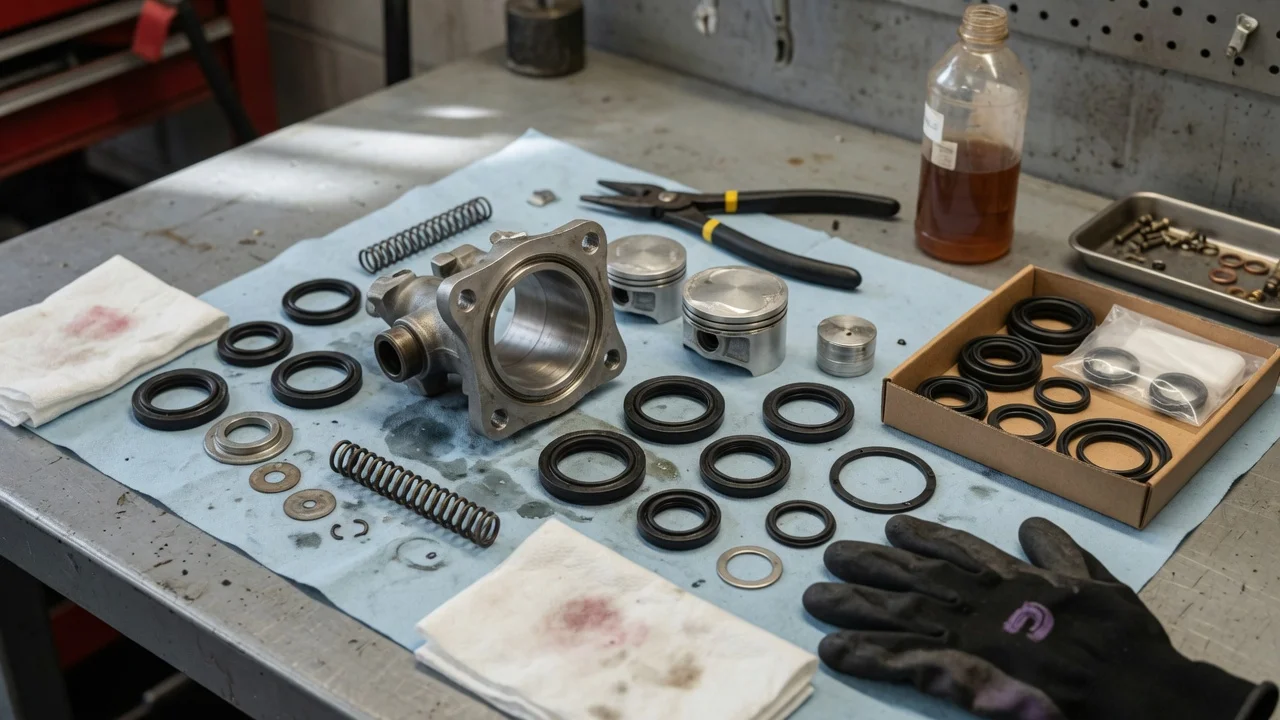
Contents vary by manufacturer and by cylinder design, so check the kit listing against your unit before buying. Kits commonly include some or all of the following:
Primary and secondary piston seals (cups); Complete replacement pistons, in some kits, rather than seals alone; A retaining snap ring or clip for the piston assembly; Reservoir grommets or seals where a plastic reservoir plugs into the body; Springs, check valves or residual pressure valves on some designs; A small packet of assembly lubricant
Kits that include pistons are generally easier to work with, because old pistons can be corroded or worn even when the bore looks acceptable. Seal-only kits require reusing the original pistons, which then need careful inspection.
Matching the kit to your vehicle
Compatibility is the most common source of trouble. The same model can use different master cylinders depending on model year, market, trim, brake system (for example, with or without ABS, or disc versus drum rear brakes) and whether the original unit has already been replaced with an aftermarket part. No vehicle-specific details were provided here, so the bore size and part numbers for any particular car cannot be confirmed in this article.
Identify the cylinder itself, not just the vehicle: look for a manufacturer name, part number or casting number on the body. Check the bore diameter, which is often cast or stamped on the body and must match the kit exactly. Confirm the reservoir type and grommet style if the kit includes reservoir seals. If the cylinder is a previous aftermarket replacement, the original-equipment kit may not fit; match the kit to the part actually installed.
For many modern vehicles, rebuild kits are no longer offered and the master cylinder is sold only as a complete unit. Kits remain more common for older and classic vehicles.
Check the bore before committing
Whether a rebuild is worthwhile is decided once the cylinder is apart. After removing the pistons, clean the bore and inspect it under good light. A smooth, even surface supports a rebuild. Pitting, rust, deep scratches or a visible step where the seals have worn a groove mean new seals will not seal reliably.
Body material matters. Cast iron bores are sometimes lightly honed (smoothed with an abrasive tool) to remove minor deposits, within limits set by the cylinder or kit maker. Aluminum bores are commonly anodized, meaning they have a hard surface coating; honing can remove that coating, and many makers advise against it. If an aluminum bore is damaged, replacement is generally the recommended route. Follow the service information for your specific cylinder, because acceptable limits were not supplied here and should not be guessed.
Outline of the rebuild process
Exact steps depend on the cylinder design and the vehicle's service manual. The general sequence is:
Remove the master cylinder from the vehicle, capping or plugging brake lines to limit fluid loss and contamination. Drain the fluid and remove the reservoir if it is separate. Remove the retaining clip or snap ring and withdraw the pistons and springs, noting their order and orientation. Clean all parts with brake cleaner or fresh brake fluid as the kit instructions specify; avoid petroleum-based solvents, which can damage brake seals. Inspect the bore and, if reusing them, the pistons. Fit the new seals in the correct direction, lubricated with the supplied assembly lube or clean brake fluid. Reassemble in the original order and install new reservoir grommets if supplied. Bench bleed the cylinder before installation, then reinstall and bleed the complete brake system. Check pedal feel and test for leaks before driving, then test brakes at low speed in a safe area.
Bench bleeding means filling the cylinder and pumping out trapped air while it is clamped on a workbench, typically using short return tubes into the reservoir. Skipping it can leave air that is hard to remove later through the wheel bleeders.
Brake fluid compatibility
Use the fluid specified for your vehicle, usually marked on the reservoir cap or listed in the owner's manual. Glycol-based fluids such as DOT 3, DOT 4 and DOT 5.1 are a different chemistry from silicone-based DOT 5, and the two types should not be mixed. If the system previously ran a different fluid than specified, flush it fully and make sure the seals in the kit are rated for the fluid you will use.
Rebuild, remanufactured or new: the trade-offs
Option | Main advantages | Main drawbacks; Rebuild with a kit | Keeps the original, matching part; useful when replacements are scarce, as on many older vehicles | Depends on bore condition; more labor; the result depends on careful assembly; Remanufactured unit | Ready to install; bore condition already addressed by the remanufacturer | Quality varies by supplier; often requires returning the old unit as a core; New unit | No uncertainty about bore wear or previous repairs | May be unavailable for older vehicles; aftermarket fit should be confirmed
Prices and availability vary widely by vehicle and supplier and were not provided, so compare current listings for your specific cylinder before deciding. When labor time is counted, a complete replacement unit is often the more practical choice for a common modern vehicle, while a kit tends to make the most sense for older vehicles or when keeping an original part matters.
Confirm the master cylinder is the problem first
A repair kit only addresses internal seal wear in the master cylinder. Brake complaints such as a soft or sinking pedal can also come from air in the lines, external leaks at calipers, wheel cylinders or hoses, or problems in other parts of the hydraulic system. Before buying a kit, make sure the fault has been traced to the master cylinder itself. If the brakes feel unreliable, the vehicle should not be driven until the cause is found and repaired.