Rebuilding Brake Calipers: When It Makes Sense and What It Involves
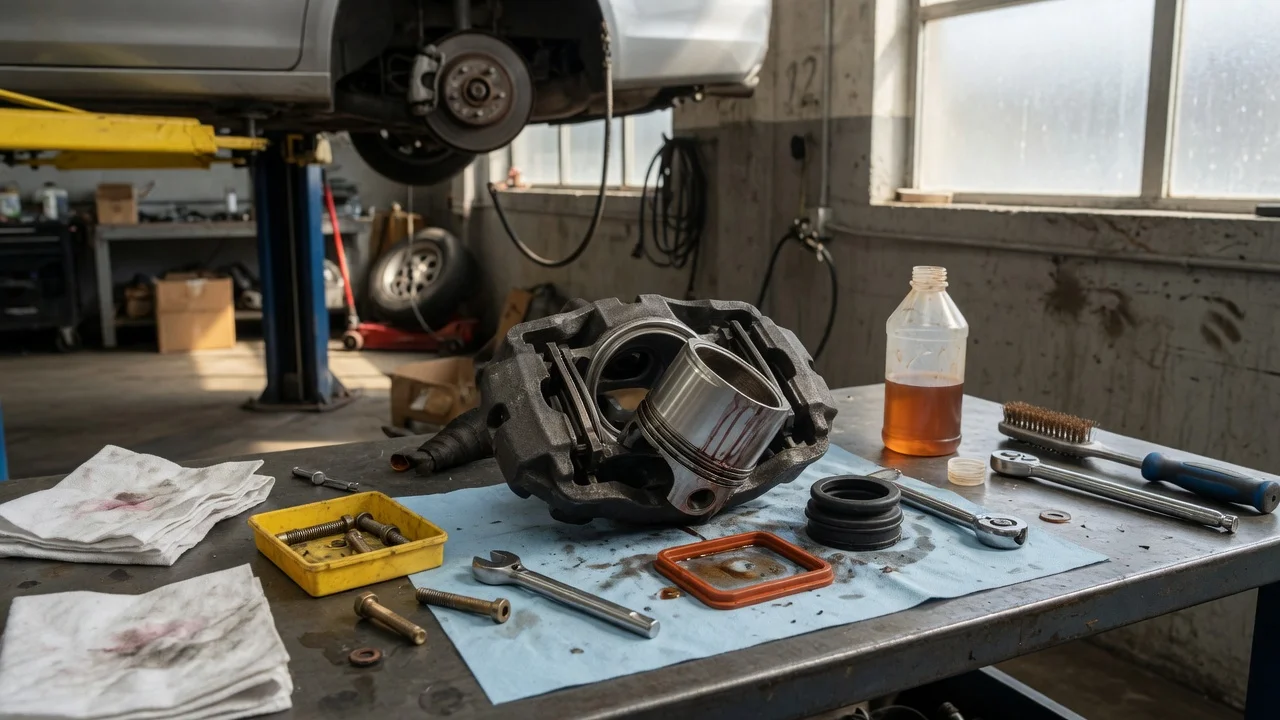
The short answer
Many hydraulic disc brake calipers can be rebuilt. A rebuild usually means replacing the rubber seals and dust boots, and often the piston and slide hardware, while reusing the caliper body. It is a practical fix when the caliper bore is clean and undamaged and parts are available for your vehicle. It stops being practical when the bore is pitted or corroded, when the caliper body is cracked or damaged, or when the design makes the job difficult, as with some rear calipers that have a built-in parking brake mechanism. In those cases, a remanufactured or new caliper is usually the better choice.
What a caliper rebuild covers
A brake caliper is the hydraulic clamp that squeezes the brake pads against the rotor. Brake fluid pressure pushes one or more pistons out of bores (machined cylinders) in the caliper body. A square-cut piston seal keeps the fluid in and helps pull the piston back slightly when you release the brake. A dust boot keeps dirt and water away from the piston. Over time the seals harden, the boots tear, and moisture causes corrosion, which can lead to sticking pistons, uneven pad wear, pulling to one side or fluid leaks.
A typical rebuild involves these stages, though the exact procedure and torque values depend on the vehicle and must come from the applicable service manual:
Removing the caliper from the vehicle and disconnecting the brake hose or line. Removing the piston or pistons from the bore. Removing the old piston seals and dust boots. Cleaning and inspecting the bore, piston, bleeder screw and slide pins. Fitting new seals and boots from a rebuild kit, plus a new piston or slide hardware if needed. Reinstalling the caliper, tightening fasteners to the specified torque, and bleeding the brake system to remove air.
Conditions that change the answer
Several factors decide whether rebuilding is realistic for a particular caliper. Each one can tip the decision on its own.
Bore condition: the seal works against the bore wall, so pitting, deep corrosion or scoring there usually means the caliper body should not be reused. Light surface deposits may clean up. Whether a given bore is acceptable is a judgment against the manufacturer's guidance, not something a general guide can settle. Piston condition: corroded or chipped steel pistons, or cracked phenolic (plastic composite) pistons, should be replaced rather than reused. Caliper type: floating calipers, which have pistons on one side only and slide on pins, are generally simpler to rebuild than fixed calipers with opposed pistons. Some manufacturers advise against separating the halves of a fixed caliper. Integrated parking brakes: many rear calipers have a mechanical or electronic parking brake built in. These can need special tools to retract the piston, or a diagnostic tool on vehicles with electronic parking brakes, which makes a rebuild harder. Parts availability: rebuild kits are common for many popular vehicles but not all, and coverage varies by model year, market and brake package. Skill and tools: the job means handling brake fluid, removing the piston safely and bleeding the system correctly. Mistakes directly affect braking.
Rebuilding versus remanufactured or new calipers
Remanufactured calipers are used bodies that have been inspected, refinished and fitted with new seals and usually new pistons. They are widely sold, often with a core charge refunded when the old caliper is returned. Rebuilding your own calipers mainly pays off when the bodies are in good condition and kits are easy to get. It can also make sense when the calipers are hard to replace, such as on older or less common vehicles. When the bore is damaged, or the time and tools involved are a concern, a remanufactured or new unit is often the simpler route.
No pricing, labor-time or durability data was supplied for this article, so it does not compare costs or service life between the options. Check current kit and caliper prices for your specific vehicle before deciding.
Safety points that apply either way
Brakes are safety-critical. Most guidance is to service calipers in pairs on the same axle, so braking stays even from side to side. Use only the brake fluid type the vehicle manufacturer specifies, follow the factory torque values, and bleed the system fully afterward. Confirm a firm pedal and correct operation before driving normally. If any of these steps is unfamiliar, have a qualified technician do the work or inspect it.
Gaps in this guide
This guide is general and does not cover any specific vehicle. It contains no model-specific procedures, torque specifications, bore wear limits, part numbers or test findings. Those details vary by make, model year, generation and brake package, and should come from the manufacturer's service information for your vehicle.