Rear Axle Shaft Seals: How to Choose a Compatible Seal
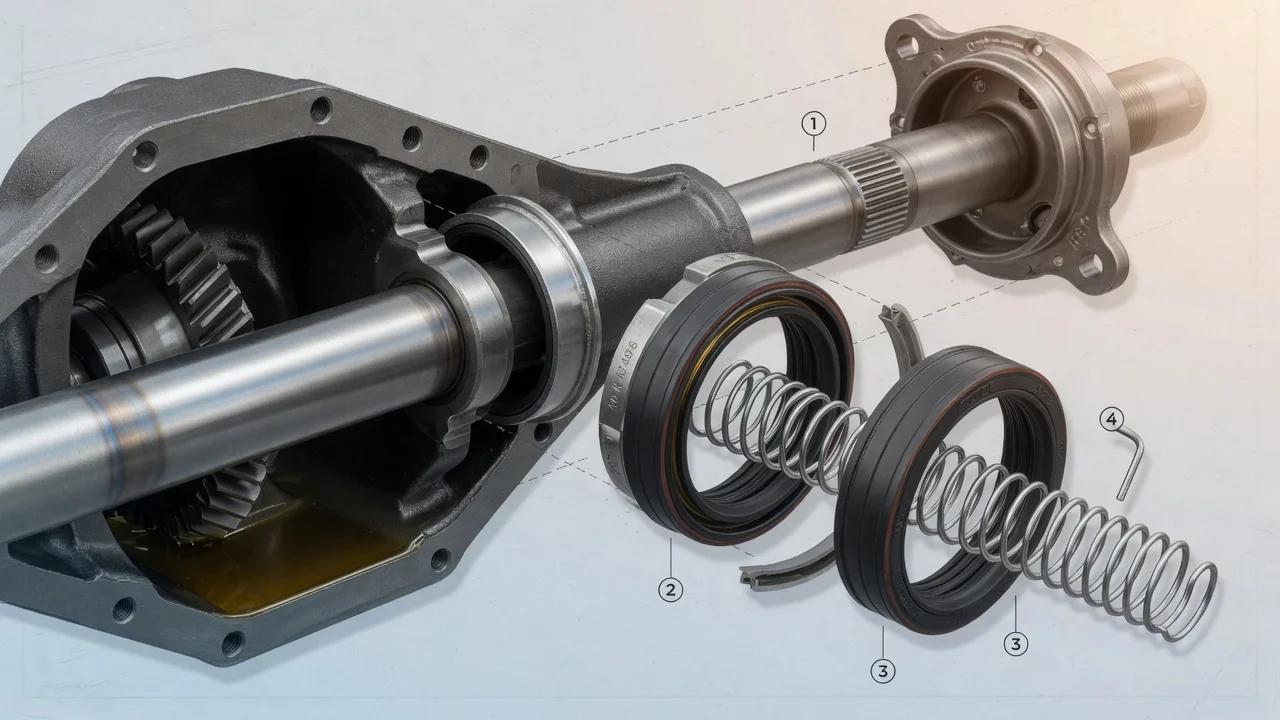
A leaking rear axle shaft seal lets gear oil creep toward the wheel. There it can soak brake parts and starve the axle bearing of lubricant. Choosing a replacement looks simple, yet seals that appear identical can differ in bore size, lip design and material. This guide explains how to match a seal to your exact vehicle configuration, which features matter, what the job costs beyond the part, and how to narrow the options to a short list of compatible seals.
Define the job the product must do
On a typical semi-floating rear axle, the shaft seal is pressed into the outer end of the axle housing. Its lip rides on the axle shaft or bearing surface, keeping differential lubricant inside and dirt and water outside. On full-floating axles, the comparable seal usually lives in the wheel hub rather than the housing. On vehicles with independent rear suspension, the seals sit where the axle shafts enter the differential. Before you shop, confirm which layout your vehicle uses, because each one calls for a different part.
Next, confirm that the seal is really the problem. Classic signs are gear oil on the inside of the wheel, on the brake backing plate or on the brake components themselves. However, an overfilled differential, a blocked axle vent or a worn wheel bearing can push oil past a seal that is otherwise healthy. If one of these causes is left in place, a new seal will often leak again. Review the service history for earlier seal, bearing or differential work. Also consider your operating conditions: daily commuting, regular towing, dusty roads and water crossings all affect which seal design is worth paying for.
Check compatibility
Start with the exact vehicle identity: model year, model, drivetrain and, most importantly, the specific rear axle. Many trucks and SUVs were offered with more than one rear axle in the same model year, so the model name alone is not enough. The VIN, an axle tag on the housing or cover bolt, or the build or option code label can identify the axle model, ring gear size and gear ratio. Parts catalogs often split seal listings by these details, so collect them before comparing options.
Then identify how the axle shaft is retained. On C-clip axles, the shaft is held in place inside the differential, and the seal is pressed into the housing bore with its lip running directly on the shaft. That seal is usually sold separately from the bearing. On bolt-in or retainer-plate axles, the bearing is pressed onto the shaft and held by a plate at the housing flange. The seal may be built into the bearing or fitted as a separate inner seal, and replacement can require pressing the bearing off. Buying a seal meant for the other retention style is a common and avoidable mistake.
Finally, check dimensions. Three measurements define a radial shaft seal: the shaft diameter at the seal contact surface, the housing bore diameter and the seal width. When catalog fitment is ambiguous, read the part number printed on the old seal or measure the old seal and the shaft with calipers. Compare those figures with the manufacturer specifications or the replacement seal's listed dimensions. If you plan to use a repair sleeve on a worn shaft, confirm that the sleeve is designed to work with the seal size you are buying.
Features that affect the choice
Lip material is the most meaningful difference between otherwise similar seals. Nitrile rubber is widely used and cost-effective for normal gear oil temperatures. Polyacrylate and fluoroelastomer compounds tolerate higher temperatures better but cost more. The original equipment material is a sensible baseline. An upgrade makes sense mainly when operating conditions such as sustained towing or high heat justify it. Make sure the seal suits the gear oil and any limited-slip additive specified for your axle.
Lip and case design matter too. Most seals use a primary lip held against the shaft by a garter spring, and many add a secondary dust or excluder lip that helps in muddy or dusty use. Some seals have direction-specific lip features and are sold as left and right versions, so check which side each one is for. The outer case may be bare metal, rubber-coated or pre-coated with sealant. A rubber outer diameter can seal slightly imperfect bores, while a metal case gives a firm press fit in a clean bore. Labels such as heavy duty or premium are not measurable claims. Give more weight to listings that state the material, dimensions and fitment by axle code.
Limitations and ownership costs
A new seal cannot compensate for problems elsewhere. A worn bearing lets the shaft move off center, and that movement wears out a new seal quickly. A grooved shaft surface, a nicked or corroded housing bore, a plugged vent or an overfilled differential can each cause a repeat leak. During removal, inspect the bearing for roughness or play and check the seal contact area on the shaft. A groove you can catch with a fingernail generally calls for a repair sleeve or a replacement shaft rather than just a new seal.
Budget for more than the seal. You will need gear oil of the type and quantity the manufacturer specifies. On C-clip axles, you will also need a differential cover gasket or sealant, because the cover must come off to remove the clips. Brake shoes or pads soaked with gear oil usually need replacement rather than cleaning, and the bearing may need replacing as well. Tools typically include a seal puller or slide hammer and a correctly sized seal driver, and a press is needed for axles with pressed-on bearings. Clean the bore, lubricate the lip, fit the seal the right way around and drive it in square to the correct depth. There is no universal replacement interval for these seals. Check them during regular inspection in your maintenance schedule, and replace them when they leak or when bearing work exposes them.
Build a practical shortlist
To narrow the field, work through the same checks for every candidate. Does it list your axle model or code, not just the vehicle make? Does it match the retention style and the shaft, bore and width dimensions you confirmed? Is the lip material equal to or better than the original, given how you use the vehicle? Is the correct side specified if the design is directional? Does it include a dust lip if you drive on dirty roads? Decide as well whether you need a seal alone or a seal and bearing kit. If the bearing shows wear, a kit avoids a second teardown.
Any seal that fails one of these checks should drop off your list, whatever its price or branding. If only one side leaked because of age, inspect the other side closely. Many owners replace both while the axle is apart, but that is a decision based on condition, not a requirement. When fitment data conflicts, the old seal's part number or a side-by-side comparison with the removed seal is the most reliable final check before installation.