Used Rear Axle Shafts: What to Check Before Buying
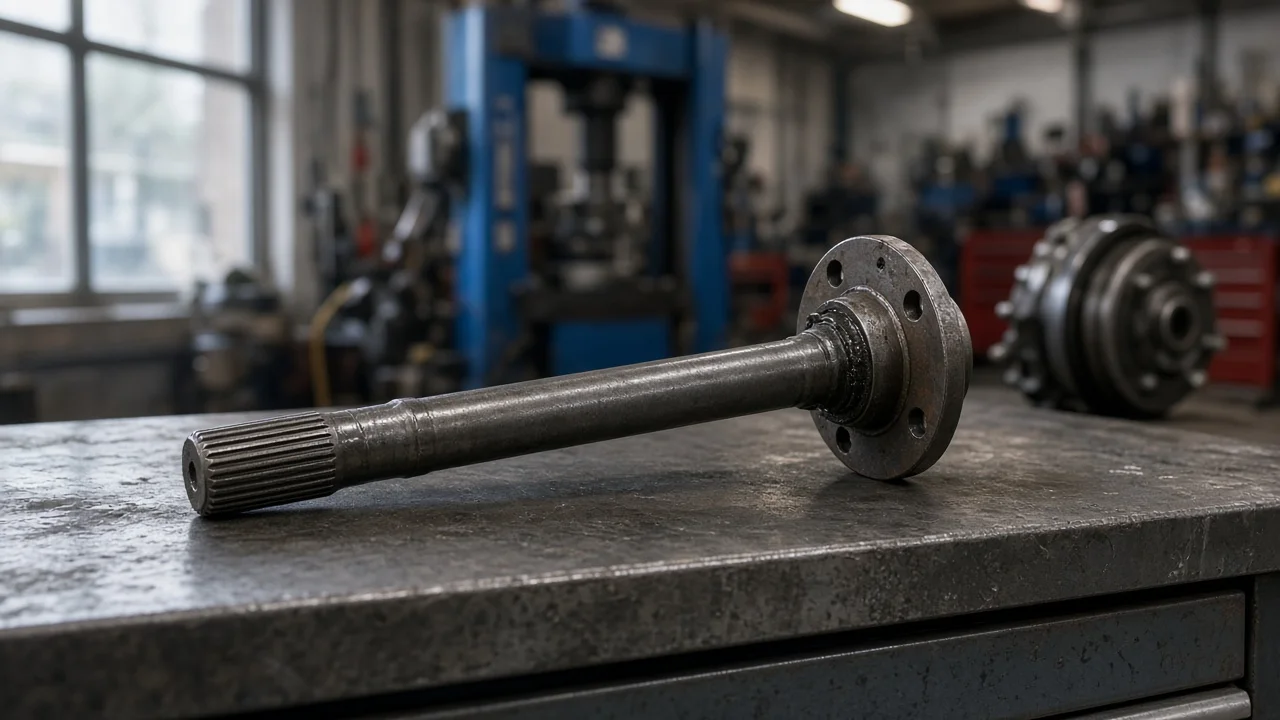
A used rear axle shaft can be a sensible way to repair a solid rear axle, but only if the original shaft is actually the problem and the replacement matches your vehicle. Noise, vibration or a leak at a rear wheel often points to the bearing or seal rather than the shaft itself. This guide covers recording symptoms, separating likely causes, checking the vehicle and the part, and deciding what to do next.
Establish the symptoms
Start by writing down exactly when the problem appears. Note whether a hum, growl or rumble changes with road speed, with acceleration versus coasting, or when the vehicle leans through a left or right curve. Record any clunk when shifting into drive or reverse, any vibration felt through the seat or floor, and whether it appears only above a certain speed. These operating conditions help separate a wheel-end problem from something in the differential, driveshaft or tires.
Look for associated signs as well: gear oil on the inside of a rear wheel or tire, a wet brake backing plate, brakes that grab or pull to one side, an ABS or traction control warning, or uneven tire wear. Then list recent changes, such as a curb strike, towing, a differential fluid service, new tires, brake work or a previous axle repair. A short record like this, together with whatever service history you have, is more useful to a technician than a description of the noise alone.
Distinguish plausible causes
On many rear-wheel-drive and four-wheel-drive vehicles with a solid rear axle, the axle bearing and seal sit at the outer end of the shaft. A worn bearing typically produces a speed-related hum or growl that may get louder or quieter as cornering shifts weight on or off that wheel. A failed seal lets gear oil reach the brakes. Neither automatically condemns the shaft, but in designs where the bearing rides directly on the shaft surface, a failed bearing can score or pit that journal, and then the shaft usually needs replacing along with the bearing.
A bent shaft, often the result of an impact, tends to cause a vibration or wobble that rises with speed and may show up as runout at the wheel flange. A cracked or broken shaft can cause a clunk, loss of drive on one side or, in some designs, movement of the wheel in and out. Competing explanations include differential gear or carrier bearing wear, which more often changes between acceleration and coasting; driveshaft or U-joint problems, which often appear as vibration on takeoff or at particular speeds; and tire defects or wheel imbalance, which a tire swap or balance check can rule in or out. Vehicles with independent rear suspension use separate half shafts with CV joints, so clicking or vibration there follows a different diagnostic path.
Checks in a useful order
Some checks are safe for any owner. With the vehicle parked on level ground, look for oil streaks on the inside of each rear wheel and around the brake backing plate, check tire wear and pressures, and confirm that all lug nuts are present and tight. On the road, in a safe place, note whether the noise follows vehicle speed or engine load, and whether swapping the rear tires to the front changes it. Check the differential fluid level only if you know the correct procedure and fluid for your axle.
Tests beyond that need a lift or proper stands and tools. With the wheel off the ground, a technician can spin it to feel for roughness, check for in-and-out or rocking play, and measure flange runout with a dial indicator, comparing the reading against the manufacturer specifications for that axle rather than a generic number. Removing the shaft allows inspection of the bearing journal, seal surface, splines and, where fitted, the ABS tone ring. On C-clip axles this involves opening the differential cover, so fresh fluid and a new gasket or sealant become part of the job. If you are not equipped for this, leave it to a qualified technician.
Match and inspect the used shaft
A used shaft must match your exact vehicle configuration, not just the model name. Useful identifiers include the VIN, the axle code or tag on the differential housing, the side of the vehicle, spline count, overall length, flange and wheel stud pattern, brake type, and whether the shaft carries an ABS tone ring. Axle options can differ within one model year and between drivetrain, body or towing packages, so confirm the part number or the donor vehicle details with the seller before paying.
When you can see the part, check the bearing journal and seal surface for grooves, pitting or heat discoloration, look for twisted, chipped or rounded splines, inspect the flange and wheel studs for damage, and ask whether the shaft came from a vehicle with a known noise or collision. If the seller cannot show a runout check, have your technician measure it before installation. Ask about return terms in case fit or condition turns out to be wrong, and plan on installing a new bearing and seal rather than reusing the donor parts.
Interpret the findings
Each result answers a narrower question. Oil on the brake confirms a leak at that wheel end but not why the seal failed. Roughness or play when the wheel is spun points to the bearing, yet the journal still has to be inspected to decide whether the shaft is reusable. Runout above specification indicates a bent shaft or flange, provided the hub face and studs were checked first. Noise that changes clearly between acceleration and coasting shifts suspicion toward the differential, which a replacement shaft will not fix.
Before buying parts, confirm the diagnosis with the shaft removed or with a measurement that isolates it. If the journal is smooth and runout is within specification, a bearing and seal may be all that is needed. If the journal is damaged, the shaft is bent or the splines are worn, replacement is justified, and the differential side gear those splines engage should be inspected at the same time, since damage at the inner end can mean the differential needs attention too.
Urgency and next action
Stop driving and arrange inspection or towing if a rear wheel moves in and out, a grinding or knocking noise appears suddenly, the vehicle loses drive on one side, gear oil is contaminating the brakes, or a hard impact was followed by vibration. In C-clip designs, a shaft broken outboard of the clip can allow the axle and wheel to slide out of the housing. No remaining mileage can be promised for a noisy or leaking wheel end, so treat new or worsening symptoms as a reason to have the vehicle checked promptly.
For the repair, bring the VIN, axle code, affected side, the symptoms with their operating conditions, recent work and any measurements already taken. That lets the shop or parts seller confirm the correct used shaft, the bearing and seal to fit with it, and the correct gear oil and any friction modifier required for a limited-slip differential, following the maintenance schedule and service information for your vehicle.