Bad or Bent Rear Axle Shaft Symptoms: How to Check the Shaft
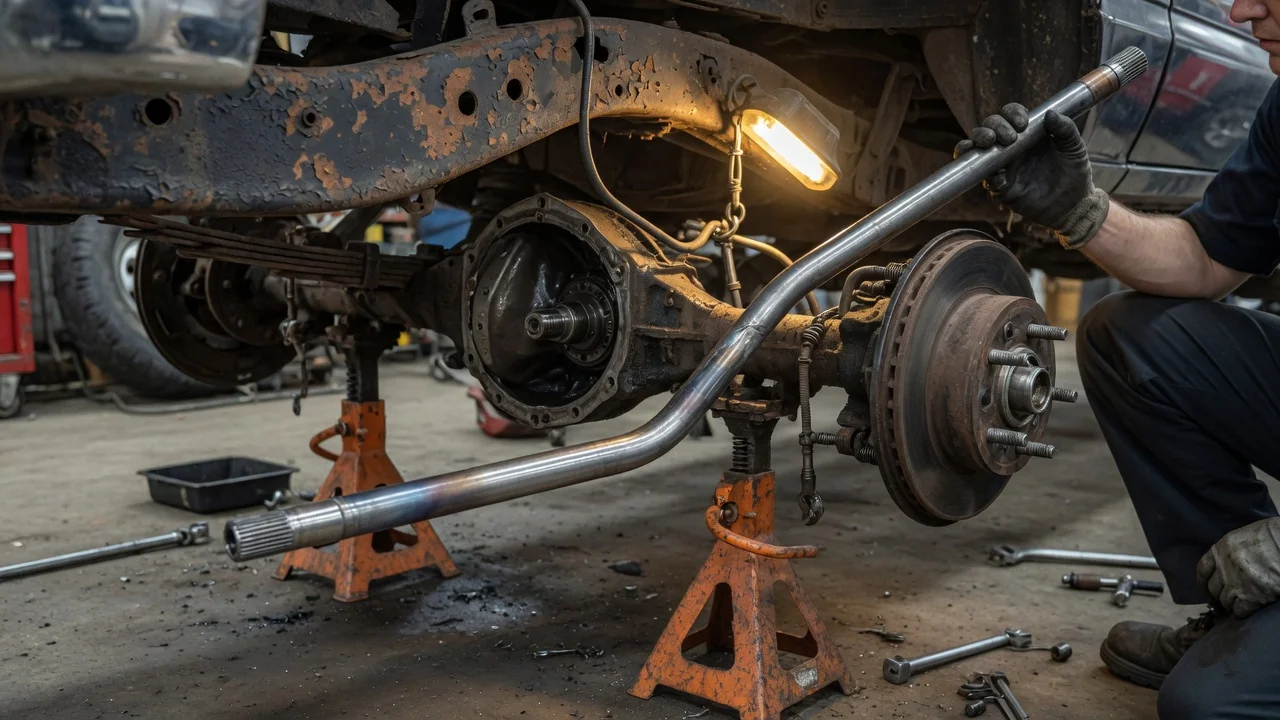
A bent rear axle shaft usually shows up as a vibration or wobble that follows road speed. It often starts after a rear wheel hits a curb, pothole or road debris. A damaged wheel, a tire defect or a worn bearing can cause the same complaints, so narrow down the cause before buying parts. This guide covers the symptoms of a bad rear axle shaft, the checks to do in order, and what each result tells you.
Establish the symptoms
Bent rear axle shaft symptoms usually start with a vibration felt through the seat or floor. It rises and falls with vehicle speed rather than engine speed. At low speed you may see the rear wheel wobble, or hear a rhythmic hum or thump that repeats once per wheel revolution. Over time, one rear tire may wear unevenly or in a scalloped pattern. A bent shaft can also work the axle seal loose, so gear oil may seep onto the inside of the wheel or the brake backing plate. On some vehicles, a wheel speed sensor ring running out of true can trigger an ABS or traction control warning. A bad shaft will not always show every one of these signs.
Before any inspection, write down when the problem occurs. Note the speed range where the vibration starts and peaks. Note whether it happens while accelerating, coasting or both, and whether it changes in turns or over bumps. Then record recent changes: an impact, an accident, new tires, wheel balancing, brake work or differential service. Also note operating conditions such as heavy loads, towing or off-road use. A problem that began suddenly after one event points in a different direction than one that crept in over months.
Distinguish plausible causes
A bent shaft or axle flange is supported by three things: symptoms that began right after a specific impact, a vibration tied to one rear corner, and measurable runout at the hub flange. That explanation is weaker if the vibration developed gradually with no event behind it. A tire or wheel problem is the most common look-alike. Belt separation, an out-of-round tire, a bent rim or a lost balance weight can all produce the same speed-related shake. A visible bulge or a vibration that moves when wheels are swapped points to the wheel or tire.
A worn wheel bearing usually causes growling or humming that changes as load shifts in turns, and sometimes play when the wheel is rocked. It tends to cause more noise than shake. A driveshaft or U-joint problem gives a vibration that is not tied to one wheel, sometimes with a clunk on take-off. Brake drum or rotor runout mostly causes pulsation while braking. A bent axle housing can mimic a bent shaft and also upset tire wear and alignment. Loose lug nuts can cause clicking and wobble and need immediate attention. Your vehicle configuration also matters. A solid rear axle, a full-floating axle and independent rear suspension with half shafts are built differently. A front-wheel-drive vehicle has no driven rear axle shaft, so a rear wobble there points to the hub, spindle, wheel or tire.
Checks in a useful order
Start with checks that need no disassembly. Look for tire bulges, rim damage, missing balance weights and gear oil on the inside of each rear wheel. Confirm that every lug nut is present, and tighten them with a torque wrench to the manufacturer specifications. Review the service history for recent tire, brake or differential work. If you can lift the vehicle safely, raise the rear on level ground and support it on proper jack stands. Chock the front wheels. Then spin each rear wheel by hand while watching the tread and rim edge against a fixed reference point. Grip the tire at the top and bottom and rock it to feel for bearing play.
Next, use tests that isolate the cause. Swap the rear wheels side to side, or front to rear where tire size and direction allow, and repeat the road test. A tire shop can check wheel and tire runout on a balancer. With the wheel and drum or rotor removed, a dial indicator on the axle flange face measures flange runout. Compare that reading with the specification for your vehicle, because no single figure applies to every axle. Removing the shaft to check it in V-blocks, inspecting the housing and replacing seals or bearings is work for a qualified technician. On many axles, the shaft is held by retaining clips inside the differential. That means draining fluid, opening the differential and reassembling to specification.
Interpret the findings
If the vibration moves to another corner when wheels are swapped, the wheel or tire is the cause, not the shaft. If the wheel shows excess runout on the balancer but the flange measures true, replace or repair the wheel. If flange runout is out of specification and the bearing has no unusual play, a bent shaft or flange is the likely cause. However, a worn bearing or a damaged shaft seat can distort the reading, so check the bearing too. Excess play when rocking the wheel points to a bearing or worn shaft end, but it does not prove the shaft is bent.
Some questions still need answers before you replace parts. A flange runout reading alone cannot tell a bent shaft from a bent axle housing. After a hard impact, have the housing and rear alignment checked as well, or a new shaft may wobble just like the old one. If oil was leaking at the axle seal, replace the seal with the shaft, because a bent shaft quickly destroys a new seal. If every measurement is within specification and there was no impact, look at the driveline, tires and brakes before condemning the axle.
Urgency and next action
Stop driving and arrange a tow if any of these signs appear: the rear wheel visibly wobbles, there is grinding or scraping, the wheel feels loose, a clunk keeps getting worse, gear oil reaches the brakes, or the vehicle pulls or feels unstable. A shaft that is cracked or has lost its retention can work outward on some axle designs and take the wheel with it. Nobody can promise how many miles a bent shaft will last. Treat any doubt after an impact as a reason for inspection before further driving.
Give the repair shop the year, make, model and VIN so the exact axle type, drivetrain and differential can be identified. Add your service history, a description of any impact, your symptom notes, whether wheels were swapped, and any runout readings. Ask the technician to state the confirmed diagnosis and the measured runout, and whether the housing and alignment were checked. Ask which seals or bearings were replaced, and confirm that the differential was refilled with the fluid type and amount listed in the manufacturer's maintenance schedule.