Rear Axle Bearing and Seal Kits: How to Choose Compatible Parts
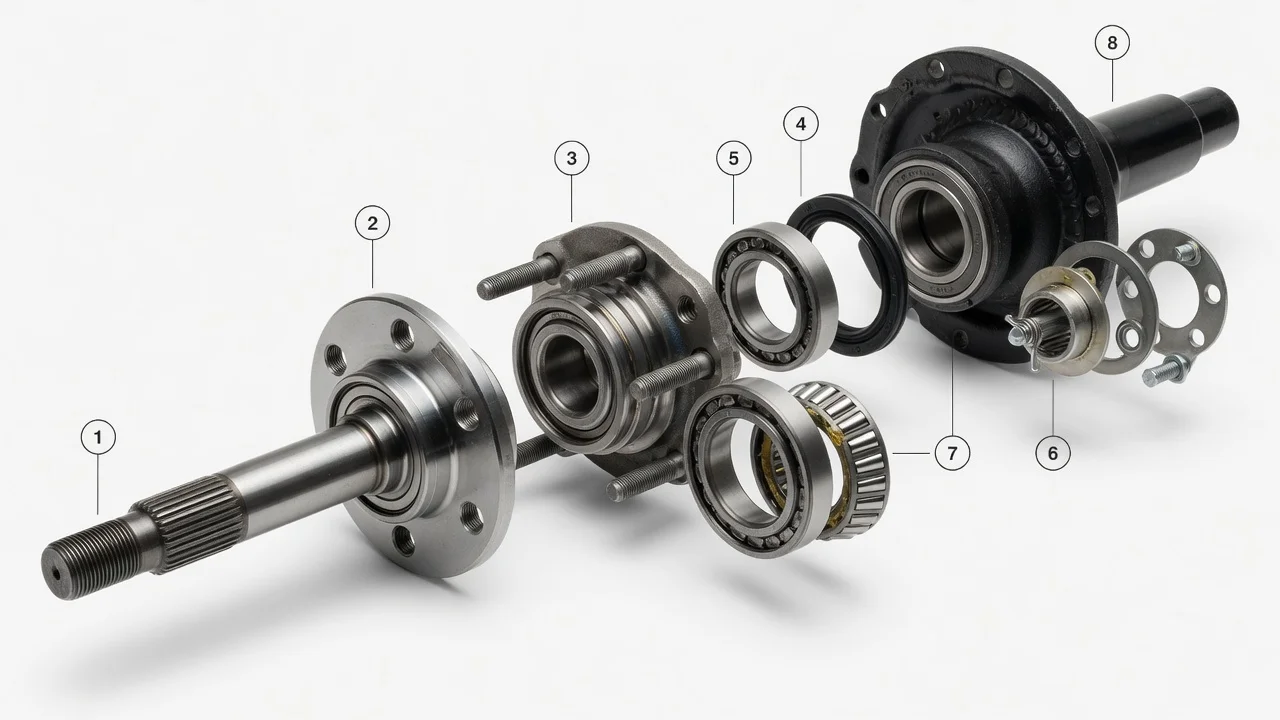
A rear axle bearing and seal kit can restore a quiet, dry wheel end, but only if every piece matches the axle it goes into. Bearings and seals that look alike can differ in bore, width, lip design or retention method, and a near miss often means a leak or a repeat failure. This guide covers how to confirm your axle design, check fitment details, judge kit features and estimate the real cost of the job before you buy.
Define the job the product must do
Start with the symptom and the reason for the repair. A seal alone may be enough when gear oil is weeping past the axle seal onto the backing plate and the bearing still turns smoothly without play. A growl or hum that changes with speed and load, roughness when the wheel is turned by hand, or play at the hub points toward the bearing itself, and the seal is normally replaced at the same time because it has to come out anyway. Confirm the diagnosis before ordering parts. Tire wear, differential gear noise and dragging brakes can sound similar, so a careful inspection with the vehicle safely supported can save you from buying parts that will not fix the problem.
Next, consider how the vehicle is used. A daily commuter, a truck that tows or hauls regularly, and a vehicle that crosses water or runs on dusty roads put different demands on the seal and bearing. Operating conditions do not change which part fits, but they affect how much attention you give to seal design, lubrication and follow-up checks. Be realistic about your tools as well: some kits install with hand tools, while others need a hydraulic press or a trip to a shop.
Check compatibility
Rear axles generally fall into a few designs, and each takes a different kind of kit. On many C-clip axles, the bearing is pressed into the axle housing and its rollers ride directly on the axle shaft, with the seal outboard of the bearing. On semi-floating axles with a pressed bearing, the bearing and a retaining ring are pressed onto the shaft, and the assembly is held in the housing by a bolted retainer plate. Full-floating axles, common on heavier trucks, carry the wheel on hub bearings mounted on a spindle and usually need adjustment during installation. Many vehicles with independent rear suspension or front-wheel drive use a bolt-on hub assembly instead of separate parts, and in that case a bearing and seal kit is not the right purchase.
Use the exact vehicle configuration rather than year, make and model alone. The same model year may have been built with different axles depending on engine, drivetrain, gear ratio, payload rating, brake type or a limited-slip option. Useful references include the VIN, any axle identification tag or stamping on the housing or differential cover, build option codes where the manufacturer provides them, and markings on the original parts. Service history matters too: a previous owner may have swapped the axle or installed a repair bearing, so the parts on the vehicle may no longer match the original build.
Compare the interfaces, not just the catalog fitment line. The bearing has to match the housing bore or shaft journal, its width and its sealing arrangement, and the seal has to match both the bore it presses into and the surface its lip runs on. If the vehicle has ABS, find out whether the tone ring is part of the axle, the bearing or a separate piece, and whether the kit includes it. When a listing gives dimensions or cross-references an original part number, check them against the manufacturer specifications or the parts you remove before installing anything.
Features that affect the choice
Kits vary in what they include. Some contain only the bearing and seal, while others add the retaining ring, a housing gasket, an O-ring, retainer hardware or a tone ring. A more complete rear axle bearing kit can save a second trip to the parts counter, but only if every included piece is correct for your axle; extras that do not apply simply go unused. Some sellers also offer an axle shaft with the bearing already pressed on, which removes the need for a press but is a larger purchase with narrower fitment.
On C-clip axles, a failed bearing can leave the shaft journal pitted or grooved, because the rollers run directly on it. Repair-style bearings are designed to ride on a different section of the shaft and come with a matching seal, which can avoid replacing the axle when the damage falls within the limits the bearing maker describes. Whether that approach is acceptable depends on the wear you actually find. Seal design also differs: lip material, single or double lips, and an outer dust lip affect how well a seal copes with heat, contamination and water. Pick the design that suits your operating conditions rather than the one with the longest feature list.
Treat labels such as premium, heavy duty or OE quality as claims rather than evidence. More useful signs are a clear brand and part number on each component, a published cross-reference to the original part number, stated dimensions, and installation instructions written for your axle design. If a seller cannot say which axle design or dimensions a kit is built for, that uncertainty is a reason to keep looking.
Limitations and ownership costs
The kit price is only part of the cost. Pressed bearings usually require cutting off the old retaining ring, which should not be reused, and pressing the new bearing and ring on with suitable equipment, so many owners pay a shop for that step. C-clip designs require opening the differential to free the axle, which means a new cover gasket or sealant and fresh gear oil of the type and quantity listed in the manufacturer specifications, including any additive a limited-slip differential requires. Full-floating hubs need correct bearing adjustment and the fastener torque values from the service information for that vehicle.
Plan for related parts. A leaking seal often contaminates brake shoes or pads with gear oil, and soaked friction material generally needs replacement rather than cleaning. Retainer bolts, nuts or locking hardware may be specified as single-use. While everything is apart, inspect the axle shaft, housing bore and ABS components, because a kit cannot correct a bent shaft, a damaged housing, worn differential gears or a tire problem. After the repair, follow your vehicle's maintenance schedule for gear oil service and recheck the wheel end for leaks and noise; there is no universal replacement interval for these parts.
Build a practical shortlist
Before comparing prices, confirm the facts that rule kits in or out: the axle design, the axle or option identification for your vehicle, brake type, ABS arrangement and whether the shaft journal is still serviceable. Then narrow the candidates to kits that list your exact configuration or match the original part numbers and dimensions.
For each remaining option, check the same points: what the kit includes and what you must buy separately, whether a press or special tool is required, the seal design, the markings on the bearing and seal, whether the instructions match your axle, and the seller's return terms if fitment turns out to be wrong. Add consumables and any shop labor to the kit price so you compare the whole job rather than the box. A kit that clears every check is a sound choice regardless of its marketing tier, while one that leaves a fitment question open is worth setting aside until that question is answered.