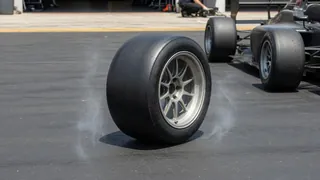
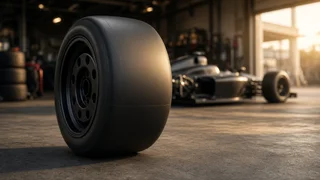
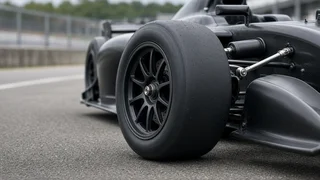
Racing slicks vs track tires
Choosing between a racing slick and a track tire comes down to how much grip you can use and how much weather risk you are willing to accept. A full slick offers the largest contact patch and the most dry-weather mechanical adhesion, but it has almost no water evacuation. A track tire adds shallow tread, making it less extreme than a slick while remaining far more responsive than a street tire. The right choice depends on tire size, inflation pressure, tread depth, vehicle weight, drivetrain compatibility, and whether the car will see any damp pavement on the way to or during a session.
Direct answer
For most drivers at open-lapping or track-day events, a modern track tire is the safer and more practical choice than a pure racing slick. The shallow grooves still move water away from the contact patch if the surface is damp, and the tread blocks help manage heat buildup across a wider range of temperatures. A slick is faster only when the pavement is fully dry, the tire is already at operating temperature, and the suspension can use the extra grip without overheating other components.
A racing slick should not be treated as simply a better track tire. Its smooth surface relies on high rubber temperatures and a clean, dry racing line to generate traction. Without those conditions, it can feel vague and may hydroplane at surprisingly low speeds. The more consistent option is a track tire because it preserves much of the dry cornering capability while covering the real-world variables that show up during a normal lapping day.