What Is a Racing Slick Tire? Dry Grip, Heat, and Track Use
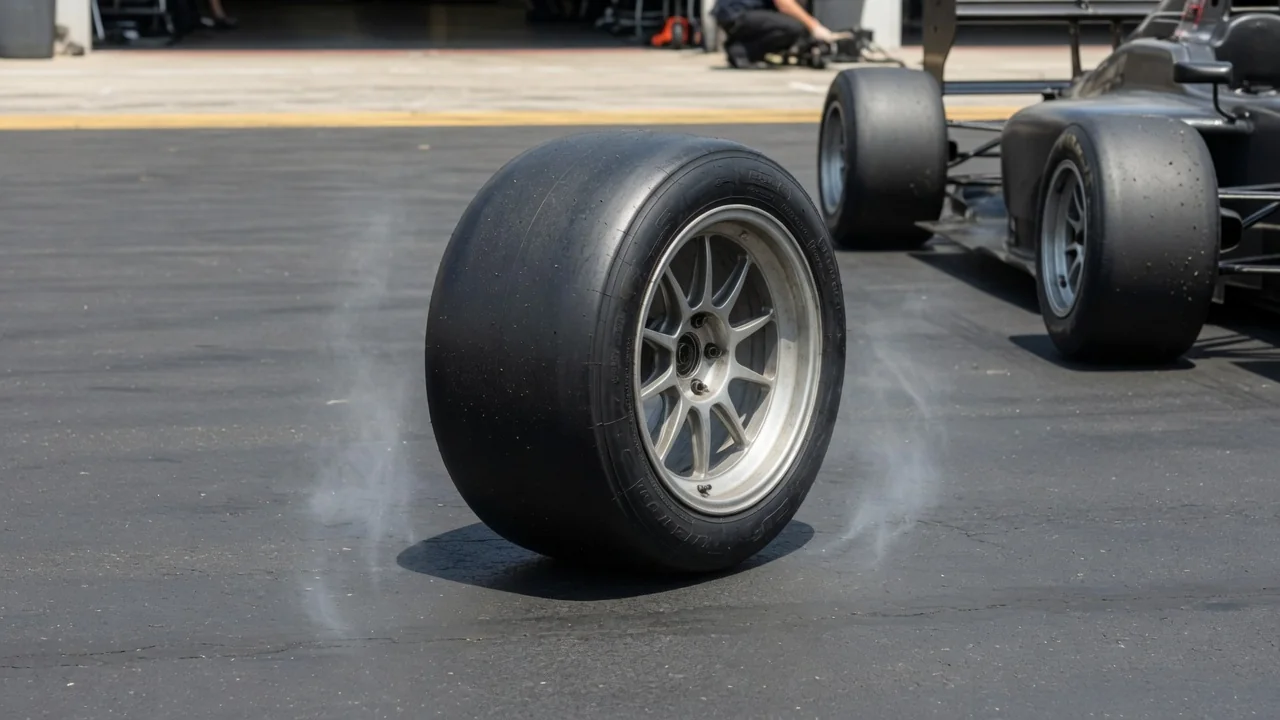
A racing slick tire is a tire with a smooth, treadless surface designed to deliver as much grip as possible on a dry, prepared racing surface. If you have wondered what a racing slick tire is or what purpose it serves in motorsport, the short answer is that it trades versatility for peak dry performance. Understanding how slicks generate grip, why they depend on heat, and why they belong on the track explains both their strengths and their limits.
Dry grip: why a slick has no tread
Tread grooves on a road tire exist mainly to move water out from under the tire so the rubber can stay in contact with the pavement. On a dry surface there is no water to clear, so those grooves simply remove rubber that could otherwise be touching the ground. A slick eliminates the grooves entirely and puts a continuous band of rubber into the contact patch, the small area where the tire actually meets the surface. More rubber in contact generally means more opportunity to generate friction, which is the foundation of cornering, braking, and acceleration grip.
Grip from rubber is not only simple sliding friction. Tire rubber is a viscoelastic material, meaning it deforms and recovers in a way that absorbs energy. As the tire rolls over the tiny peaks and valleys of the track surface, the rubber partly flows around those textures, a mechanism often described as hysteresis. The rubber also forms molecular-level adhesion with the surface. Racing compounds are formulated to be relatively soft and sticky to maximize both effects, which is why a used slick often feels tacky to the touch.
Removing the tread also makes the tread surface more stable. Individual tread blocks on a patterned tire can flex and squirm under heavy loads, which softens steering response and can build heat in localized spots. A continuous slick surface behaves more uniformly under cornering and braking forces. That stability, combined with the soft compound, is a large part of the motorsport slick tire purpose. Actual grip levels still depend on compound, construction, vehicle setup, and track surface, so no single figure applies to all slicks.
Operating temperature and why slicks need heat
A slick's compound is engineered to reach its best grip within a specific temperature range, often called the operating window. Below that window, the rubber is comparatively stiff and does not conform well to the surface, so grip can be much lower than drivers expect. Within the window, the rubber becomes compliant enough to key into the surface texture and generate strong adhesion. Manufacturers specify the recommended range for each compound, and those figures vary between products and racing series, so the correct window should come from the tire maker's guidance rather than a general rule.
Heat builds through the work the tire does. Braking, cornering, and acceleration flex the carcass and deform the tread, and that energy turns into temperature. This is why drivers weave or brake firmly on warm-up laps and why some series permit electric tire warmers before a session. Teams often measure temperatures across the tread width, typically at the inner, middle, and outer zones, because uneven readings can point to camber, toe, or pressure settings that load one part of the tire more than another.
Temperature and pressure are closely linked. As the air inside the tire heats up, pressure rises, which changes the shape of the contact patch and how the tire responds. Crews therefore set cold pressures with the expected hot pressure in mind. Running above the operating window brings its own problems: an overheated compound can lose grip, feel greasy, blister, or wear rapidly. Repeated heating and cooling, often called heat cycles, can also gradually change how a compound performs over its life.
Track-only context: where slicks belong
Racing slicks are designed for closed circuits, prepared surfaces, and controlled events. In most jurisdictions they lack the tread, wear indicators, and certification markings required for legal use on public roads, so they are typically labeled for competition or off-highway use only. Even setting legality aside, public roads rarely suit them: traffic, modest speeds, and short trips seldom generate enough heat to bring the compound into its working range.
Water is the most serious limitation. Without grooves, a slick has no channel to clear standing water, so even a thin film can lift the tire off the surface and cause hydroplaning at speeds a treaded tire would handle. Cold, damp conditions make matters worse because the tire cannot build heat. This is why racing series that use slicks also provide treaded wet or intermediate tires and have procedures for switching between them when the weather changes.
Slicks also reflect how competitive motorsport is organized. Many series specify a single tire supplier or a limited set of compounds, and rules may define how many sets a team can use during an event. The tire becomes part of the technical regulations rather than a free equipment choice. In grassroots racing, class rules decide whether slicks are allowed at all; some classes require treaded tires to control costs and keep competition close.
Practical implications and limits
For anyone considering slicks for track days or club racing, the first practical step is checking event and class rules, since organizers decide whether slicks are permitted and what safety equipment must accompany them. The car matters too. Higher grip places larger loads on suspension components, wheel bearings, brakes, and the chassis, and it can expose weaknesses in a setup designed around road tires. Alignment, spring rates, and brake cooling may need attention before the added grip can be used effectively and safely.
Logistics change as well. Because slicks are not road legal, they are usually mounted on a separate set of wheels and transported to the track, with road tires fitted for the drive home. Storage conditions affect rubber over time, so the manufacturer's guidance on storage, age, and handling is worth following. Wear tends to be faster than with road tires, which makes tire life and replacement cost a regular part of the budget rather than an occasional expense.
Finally, slicks demand attention from the driver. Cold tires on an out-lap, a sudden rain shower, or a session that overheats the compound can all reduce grip sharply and with little warning. Reading the tires through temperatures, pressures, and wear patterns becomes part of driving them well. Slicks are a specialized tool: in their intended environment they offer a level of dry grip that treaded tires are not designed to match, and outside it their advantages largely disappear.