Is Police Dash Cam Video a Public Record? How to Request It in the US
The Short Answer
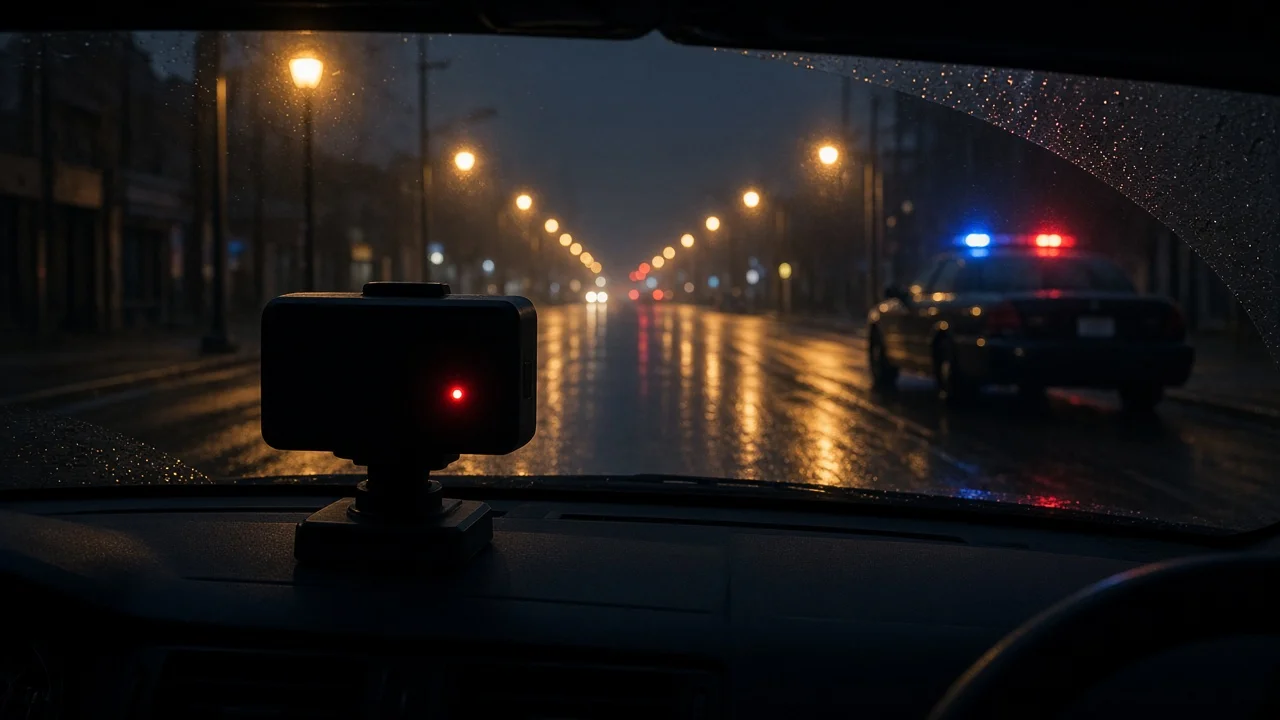
In the United States, video recorded by a police dash camera (a camera mounted in a patrol vehicle that records the road ahead and sometimes the interior) is generally treated as a government record. That usually means it falls under public records law, and members of the public can request it. Being a public record does not guarantee release. Each state sets its own rules, and agencies can often withhold or redact footage under specific exemptions.
Three conditions change the answer most. The first is which agency made the recording. The second is which state's law applies. The third is whether the footage relates to an open investigation or contains protected personal information. If you were involved in a collision and want the footage as evidence, your chances are often better than an unrelated requester's. Even so, release is still governed by the same law.
Which Law Applies
The federal Freedom of Information Act (FOIA) covers federal agencies only. Most dash cam footage comes from city police, county sheriffs or state highway patrols, so the request usually falls under that state's public records law. These laws go by different names, such as open records act, public records act or right-to-know law. Some states also have separate statutes written specifically for police video recordings, which can add or restrict access rules.
No state-specific deadlines, fees or statutes were confirmed for this guide. Check the current public records law for the state where the recording was made before relying on any timeline or cost.
Common Reasons Footage Is Withheld or Redacted
Even when footage counts as a public record, agencies commonly rely on exemptions like these:
Active or pending criminal investigations or prosecutions; Privacy of people shown, such as victims, witnesses, bystanders or minors; Medical information or sensitive scenes inside homes or vehicles; Information that could identify confidential sources or reveal investigative techniques; State-specific limits that apply only to police audio and video recordings
Redaction (blurring faces, license plates or audio) is common. You may receive a partial release instead of an outright denial.
How to Request Police Dash Cam Footage
1) Identify the agency. Confirm whether the officer was from city police, a county sheriff or a state patrol. The crash report or the officer's card usually shows this. 2) Gather incident details. Note the date, approximate time, location, report or case number, and names of involved parties if known. 3) Find the agency's records process. Many agencies have a records unit or public records officer and may accept requests through a portal, by mail or in person. 4) Submit a written request. Ask specifically for dash camera video, and body-worn camera video if relevant, for the identified incident. Cite the state's public records law by name if you know it. 5) Keep a copy and a record of the submission date. This matters if you need to follow up or appeal. 6) Respond to any fee estimate or clarification request. Agencies may charge for copying or redaction time, depending on state law. 7) Review what you receive. Check that the footage covers the correct date, time and vehicle, and that the file plays fully.
Act Quickly: Retention Matters
Agencies keep video under retention schedules. Footage not flagged as evidence may be deleted after a set period, and that period varies by agency and state. If the footage matters for an insurance claim or lawsuit, request it as early as possible. An attorney can also send a preservation request asking the agency not to delete it. If litigation is underway, footage may be obtainable through a subpoena or discovery, even if a public records request is denied.
If Your Request Is Denied
A denial should usually state the legal basis for withholding. Most states provide some form of review, such as an administrative appeal, a review by a state oversight office, or a court challenge. The procedure and deadlines depend on the state. If the footage is important to a collision claim, consider consulting a local attorney who handles public records or traffic injury cases.
Private Dash Cam Footage Is Different
Video from a dash cam owned by a private driver is not a public record. It belongs to the person who recorded it. To obtain it, you would need to ask that person directly, or seek it through your insurer or legal process. If you have your own dash cam footage of a collision, save and back up the original file promptly so it is not overwritten by loop recording.
What This Guide Could Not Confirm
Specific response deadlines, fees, retention periods, agency contacts and state statute details were not available for this guide. They vary across US jurisdictions. Verify them with the relevant agency or your state's current public records law before making decisions that depend on them.