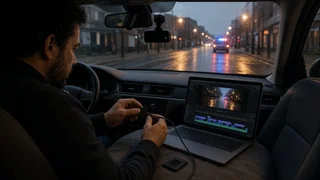
How to Request Dash Cam Footage After a Collision
The short answer
To get dash cam footage after a collision, ask the person or company that owns the camera as soon as possible, in writing, and say exactly which date, time, location and vehicles you need. A dash cam is a small camera mounted in a vehicle that records the road, and sometimes the cabin. In the US, a private driver generally does not have to hand over their footage just because you ask. If they refuse, or the footage belongs to a business, you usually have to go through the police, an insurance company or an attorney instead.
Speed matters. Many dash cams use loop recording, which means they keep recording over the oldest files unless a clip is saved or locked. How long footage lasts depends on the camera, its settings and the memory card, so you cannot assume it will still exist days or weeks later.
What changes the answer
Who owns the camera: a private driver can agree or refuse. A business with vehicles, such as a trucking, delivery, rideshare or bus company, will usually have a formal process and may only release footage to police, insurers or attorneys. Whether a claim or lawsuit is involved: once a dispute is likely, an attorney can send a preservation letter, which formally asks the owner not to delete the footage. A subpoena, which is a court-backed demand, may be possible if a case is filed. Whether police investigated: if officers responded, they may already have collected footage or may be able to request it. State law: rules on recording, audio consent, privacy and evidence differ from state to state. If legal rights matter to your situation, check the law in the state where the crash happened or speak with a lawyer licensed there.
Step-by-step: how to request the footage
1) Save your own footage first. If your vehicle has a dash cam, lock or export the relevant clip before it is overwritten, and keep a copy somewhere other than the memory card. 2) Identify who may have a camera. Think about the other drivers involved, witnesses who stopped, vehicles that passed, and commercial vehicles with company names on them. 3) Write down the details at the scene. Note names, phone numbers, license plates, company names, and any vehicle or fleet numbers shown on commercial vehicles. 4) Ask directly and politely. Explain that you were in a collision and ask whether their camera recorded it. Ask them to save the clip right away, even if they are unsure whether to share it. 5) Put the request in writing. A text or email creates a record of what you asked for and when. 6) Contact businesses through official channels. For a company vehicle, contact the company and ask how it handles footage requests after a collision, and ask it to preserve the recording. 7) Tell the police and your insurer. Give them the names and contact details of anyone who may have footage. Ask whether they can request or collect it. 8) Involve an attorney if needed. If the owner refuses, if injuries or significant damage are involved, or if fault is disputed, an attorney can send a preservation letter or pursue legal options available in your state.
Sample request message
You can adapt the following wording for a text or email. Replace the bracketed parts with your own details.
Hello [Name],; I was involved in a collision on [date] at about [time] near [location]. Your vehicle [description / plate, if known] was nearby, and I believe your; dash cam may have recorded it. Could you please save the recording from about [time window] so it isn't; overwritten? If you are willing, I would be grateful for a copy of the; original file. I'm happy to cover the cost of a memory card or arrange a; convenient way to transfer it. Thank you,; [Your name]; [Your phone number]
How to check the footage you receive
Ask for the original file, not a screen recording or phone video of the screen, since copies can lose detail and timestamps. Check that the clip shows the right date, time and location, and note whether the camera's clock looks correct. Keep the file unedited. If you need a trimmed version, make a separate copy and keep the original untouched. Record who gave you the file, when, and how it was transferred. Store copies in more than one place and give copies to your insurer or attorney as they request.
Limits of this guide
This guide covers general practice in the US. It does not give state-specific legal requirements, deadlines, or how long particular dash cam models keep recordings, because those vary and were not confirmed for this article. For questions about your legal rights, whether footage can be used as evidence, or how to compel someone to provide it, contact your insurer or a lawyer in the state where the collision happened.