How to Request CCTV Footage of a Car Accident
The short answer
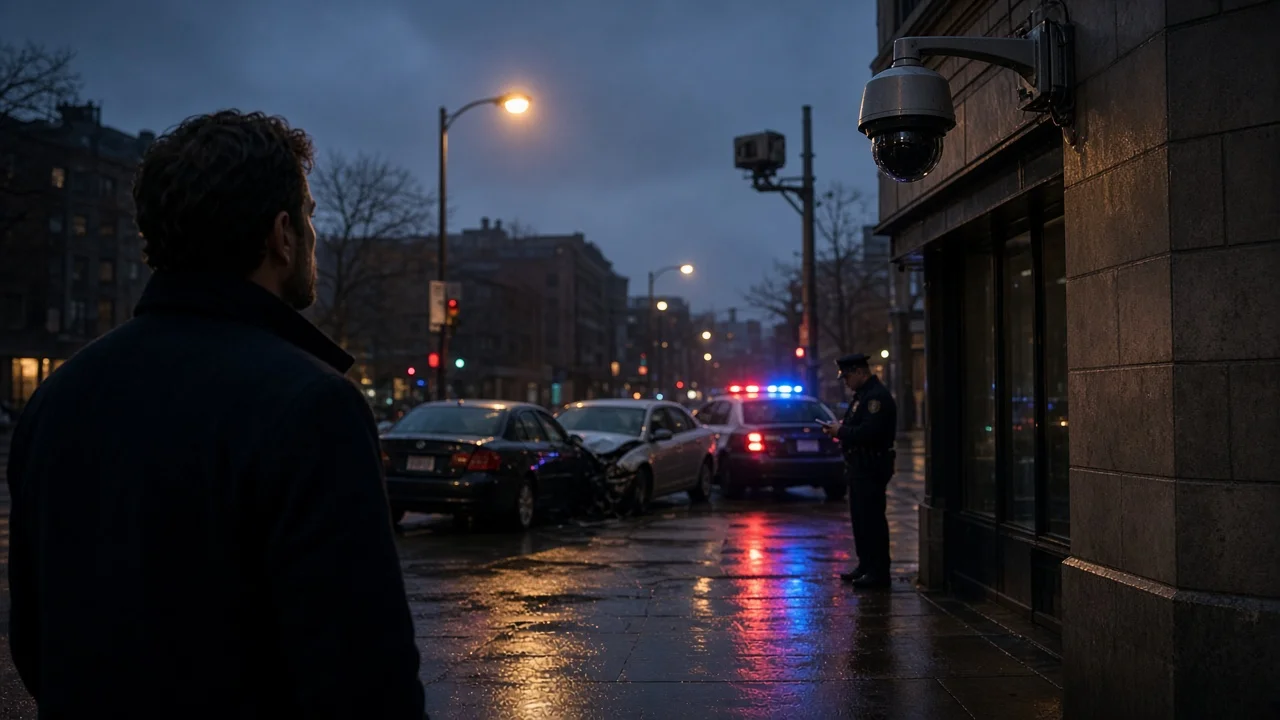
To get CCTV footage of a car accident, find out who owns the camera that may have captured it. Contact that owner as soon as possible with the exact location, date and time window. Ask in writing that the recording be preserved, and then ask for a copy. CCTV (closed-circuit television) means any camera system that records to private storage rather than broadcasting publicly. Examples include store security cameras, parking lot systems, residential doorbell cameras and some government traffic or transit cameras.
Who owns the camera changes the answer. A private business or homeowner is generally not obligated to give footage to a member of the public, so they may release it voluntarily, release it only to police or an insurer, or refuse. If they refuse, an attorney can usually compel production with a subpoena once a lawsuit or claim is under way. Cameras run by a government agency are usually requested through a public records request under that state's public records law, or under the federal Freedom of Information Act for federal agencies. Speed matters in every case, because many systems overwrite older recordings automatically, and how long footage is kept depends entirely on the owner and system.
This guide describes general practice in the United States. Rules on access, fees, response times and exemptions vary by state, city and agency, and nothing here is legal advice. If you are injured, facing a disputed claim or being sued, talk to a lawyer licensed in the state where the crash happened.
Who might have recorded the crash
Businesses facing the road or intersection, such as gas stations, convenience stores, banks and restaurants; Parking lot and garage operators, including shopping centers and apartment complexes; Homeowners with doorbell or exterior security cameras; City, county or state traffic cameras, including red-light and intersection monitoring cameras; Public transit agencies, whose buses and stations may carry cameras; Schools and other public buildings near the scene; Other drivers with dashcams. These are not CCTV in the strict sense, but they are often the most direct record and can be requested the same way, by asking the owner.
Step-by-step: requesting the footage
1) Write down the facts the camera owner will need: the exact location (cross streets or nearest landmark), the date, and a time window that starts a few minutes before the crash and ends a few minutes after it. Note the vehicles involved by color, make and model. 2) Return to the scene, or check street-level imagery, and list every camera that faces the area. Photograph the cameras and the buildings they are mounted on so you can identify the owners later. 3) Contact each private owner promptly, ideally in person or by phone first, and ask for the manager or whoever controls the security system. Ask whether a camera covered the location and whether the footage still exists. 4) Follow up in writing the same day with a preservation request asking the owner not to delete or overwrite the recording. Keep a copy and note who received it and when. 5) Give the police report number to the investigating officer and tell them which cameras you identified. Police can often request or collect footage directly, and some owners will release footage only to law enforcement. 6) Tell your insurer, and the other driver's insurer if you are filing a claim against them, which cameras may have footage. Adjusters can request it as part of their investigation. 7) For government cameras, submit a public records request to the agency that operates the camera, such as the city transportation department, state department of transportation or transit authority. Ask whether the camera records at all, because some traffic cameras may be live-view only and keep no stored video. 8) If an owner refuses or does not respond, and the footage matters to an injury claim or lawsuit, ask an attorney about sending a formal preservation letter and issuing a subpoena. 9) When you receive footage, check it using the steps in the verification section below before you rely on it.
What to include in a written request
Keep the request short and specific so the owner can find the right clip quickly. The template below can be adapted for a business, homeowner or agency. Fill in the bracketed parts, and remove anything that does not apply.
Subject: Request to preserve and obtain video of vehicle collision; To: [Business or agency name / manager]; On [date], a vehicle collision occurred at [location / cross streets]; at approximately [time]. Your camera at [camera location] may have; recorded it. I am requesting that you: 1) Preserve all video from [start time] to [end time] on [date]; from any camera covering [location], and not delete or; overwrite it. 2) Provide a copy of that video in its original format. Police report number: [number, if available]; Insurance claim number: [number, if available]; Vehicles involved: [color, make, model]; Please tell me how and when a copy can be provided, and whether; there is any fee. Name: [your name]; Contact: [phone number]; Date of request: [date]
Private cameras compared with public cameras
Camera owner | Usual way to request | Can they refuse? | Who else can request it; Private business or homeowner | Direct, polite request followed by a written preservation request | Generally yes, unless legally compelled | Police, insurers, and attorneys by subpoena in litigation; City, county or state agency | Public records request under that state's law | They may withhold records under exemptions in the law, which can include records tied to active investigations | Police, insurers, attorneys; Federal agency | Freedom of Information Act request | They may withhold records under statutory exemptions | Police, insurers, attorneys; Transit authority | Records request or the agency's own video request process | Depends on the agency's rules and state law | Police, insurers, attorneys
If the owner says no or the footage is gone
A refusal from a private owner is common and is not necessarily the end of the matter. Ask whether they would release it to the police or to an insurance adjuster, since some businesses have policies that allow only that. If the footage is important to an injury claim, an attorney can send a formal preservation letter and, once a case is filed, subpoena the recording. A preservation request sent before the footage is overwritten can matter later, because it puts the owner on notice that the video is evidence.
If the recording has already been overwritten, it usually cannot be recovered through an ordinary request. In that case, the remaining evidence is the police report, witness statements, scene and vehicle photographs, dashcam footage from anyone involved, and vehicle data such as an event data recorder, the module in many modern vehicles that can log speed and braking around a crash. Whether a specific vehicle has one, and what it records, depends on its make, model year and equipment.
How to verify the footage you receive
Confirm that the clip shows the correct location and the vehicles involved. Check that the time window covers the moments before, during and after the impact, not just the aftermath. Compare the on-screen timestamp with the known crash time. Camera clocks can be wrong, so ask the owner whether the system clock is accurate or offset. Ask for the original file format rather than a phone recording of a monitor, which loses detail and can be challenged. Record who provided the file, when, and by what method, so you can show how you obtained it. Keep the original copy unedited and work only from duplicates. Do not trim, enhance or annotate the original. Share a copy with your insurer, the investigating officer, or your attorney as appropriate.
What this guide cannot tell you
No verified figures were available for how long particular camera systems keep recordings, what agencies charge for copies, how quickly they must respond to records requests, or whom to contact in a specific city or state. These details vary by owner, agency and jurisdiction. Check them directly with the camera owner, the agency's records office, or a local attorney rather than assuming a standard timeframe.