Is Dash Cam Footage a Public Record? What US Drivers Should Know
The short answer
In the United States, video recorded by a private driver's dash cam is generally not a public record. Public records laws, such as the federal Freedom of Information Act and each state's open records or sunshine law, apply to records held by government agencies, not to files stored on a private person's camera, phone or cloud account. Nobody can use a public records request to obtain footage that exists only in your possession.
The important qualification is what happens after you share it. Once footage is handed to a police department or another government body, a copy may become part of that agency's records and can fall under public records rules, subject to exemptions. Footage filed as evidence in a court case can also become part of the court record. Footage recorded by police vehicle cameras is a separate category altogether and is often treated as a government record from the start.
What "public record" actually means
A public record is information created, received or kept by a government entity in the course of its official business. The public can request access to these records under open records laws, although agencies may withhold or redact material that falls under specific exemptions. The definition depends on who holds the record, not on where the video was filmed. Recording a public road does not turn the recording itself into a public record.
Your own dash cam footage
Footage from a camera you own and operate is your private property. In general, you decide whether to keep it, delete it or share it, and with whom. There is no general obligation to publish it or to hand it to the public on request.
That control has limits once a crash, claim or lawsuit is involved. Being private is not the same as being beyond legal reach, as the sections below explain.
When private footage can become accessible to others
Submitting it to police: A copy given to law enforcement becomes part of their file. Whether the public can later obtain it depends on the state's records law and on exemptions, which commonly cover active investigations, personal privacy and certain victim or witness information. Filing it in court: Evidence entered in a civil or criminal case may become part of the court record, which is often open to the public unless a judge seals it or limits access. Sharing it with an insurer: Insurance companies are private businesses, so footage sent to an insurer does not become a public record. It does become part of the claim file and may be shared with the other party's insurer or used in litigation. Posting it online: Uploading footage to social media or a video site makes it publicly viewable by your own choice. That is not a public record in the legal sense, but it can be copied, shared and cited by anyone, and it can be difficult to retract.
Subpoenas and discovery are not the same as public records
Even though your footage is private, you can be legally required to produce it. In a lawsuit, the opposing side can request relevant evidence through discovery, and a court can issue a subpoena or order requiring you to hand it over. Law enforcement may also seek footage through a warrant or other legal process in a criminal investigation.
This kind of access goes to specific parties in a specific legal matter, not to the general public. Deleting footage you know is relevant to a crash, claim or lawsuit can create serious problems; courts treat the destruction of relevant evidence, often called spoliation, as misconduct and may penalize the party responsible.
Police dash cam footage is a different question
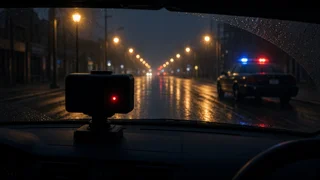
Many people searching this topic are actually asking about cameras mounted in patrol cars. Because a government agency creates and keeps that video, it generally counts as a government record. Access, however, varies considerably by state and sometimes by local policy. Some states have specific statutes governing police vehicle and body camera video, while others handle it under their general records law. Requests may be denied or delayed while an investigation is open, and released video may be redacted to protect the privacy of people who appear in it.
If you were involved in an incident recorded by a police vehicle, the usual route is a records request to the agency involved or a request made through your attorney or insurer as part of a claim or case.
Comparison at a glance
Situation | Generally a public record? | Who can typically access it; Footage kept only on your own dash cam or account | No | You, and others only if you share it or are legally compelled; Copy given to a police department | Possibly, depending on state law and exemptions | The agency; the public via records request if not exempt; Footage entered as court evidence | Often part of the court record unless sealed | Parties to the case; often the public; Footage sent to an insurer | No | The insurer and parties to the claim or related litigation; Footage you post online | Not legally a public record, but publicly viewable | Anyone who can see the post; Police vehicle camera footage | Generally yes, as a government record, subject to exemptions | The agency; the public via records request, varying by state
A note on audio
Many dash cams record sound as well as video. Recording video in public places is generally lawful, but audio recording of conversations is governed by state wiretapping and eavesdropping laws. Some states require only one party to a conversation to consent, while others require consent from everyone involved. If your camera captures conversations inside the vehicle with passengers, or with someone at your window, the rules of the state where you are driving matter. This affects whether the recording was lawfully made and, in some cases, how it can be used, separate from the public records question.
Practical steps after a collision
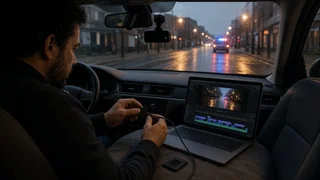
Save the relevant clip right away. Many dash cams loop-record and overwrite older files, and most have a way to lock or protect a clip. Make a copy and store it somewhere separate from the camera's memory card, keeping the original file unedited. Note the date, time and location so the clip is easy to match to the incident. Decide deliberately whom to share it with. Giving it to police or your insurer can help establish what happened, but expect that it will become part of their files. Think carefully before posting it publicly, especially while a claim or case is unresolved, since public posts can be used by the other side and cannot be fully withdrawn. If a lawsuit is possible or underway, keep the footage and ask your attorney how and when to share it.
Bottom line
Your personal dash cam footage is generally private and is not a public record simply because it shows a public road. It can become accessible to others when you give it to a government agency, when it enters a court record, when you post it yourself, or when a court or investigator legally compels it. Police vehicle footage follows separate rules as a government record. Because records laws and recording consent rules vary by state, anyone dealing with a specific crash, claim or case should check the rules where they live or consult an attorney.