Patch a small hole in a car body
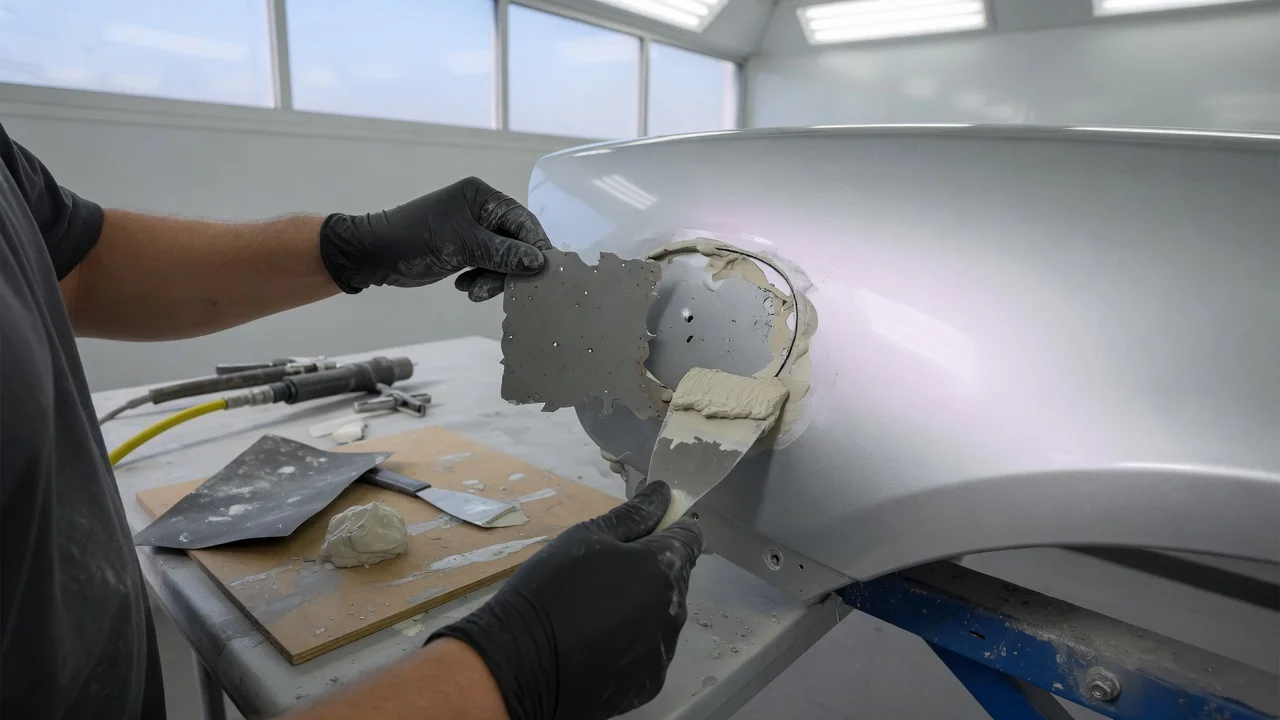
What the repair actually is
A small hole in an outer steel body panel can usually be patched at home if the metal around it is still sound. Clean the area to bare metal, stop any rust, back the opening with mesh or a metal patch, then fill, prime and paint so water cannot reach the repair from either side.
The method changes with the cause and the panel. A puncture in otherwise healthy steel is a surface repair. A rust hole is a corrosion problem: the weak metal has to come out, or the patch will fail from behind. Holes in structural members, large rust-through, aluminium skins and plastic bumpers sit outside a basic filler patch and need different materials or a body shop.
Leave factory drain holes in doors, sills and tailgates open. Those openings are designed to let water out of the panel; sealing them traps moisture and starts rust from the inside.
Confirm the panel can take a patch
Press around the hole with a gloved finger or a plastic scraper. Firm, clean steel can support filler. Metal that flexes, flakes or crumbles has to be cut back to solid material, then closed with a metal patch or a replacement panel. Probe the inner face if you can reach it; rust often starts in the cavity and only shows as a small hole on the outside.
Identify the material: most older outer skins are steel; many newer closures use aluminium or plastic and need matching repair products. Decide whether the hole is a puncture, a stone chip that went through, or rust-through from the inner face. Check that the hole is in a cosmetic outer panel such as a wing, door skin, bonnet or boot lid. Treat sills, A-pillars, floor pans and chassis sections as structural work when the metal is load-bearing or safety-related. Look for bubbling paint, soft edges and moisture staining, which mean corrosion is still active.
Stop driving the car for assessment if the hole is in a load-bearing area, if the panel is part of a crumple zone, or if rust has opened a path into the cabin floor. Those conditions need professional diagnosis and, where required, welded replacement rather than filler.
Match the patch to the hole
Body filler needs a stable backing. A pinhole in sound steel can take a thin skim once rust is gone. Anything you can see daylight through usually needs aluminium mesh, fibreglass mat, or a piece of sheet steel so the filler has something to key to and cannot sag or crack.
Hole and panel condition Typical repair; Pinhole or tiny pit in firm steel Remove rust, apply a rust converter if any stain remains, then a thin layer of polyester body filler. Small opening in a sound outer skin Clean to bare metal, bed aluminium repair mesh or fibreglass into the opening, then fill and shape. Hole with rusted, thin or flaking edges Cut back to solid metal, treat the inner face, then close with a metal patch before filling. Aluminium outer panel Use aluminium-compatible fillers and joining methods; mixed-metal welding belongs in a specialist shop. Plastic bumper or cladding Use a plastic bumper repair kit or plastic weld; polyester body filler on unprepared plastic peels.
Those pairings are workshop practice, not a single manufacturer specification. Panel thickness, coating and access vary by model year, generation and market, so the same hole on two cars can need different backing.
Prepare the metal
Mask glass, trim and openings. Remove loose paint and rust with abrasive discs or paper until you reach bright, firm metal well past the damaged edge. Feather the surrounding paint so the later filler and primer can blend. If the inner face is reachable, clean and treat that side too; an outside-only repair leaves the cause in place.
Cut away metal that is perforated or paper-thin until the remaining edge is solid. Knock proud edges down so the patch can sit flush with the original skin. Degrease with a wax and grease remover after sanding so filler will bond. Treat remaining rust staining with a converter only on firmly attached metal; converters do not restore crumbling steel. On the inner face, dry the cavity and plan to coat it with cavity wax or a rust-inhibiting primer after the outer repair.
Back the hole, then fill
For a small opening in steel, cut aluminium body-repair mesh or fibreglass slightly larger than the hole. Bed it into a thin mix of filler or resin so it sits just below the finished surface. For a cut-out rust hole, shape a steel patch to the opening, fix it by welding where you have the skill and equipment, or by a panel-bond adhesive rated for automotive skins, then grind the joints flush.
Mix polyester body filler in small batches and press it into the backed hole, slightly proud of the surrounding panel. Let it cure fully, then shape with a body file and progressively finer abrasives until the contour matches the original panel. Apply a thin glaze or stopper over pinholes and sand scratches, then wipe clean.
Keep filler layers thin. Thick, unsupported filler shrinks, cracks and holds water. Filler is a surfacer over a mechanical repair; it is not a substitute for missing metal.
Prime, paint and keep water out
Once the shape is right, apply an etch or epoxy primer over bare metal so the next coats can bond and the steel is sealed. Build primer, sand it smooth, then apply colour and a clear coat matched to the vehicle’s paint code. Blend into the surrounding panel rather than stopping on a hard edge, which shows as a halo.
Seal the inner face after the outer paint is done. Cavity wax, a rust-inhibiting underbody coating, or both, keep moisture off the back of the patch. Recheck the repair after rain and after winter: blistering, rust bleed or a soft spot means corrosion is still active and the metal needs further cutting or replacement.
When to hand the job to a body shop
A home patch is a reasonable next action on a small, well-supported hole in a steel cosmetic panel after rust is fully removed. Book professional bodywork when the hole is structural, the surrounding metal is weak over a wide area, the panel is aluminium and needs welding, the finish has to match a large visible surface to a high standard, or you cannot reach the inner face to stop the rust. Those limits are about durability and safety; filler over hidden corrosion will open again.