How to Fix a Small Hole in a Car Body: Causes, Repair Methods and When to Get Help
You can usually fix a small hole in a car body at home if three conditions hold. The hole is in a non-structural outer panel, the metal around it is solid, and you remove all corrosion before filling it. The right repair method depends on what caused the hole, the substrate material and where the hole is. Rust that has eaten through from the inside, a puncture from an impact, and a crack in a plastic bumper each need a different approach. A hole in a structural area is a different job and should be inspected by a body shop. Structural areas include frame rails, rocker reinforcements, strut towers, and floor pans near seat or suspension mounts.
The Short Answer
Most DIY repairs of a small hole in a steel outer panel follow the same sequence:
Grind away paint and rust until you reach clean, bright metal. Treat the edges with a rust converter, or with an etching or epoxy primer. Bridge the hole with fiberglass mesh, fiberglass-reinforced filler or a small metal patch, applied from behind or on the surface. Finish with a thin skim of body filler, then sand, prime and paint.
A patch is only as durable as the surface preparation and corrosion protection underneath it. Filler spread over active rust will usually bubble and fail.
Two qualifications change this answer. First, the metal around the hole may be thin, flaky, or crumble when you press on it. If so, the damage is bigger than it looks, and cutting out the section and welding in a patch panel is more reliable than filler. Second, the panel may be plastic, aluminum or composite rather than steel. In that case, use products rated for that material. Fillers and primers intended for steel may not bond properly to it.
First, Identify What Caused the Hole
Knowing the cause tells you how far the damage extends and which repair will hold. Check the following before you buy materials.
Rust-through from the inside
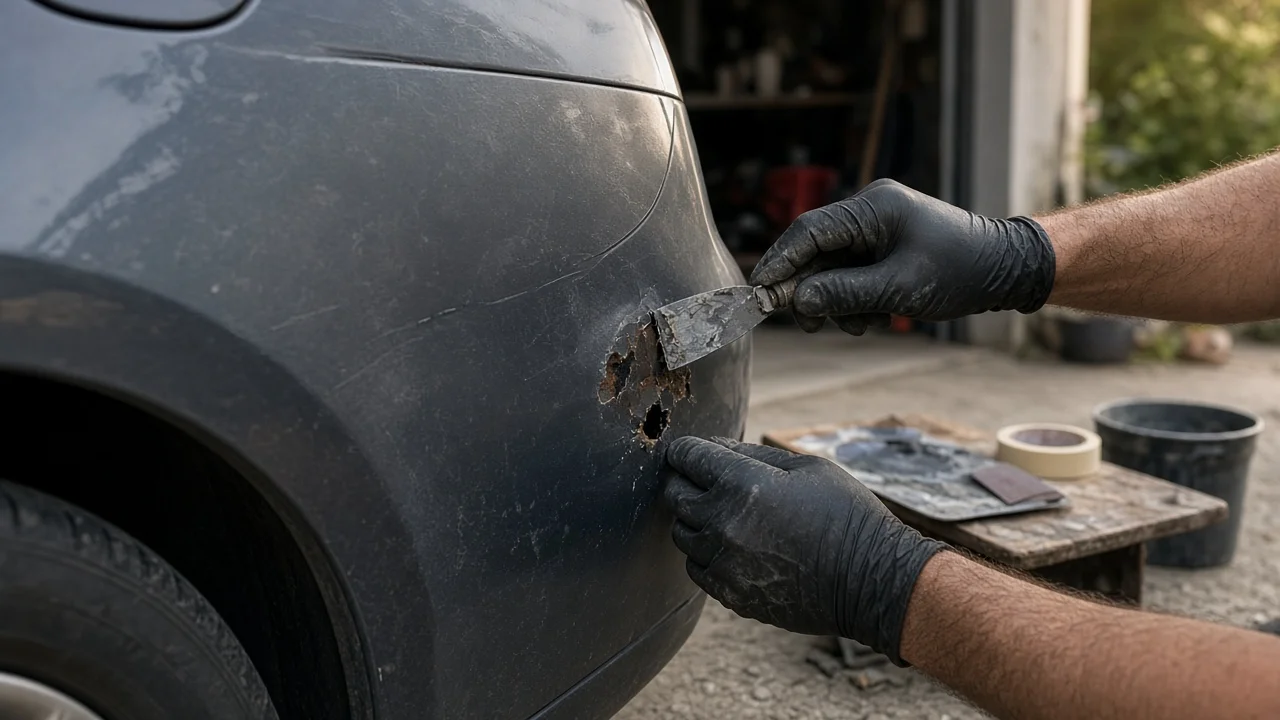
Rust-through usually shows bubbling or blistered paint around the hole, a brown or orange crust on the edges, and thin, jagged metal. These holes often appear low on doors, quarter panels, wheel arches and rocker panels, where water and road salt collect. If you can reach the back of the panel, inspect it there. Possible access points are an inner door opening, the trunk trim or the wheel well liner. Rust that starts on the inside usually covers a wider area than the visible hole, so expect to cut back further than you planned.
Impact or puncture
A clean or pushed-in hole with bright metal at the edges and no blistering points to a stone strike, a collision or a sharp object. The surrounding metal is usually sound, which makes a filler or small patch repair practical. Check panel alignment nearby as well. If the gaps to an adjacent door, the hood or a fender have changed, the impact may have bent supporting structure behind the outer skin.
Failed previous repair
Look for a different texture, a visible edge or cracked paint around the hole. Any of these often means the hole has reopened through old filler. A magnet sticks weakly or not at all over thick filler. A light fridge magnet is therefore a quick way to map how much of the panel is filler and how much is steel. Old repairs usually need to be ground out completely, because new material bonded to failing filler inherits its problems.
Holes in plastic bumpers and trim
Most modern bumper covers are plastic, but the type of plastic varies by vehicle and model year. Many covers have a material code molded into the back. It is worth finding, because some repair kits and adhesives are made for specific plastic types. A magnet will not stick to a plastic panel at all.
When to Stop and Get a Professional Inspection
Have the vehicle inspected before attempting a DIY patch if any of the following apply:
The hole is in a frame rail, a subframe mount, a suspension or seat-belt mounting area, a strut tower, or a floor pan section that supports the seats. Pressing around the hole reveals soft, crumbling or perforated metal over a wide area. You smell exhaust fumes inside the cabin, or road spray can reach wiring or the passenger compartment through the hole. Panel gaps, door closing or hood alignment changed after an impact. The vehicle must pass a safety or rust inspection where you live, and the inspector may reject cosmetic filler over structural corrosion. The panel is aluminum or carbon composite and you do not have materials rated for it.
In these cases the repair usually means cutting out the damaged section and welding in new metal, or replacing the panel. A cosmetic patch could hide a weakness that matters in a crash.
Choosing a Repair Method
Body filler alone
Standard polyester body filler is meant for shaping shallow dents and smoothing surfaces. On its own it has little strength across an open gap. Use it for pinholes and as the final skim coat over a stronger base, not to bridge a hole by itself.
Fiberglass mesh or fiberglass-reinforced filler
Fiberglass is a common choice for small holes in steel panels. You can use fiberglass cloth or mesh saturated with resin, or a filler with fiberglass strands mixed in. Either gives the repair enough strength to span the gap, and regular filler then goes on top for shaping. Fiberglass resists water, while some ordinary fillers can absorb moisture. A fiberglass base layer therefore also helps keep water away from the metal.
Metal patch with panel adhesive
Cut a piece of steel slightly larger than the hole and bond it behind or over the opening with a structural panel adhesive made for automotive metal. This avoids welding and gives a firmer base than mesh. Bond strength depends heavily on preparation, so follow the adhesive maker's directions for surface preparation and clamping.
Welded patch
Cutting out the damaged metal and welding in a new piece is the most durable fix for rust holes. It is also the expected method for anything structural. The job needs welding equipment and skill. Thin body steel warps easily under heat, so the work is normally done in short tacks. Nearby wiring, fuel lines and interior trim must be protected from heat and sparks.
Plastic repair for bumpers
Holes in plastic bumper covers are typically repaired in one of two ways. The first is a two-part plastic repair adhesive, reinforced with mesh from the back. The second is plastic welding. Either way, apply an adhesion promoter made for plastics before priming, because many standard primers and fillers do not stick reliably to bare plastic. Flexible bumpers may also need a flexible filler or additive so the repair does not crack.
Step-by-Step: Patching a Small Hole in a Steel Panel
These steps cover the common DIY approach for a small, non-structural hole using fiberglass reinforcement and filler. Mixing ratios, working times and recoat intervals differ between brands. Always follow the directions printed on the products you buy.
Clean the area with soap and water, then wipe it with wax and grease remover so contaminants are not ground into the metal. Mask the surrounding panels, glass and trim. Grind or sand away paint and rust well beyond the visible damage until you reach clean, bright metal on all sides. Cut away any metal too thin or weak to hold the repair. If the hole has a pushed-in lip, tap it slightly below the surrounding surface so the filler has room to sit flush. Treat any remaining pitting with a rust converter, or apply an epoxy or etching primer to bare steel. Follow the product directions. This is the main corrosion protection step. Scuff the surrounding area so the repair materials have a surface to grip. Apply fiberglass mesh with resin, or fiberglass-reinforced filler, across the hole. Back it from behind if you can reach the inside of the panel. Let it cure fully. Rough-sand the reinforcement layer to shape, keeping it below the panel surface. Apply standard body filler in thin layers, pressing the first pass on firmly to remove air pockets. Build it up gradually rather than in one thick coat. Sand the filler with progressively finer abrasives on a sanding block so the contour matches the panel. Check the shape by running a flat hand across the area, or by looking along it under low-angle light. Fill any remaining pinholes with glazing or spot putty, then sand smooth. Apply primer-surfacer over the repair and sand it smooth once it has cured. Apply base color and clear coat, blending into the surrounding paint.
Surface Preparation and Coating Compatibility
Most failed patch repairs trace back to poor preparation rather than to the patch itself. Filler bonds poorly to rust, old flaking paint, wax and silicone residues, and smooth glossy surfaces. A clean, dry, properly scuffed surface is essential.
Coating compatibility matters at every layer. Some fillers are designed to go over bare metal, while others perform best over epoxy primer. Some etching primers should not have filler applied directly on top. Some aerosol paints can lift or wrinkle when sprayed over an incompatible primer or fresh filler. Check each product's directions to confirm what it can go over and what can go over it. Using products from one manufacturer's system reduces the chance of a reaction.
Protecting the Repair Against Future Rust
A hole caused by rust will often return if the conditions that caused it remain. Once the outer repair is finished, take these steps to reduce the risk:
Treat the back of the panel where you can reach it, for example with a cavity wax or rust-inhibiting spray inside doors, rockers and quarter panels. Make sure the drain holes at the bottom of doors and rockers are clear so water can escape. In winter, regularly wash road salt off the underside and lower panels. Repair stone chips promptly so bare metal does not stay exposed.
Matching Paint and Setting Expectations
Many vehicles have a paint code on a label, which may be in the door jamb, under the hood or in the trunk, depending on the manufacturer. The code helps you order matching touch-up or aerosol paint. Even with the correct code, aged or sun-faded paint may not match fresh paint exactly. Blending the new color into the surrounding area and finishing with clear coat helps hide the repair. An aerosol repair can look good from a few steps away, but a professionally sprayed and blended finish is usually harder to spot.
DIY or Body Shop?
A DIY patch makes sense for a small hole in a cosmetic outer panel with solid metal around it, especially on an older vehicle where a perfect finish is not the priority. Choose a body shop if the damage is structural, the rust is widespread, the panel is aluminum or composite, the vehicle must pass an inspection, or you want an invisible paint match. If you are unsure whether the area is structural, have it inspected before you start. An inspection costs less than redoing a repair that hid a deeper problem.