What Is a Patch Panel in Classic Car Repair?
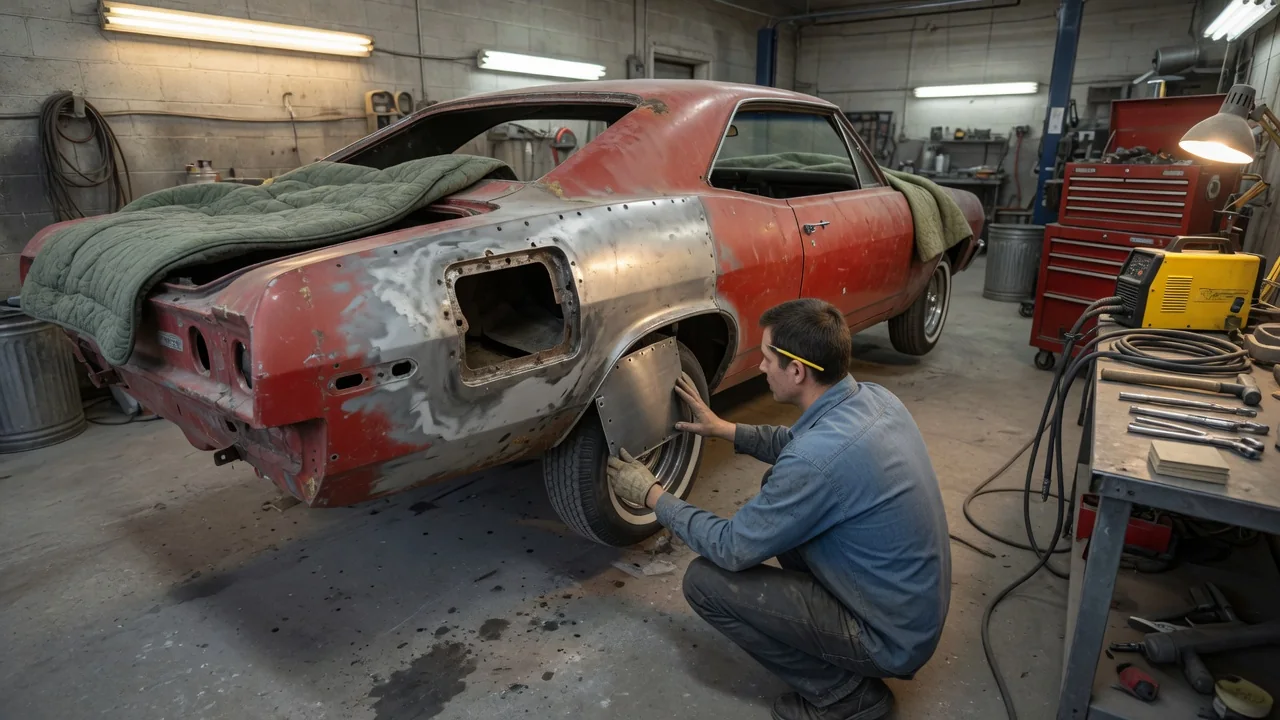
A patch panel is a section of new or salvaged sheet metal shaped to replace only the damaged part of a body panel, not the entire panel. In classic car repair, patch panels are commonly used for rust-prone areas such as lower quarter panels, rocker sections, wheel arches, door bottoms and floor pans. Understanding a classic car patch panel comes down to three tasks: defining the cutout area, achieving a precise metal fit, and welding the repair so it lasts.
Cutout area: deciding how much original metal to remove
The cutout area is the section of original metal that is removed to make room for the patch. The guiding principle is to cut back into sound, clean steel rather than stopping at the visible edge of the damage. Rust often spreads beneath paint and filler, and corrosion on the inner side of a panel may extend further than the outer surface suggests. Stripping paint around the damage, inspecting from behind where access allows, and probing suspect areas helps reveal how far the deterioration actually goes. Welding new metal to thin, pitted or contaminated steel tends to cause burn-through, porosity and a repair that fails early.
Where the cut line falls also matters. Many restorers place seams on flat or gently curved areas that are easier to weld and finish, and away from body lines, sharp creases or edges that are difficult to reproduce. Before cutting, it is common to mark the line using the patch itself as a template, check what lies behind the panel, such as wiring, fuel lines, brake lines or interior trim, and confirm whether the panel contributes to the strength of the body. On unibody cars in particular, removing large sections can affect alignment, so bracing the body or measuring reference points before cutting is a prudent step. Cutting tools range from cutoff wheels and air saws to nibblers and spot weld drills, chosen to remove metal without damaging the surrounding structure.
Metal fit: shaping and trimming the patch to match
A patch panel only produces a good repair if it fits the car closely. Reproduction patches vary in how accurately they match original contours, and even a well-made panel usually needs trimming and adjustment. The usual approach is to trial-fit the patch repeatedly, holding it in place with clamps, magnets or temporary fasteners such as clecos, and checking how its shape, crowns and body lines line up with the surrounding metal. Small differences can often be corrected by hand with hammers, dollies and shaping tools before any welding begins.
The joint type determines how closely the edges must meet. A butt joint, where the patch and the original panel meet edge to edge, is widely preferred for exterior panels because it keeps metal thickness consistent and leaves no overlap to trap moisture. It requires a tight, even gap along the whole seam, which is why many restorers cut the patch slightly oversized and trim it gradually. A lap or flanged joint, often formed with a joggle or flanging tool so one edge sits recessed under the other, is more forgiving to fit and is sometimes used on floors or hidden areas, but the overlap creates a pocket that needs careful sealing against corrosion.
Material compatibility is part of fit as well. The patch should be close to the thickness of the original steel so it welds evenly and finishes flush. A panel that is noticeably thinner or thicker than the surrounding metal makes heat control harder and may leave a visible step after finishing. Edges should be cleaned of coatings and mill scale where the weld will go, while the rest of the panel benefits from protection against surface rust until it is installed.
Welding: joining the patch without warping the panel
Welding a patch panel is largely a matter of controlling heat. Thin automotive sheet metal expands, shrinks and distorts as it heats and cools, and a long continuous bead can warp a flat panel badly enough to require extensive straightening. To limit this, restorers typically begin with tack welds spaced along the seam to lock the panel in position, then fill the gaps with short welds spread around the panel rather than concentrated in one area, letting each section cool before returning to it.
MIG welding is widely used for patch panel work because it is accessible and manageable on thin steel. TIG welding offers finer heat control and a softer weld that can be easier to shape, but it demands more skill and time. Where the factory used spot welds along flanges, many restorers replicate them with plug welds through drilled holes, or with resistance spot welding where equipment and access allow. Whatever method is used, welds on visible panels are generally ground flush with care, since overheating the metal while grinding or thinning it too much weakens the seam.
Finishing and protection complete the welding stage. After grinding, the seam may need light hammer-and-dolly work to relieve distortion before a thin skim of filler, if any, and primer. The back side of the repair deserves equal attention: weld-through primer on overlapping surfaces, seam sealer on lap joints, and rust-preventive coatings or cavity wax inside enclosed sections help keep the new seam from becoming the next corrosion point.
Practical implications and limits
In practical terms, a patch panel is a way to keep as much original metal on the car as possible while removing only what has failed. That makes it attractive to owners who value originality or want to avoid replacing a full quarter panel, floor or door shell. The trade-off is labor: a patch repair can involve a lot of cutting, fitting and finishing relative to the area being repaired, and the result depends heavily on the skill of the person doing the work. Outcomes also vary by vehicle, since body construction, panel availability and the shape of the damaged area differ between makes, models and years.
There are limits to what a patch can sensibly fix. If corrosion has spread across most of a panel, or extends into frame rails, sills, pillars or other load-bearing structure, a small patch may simply hide the problem. Structural repairs carry safety implications and may call for a full panel, a professional assessment or repair guidance specific to the vehicle. Patches also do not address the conditions that caused the rust in the first place, such as blocked drain holes, trapped moisture or failed seals, so correcting those is part of making the repair last. Before buying a reproduction patch, it is worth comparing its shape against the car and considering whether a larger section or a different repair approach would give a cleaner, more durable result.