Monro brake service
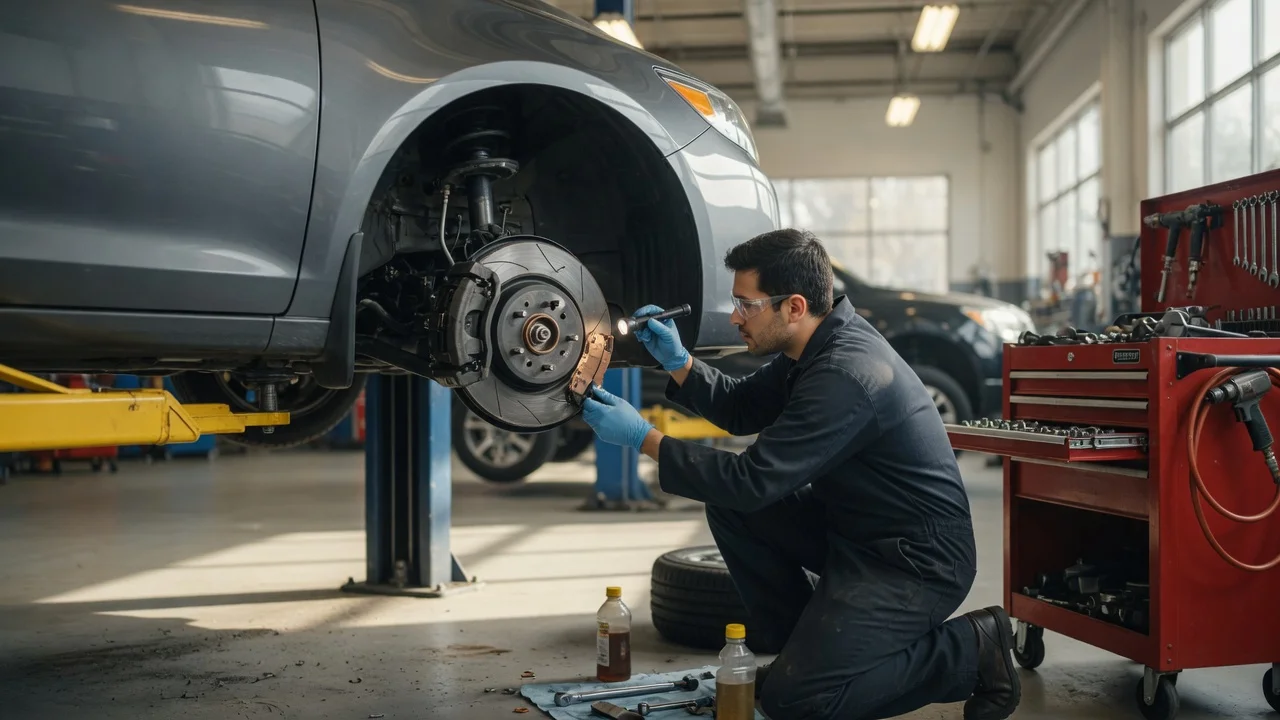
What Monro brake service is
Monro brake service is brake inspection and repair performed at Monro, a United States automotive service chain long associated with undercar work. The phrase people search as “Monro muffler brake” usually names that chain and its two signature jobs—brakes and exhaust—rather than a single factory part called a Monro muffler or a Monro brake.
The subject of this guide is shop service at Monro locations, not a vehicle-specific OEM procedure. What a given store can do, which parts it installs, how it prices labor, and what warranty it offers are set locally and are not documented in the material used for this article. Treat any nationwide claim as unverified until the store you would use confirms it in writing.
Scope of the work
In ordinary automotive use, a brake visit covers the friction and hydraulic parts that stop the vehicle: pads or shoes, rotors or drums, calipers or wheel cylinders, hardware, hoses, and brake fluid. Exhaust work at the same kind of shop covers mufflers, pipes, catalytic converters where regulations allow, and related hangers and clamps. A customer who asks for “muffler and brakes” is typically requesting both undercar systems in one appointment.
Monro has operated under names that include Monro Muffler Brake and Monro Auto Service. Local signs, websites, and invoices may use different wording. That branding change does not by itself tell you which brake or exhaust jobs a particular center still performs.
What a typical brake appointment includes
The steps below are standard industry practice for a passenger-car brake inspection. They are not a published Monro national package, and a store may add, skip, or bundle items.
Road test for noise, pull, pedal feel, and warning lights; Visual check of pads, rotors, calipers, hoses, lines, and the parking brake; Measurement of remaining pad material and rotor thickness or runout where the shop has the tools; Recommendation for pads, rotors, hardware, fluid service, or further diagnosis; Written estimate before parts are installed; Replacement, torque of fasteners to spec, and a post-repair check or road test
A muffler or exhaust request is usually a separate inspection: leaks, rust-through, broken hangers, and damage near heat shields or the catalytic converter. Combining both jobs can save a second lift, but each system should still appear as its own line on the estimate.
Qualifications that change the answer
Location matters. Not every center stocks the same rotors, pad compounds, or exhaust sections, and some vehicles need specialty tools the nearest shop may not have.
The vehicle matters. Hybrid and battery-electric models use regenerative braking, so pad wear can look light while the hydraulic system still needs fluid service. Trucks, performance trims, and cars with electronic parking brakes use different calipers, sensors, and procedures than a basic compact sedan. Brake rotor diameter, pad shape, and whether the parking brake is in the caliper or a drum-in-hat design all depend on model year, generation, powertrain, and trim.
Market and regulation matter. Exhaust replacement, especially anything that affects emissions equipment, is constrained by local law. A muffler job that is routine in one state can be restricted in another.
Parts, brands, and what “Monro” does not mean
Monro in this context is the service provider. Aftermarket pads, rotors, and mufflers installed there are typically house-brand or supplier parts chosen by the shop unless you specify a product. That is different from an original-equipment brake or exhaust assembly from the vehicle maker. If matching OEM feel, noise, or warranty paperwork is important, ask which brand and part numbers will go on the car before you approve the job.
No pad thickness, rotor discard specification, fluid boiling point, or price figure is supplied here. Those values belong on the inspection sheet for your year, make, model, and axle.
How to judge a quote
A usable brake estimate names the axle (front, rear, or both), whether rotors are being replaced or machined, whether hardware and fluid are included, the parts brand, and labor. An exhaust estimate should name the section being replaced and whether hangers, gaskets, and clamps are in the price. Vague lines such as “brakes” or “muffler” without those details leave too much room for surprise charges.
Warning lights, a soft pedal, a pull to one side, grinding, or a burning smell after a short drive are reasons to treat the visit as safety-critical rather than routine maintenance. Those symptoms still need diagnosis; they do not by themselves prove that pads, rotors, or a muffler must all be replaced.
Gaps in the available evidence
This article does not have Monro’s current national service menu, labor rates, coupon terms, parts brands, warranty length, shop count, or hours. It also has no attributed test of Monro workmanship compared with dealers or other chains. Those items should be treated as unknown until the specific location documents them.
Next action
Give the year, make, model, engine, and trim to the Monro you would actually use and request a written inspection and estimate for the brakes, and for the exhaust if that is part of the job. Ask what parts will be installed, whether rotors are replaced or resurfaced, whether fluid and hardware are included, and what warranty covers parts and labor at that store. For a large repair, compare that estimate with another independent shop or the selling dealer so you can choose on documented scope and price rather than on the chain’s historic muffler-and-brake name alone.