Get brake repair service
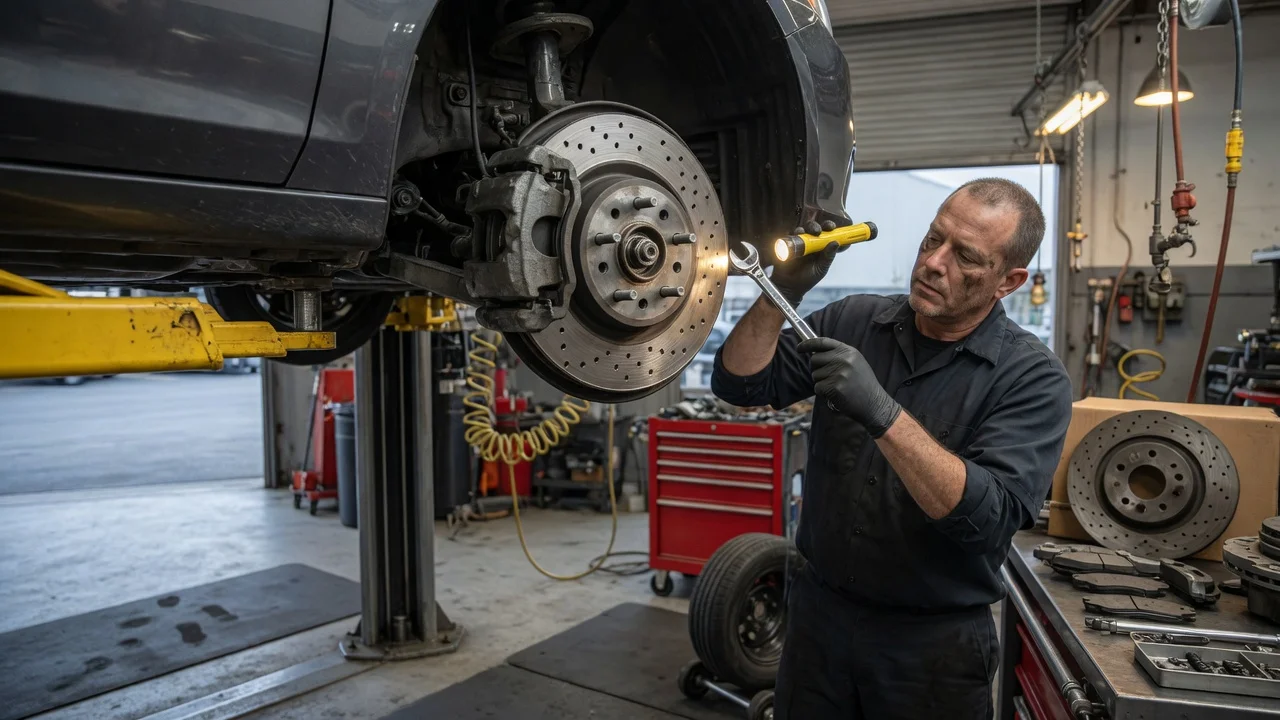
What brake repair service covers
Brake repair service is the inspection, adjustment, or replacement of parts in a vehicle's braking system so it can slow and stop reliably. A typical visit begins with an inspection. The technician then recommends work based on what is worn, damaged, leaking, or contaminated. You may not need every service listed below. What a vehicle actually needs depends on its design and condition, so the inspection result matters more than the name of the service package.
Components commonly inspected or serviced include:
Brake pads: friction material that clamps against a disc (rotor) on disc-brake systems. Rotors: the metal discs that pads press against. They may be resurfaced or replaced depending on wear and condition. Brake shoes and drums: the friction parts and housing used on drum-brake systems, often found on the rear axle of some vehicles. Calipers and wheel cylinders: hydraulic parts that push pads or shoes into contact. Brake hoses and lines: carry brake fluid under pressure to each wheel. Brake fluid: the hydraulic fluid that transmits pedal force. It can be flushed and replaced. Parking brake: mechanical or electronic, depending on the vehicle. Anti-lock braking system (ABS) components: sensors and control parts that prevent wheel lockup under hard braking.
How the scope changes by vehicle
Brake work is not identical across vehicles. Whether a car uses discs at all four wheels or drums at the rear changes which parts are serviced. On many vehicles with an electronic parking brake, the rear calipers must be retracted with a diagnostic tool before pads can be replaced. Hybrids and electric vehicles use regenerative braking, which slows the car partly through the electric motor. That can change how quickly friction parts wear and what the technician checks. These details vary by make, model year, generation, powertrain and market. The manufacturer's service information for your specific vehicle is the authority on procedures and specifications.
What to ask before approving repairs
A clear estimate should separate parts that need replacement now from parts that are only being monitored. These questions can help you understand a recommendation:
Which components were inspected, and what condition was each one in? Were pad or shoe thickness and rotor condition measured, and how do the results compare with the manufacturer's limits? Are the rotors being resurfaced or replaced, and why? Is a brake fluid replacement recommended based on condition, mileage, or the maintenance schedule? What parts are being installed, and what warranty covers parts and labor? Does the vehicle need any special procedure, such as electronic parking brake service or ABS system checks?
When not to drive the vehicle in
Sometimes brakes do not feel safe. Examples include a pedal that sinks toward the floor, a clear loss of stopping power, or a red brake warning light. In those cases, arranging a tow is generally safer than driving the car to a repair shop.
Information gaps
No evidence was supplied on repair costs, service intervals, wear limits, or model-specific procedures, so this guide does not state any. For those figures, check the owner's manual or manufacturer service information for your exact vehicle, and get a written estimate from the repair provider.