Discount Tire Installation: How to Arrange the Service
The Short Answer
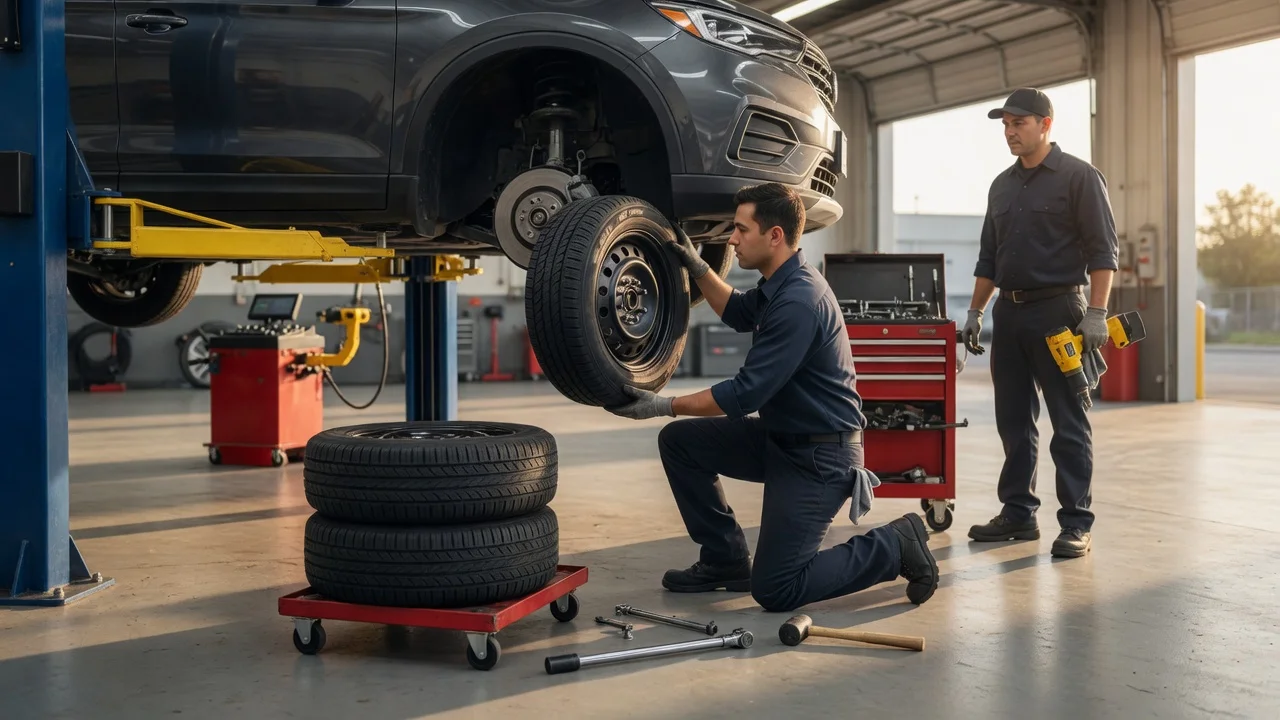
To have tires installed at Discount Tire, confirm the correct tire size for your vehicle, choose your tires, and book a time at a nearby store. The store's technicians then mount the tires on your wheels, balance them, reinstall the wheels, and set the pressure. Installation here means fitting the tire onto the wheel rim (mounting), adding small weights so the wheel spins smoothly (balancing), and bolting the wheel back onto the vehicle to the specified tightness (torque).
Several details can change what you pay and how the visit goes: whether you buy the tires from the store or bring your own, whether your vehicle has a tire pressure monitoring system (TPMS), whether you add services such as an alignment, and the policies of the specific location. This guide does not include current pricing, package contents, or store policies, so confirm those directly with Discount Tire before your appointment.
Before You Book
Gather this information so the store can match the right tires and plan the job:
Vehicle year, make, model and trim, since tire sizes can differ between trims of the same model. The tire size printed on the sidewall of your current tires and on the tire information placard, usually found on the driver's door jamb. If the two differ, ask the store which size is correct for your vehicle. Whether your vehicle has a TPMS warning light, which indicates sensors that may need servicing during the tire change. Whether your wheels use locking lug nuts, and where the key is stored. Whether you plan to buy tires from the store or bring tires purchased elsewhere.
If you intend to bring tires bought from another seller, ask the store in advance whether it installs them and on what terms. Policies on outside tires, fees and any warranty or road hazard coverage were not supplied for this guide and may vary.
Steps to Arrange the Installation
1) Confirm your tire size using the door jamb placard or owner's manual. Do not choose a different size, load rating or speed rating than your vehicle manufacturer specifies without professional advice. 2) Choose your tires through the store, by phone or in person, and confirm they are in stock at your chosen location or when they will arrive. 3) Book an appointment, or ask whether the store accepts walk-ins and how long the wait may be. Ask how long the job is expected to take. 4) Ask what the installation price includes, such as mounting, balancing, valve stems, TPMS service and disposal of your old tires, and whether an alignment is recommended. 5) Bring the vehicle at the booked time with the wheel lock key if your vehicle uses one. If a current tire is visibly damaged, losing air, or showing cords or bulges, do not drive on it; use your spare or arrange towing instead. 6) Review the work order before the job starts so you know which services will be performed and the total cost. 7) Wait while the technicians complete the work, or collect the vehicle when notified.
Work That Requires a Qualified Technician
Mounting, balancing, TPMS sensor service and tightening lug nuts to the specified torque require proper equipment and training. Incorrect mounting can damage the tire bead or wheel, and incorrect torque can cause a wheel to loosen or warp brake components. This is the reason to have the store, or another qualified tire shop, carry out the work rather than attempting it at home.
Checks Before You Drive Away
Read the sidewall on each new tire and confirm the size matches what you ordered and what your vehicle requires. Confirm the tire pressure has been set to the value on your door jamb placard, not the maximum pressure printed on the tire. Check that the TPMS warning light turns off after a short drive. If it stays on or flashes, return to the store. Confirm that all lug nuts are installed and that your wheel lock key has been returned. Ask whether the store recommends returning to have the lug nuts re-checked after an initial distance, and what distance it specifies. Keep your receipt and any warranty or road hazard paperwork.
If you notice vibration, pulling to one side, or unusual noise after installation, stop driving when it is safe to do so and contact the store. Vibration can point to a balancing issue, and pulling can indicate an alignment need or a tire problem that should be inspected.
Information Not Covered Here
This guide does not provide Discount Tire's current installation prices, appointment booking options, regional store names, outside-tire policies, warranty terms or recommended re-torque intervals. Confirm these with your local store, and follow your vehicle manufacturer's specifications for tire size, pressure and lug nut torque.