Mobile Tire Replacement: How to Arrange Service at Your Location
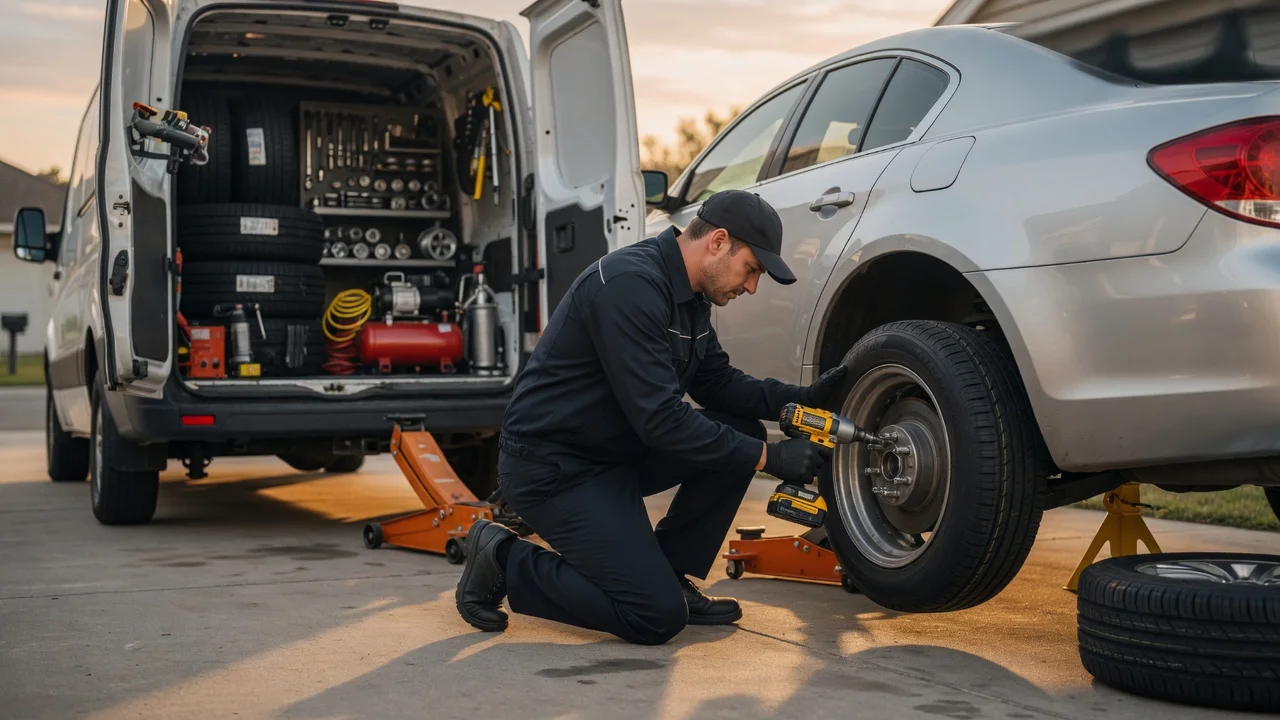
Mobile tire replacement is a service in which a technician brings a vehicle equipped with tire-fitting tools to your home, workplace or another agreed spot and replaces your tires there. To arrange it, you book with a provider that serves your area, give them your vehicle and tire details, confirm the replacement tires, and make sure the location is safe and permitted for the work. Four conditions decide whether this route works: the provider must cover your location, the site must be safe and allow the work, the correct tires must be available, and the vehicle must need only tire work. If a wheel, suspension part or steering component is damaged, a workshop visit is usually the better choice.
What the Service Usually Includes
The core tasks are removing the wheel, mounting the new tire on the rim, balancing the wheel and tire assembly, and refitting the wheel to the vehicle. Mounting means fitting the tire onto the wheel rim. Balancing means correcting uneven weight distribution so the wheel spins smoothly. Many providers also replace valve stems, which are the small fittings used to inflate the tire. They may also service the tire pressure monitoring system (TPMS), the sensors that warn you when pressure is low, and take away the old tires.
Some work generally needs a fixed workshop. Wheel alignment, which adjusts the angles at which the wheels meet the road, typically requires an alignment rack. Bent or cracked wheels and suspension repairs are also usually beyond mobile service. Ask each provider exactly which tasks they perform on site, because services vary.
Mobile tire replacement is different from basic roadside assistance. Roadside assistance commonly fits your spare wheel so you can drive to a shop. A mobile tire service replaces the tire itself.
Information to Gather Before You Book
Tire size, load index and speed rating. These are molded into the tire sidewall. The manufacturer-recommended values are usually on a placard in the driver's door jamb, the fuel filler door or the glovebox, and in the owner's manual. Use the vehicle's specification rather than relying only on the tires currently fitted, since a previous owner may have changed them. Whether front and rear tire sizes differ. This is called a staggered setup, and it means two different tire sizes must be ordered. Vehicle year, make, model and trim. These help the provider confirm wheel fitment and TPMS type. Whether your tires are run-flat or another special type. Some providers need specific equipment or stock for these. Whether the vehicle has TPMS sensors, and whether any warning light is currently on. The location of the wheel lock key, if your wheels use locking lug nuts. Without it, the technician may not be able to remove the wheels. The number of tires being replaced. On all-wheel-drive vehicles, some manufacturers specify how closely tread depth must match across tires. Check your owner's manual before replacing only one or two tires.
Steps to Arrange Mobile Tire Replacement
1) Confirm coverage and scope. Check that the provider serves your address and performs the tasks you need, such as balancing, TPMS service and old-tire disposal. 2) Supply your vehicle and tire details. Confirm that the quoted tires match the size, load index and speed rating your vehicle manufacturer specifies. Do not accept a substitute with different specifications unless you have confirmed it is suitable for your vehicle. 3) Get an itemized quote. Ask for separate prices for the tires, mounting, balancing, valve stems or TPMS parts, disposal, and any call-out or travel fee, so you can compare providers on equal terms. 4) Choose and clear the location. The technician needs firm, level ground with enough room to work around the vehicle and to park the service vehicle nearby. Get permission if the spot is a workplace car park, a managed residential lot or a parking garage, since some restrict vehicle work. Local rules on working at the kerbside vary by jurisdiction, so check with the provider. 5) Prioritize safety if you are stranded. If the vehicle is disabled beside moving traffic, move it to a safe place only if you can do so safely. Otherwise contact emergency services or roadside assistance. Ask the provider whether they will work at a roadside location at all. 6) Prepare the vehicle. Have the keys and wheel lock key available, clear the area around the wheels, and remove any items the technician must move to reach the spare or the jacking points. 7) Stay available during the appointment. A technician may find a bent rim, damaged bead seat (the edge of the rim where the tire seals), loose suspension parts or unusual wear. If they do, stop and get the issue assessed rather than having the new tire fitted anyway.
Checking the Work Before the Technician Leaves
Ask whether the lug nuts were tightened with a torque wrench to the vehicle manufacturer's specification, not only with an impact tool. Confirm that pressures were set to the values on the vehicle's placard. The maximum pressure printed on the tire sidewall is a limit, not the recommended operating pressure. Check whether the TPMS warning light has cleared. Some vehicles need a relearn procedure or a short drive before it goes off. Ask the technician what applies to your vehicle. Check that the new tires, sizes and services on the invoice match what you ordered, and that the old tires were handled as agreed. Ask whether the installer recommends rechecking lug nut torque after initial driving, and follow that advice. If the vehicle pulls to one side, vibrates or shows uneven wear on the old tires, book a wheel alignment check at a workshop.
What This Guide Does Not Cover
This guide does not include prices, named providers, torque values, tire pressures or jurisdiction-specific rules on street work and tire disposal, because these depend on your vehicle, market and location. Use your owner's manual and the vehicle placard for specifications, and confirm local requirements and service details directly with the provider you book.