Mobile Tire Replacement: How to Choose an On-Site Service
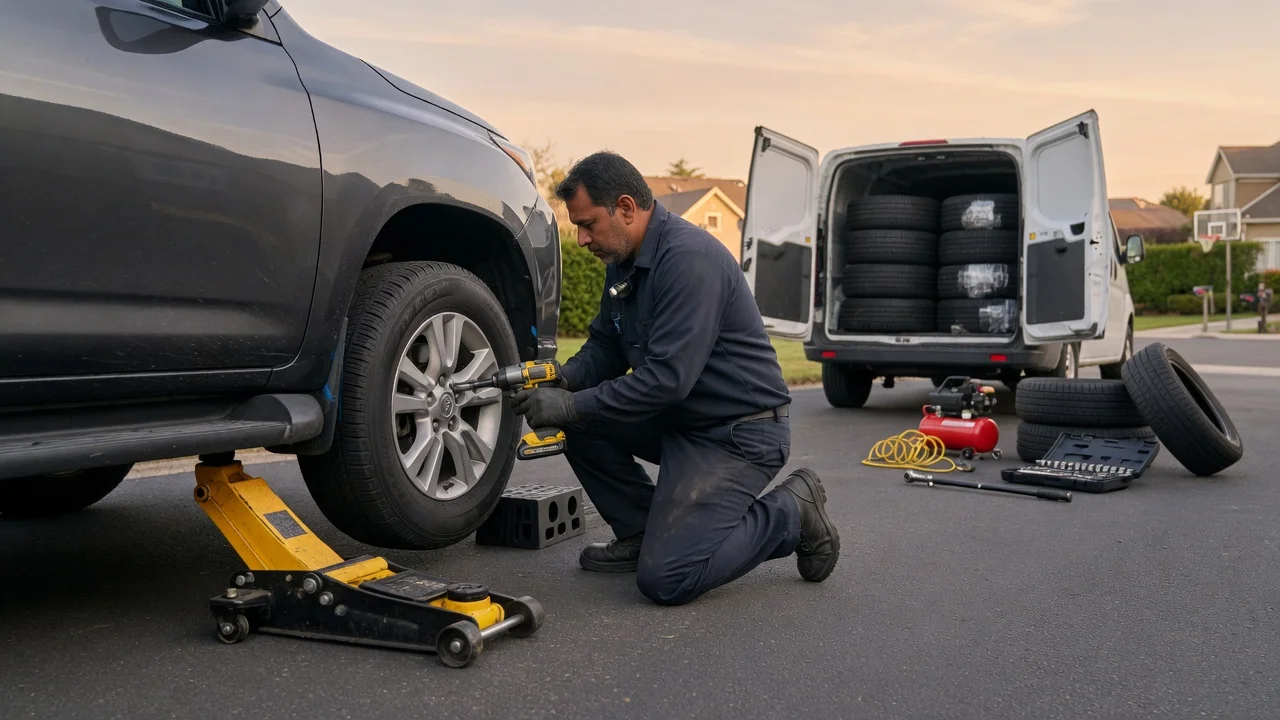
Mobile tire replacement means a technician drives a van equipped with tire-fitting tools to your home, workplace or another agreed location and replaces your tires there. It is a good choice for routine tire replacement and many puncture repairs when you would rather not visit a shop. A shop is usually better if you also need a wheel alignment, suspension or brake work, or if your wheels or tires need equipment the van does not carry. To choose a provider, confirm four things: they can supply your exact tire specification, their equipment suits your wheels, their price includes balancing and disposal, and they tighten wheel fasteners to your vehicle manufacturer's specification.
What an on-site tire service can and cannot do
A typical mobile tire van carries a tire changer, which removes the old tire from the wheel and fits the new one, and a wheel balancer, which spins the wheel and shows where to add small weights so it rotates without vibration. The van also carries an air compressor, a jack or lift, and a torque wrench. Equipment varies between providers, so ask what yours carries rather than assuming it.
Mobile tire replacement is different from basic roadside assistance. Roadside assistance usually fits your spare wheel so you can drive to a shop. A mobile tire service fits new tires to your existing wheels.
The main limitation is wheel alignment, which adjusts the angles of the wheels relative to the vehicle and the road. Alignment needs a level alignment rack and measuring equipment that vans generally do not carry. If your old tires wore unevenly, for example more on one edge, you may need an alignment, and that means a shop visit. Bent or cracked wheels, damaged suspension parts and worn brakes also need workshop inspection. The work site matters too. Technicians need a firm, level surface away from moving traffic, and many will not work on a highway shoulder or a steep slope.
Mobile service or tire shop: which fits your situation
Criterion | Mobile tire service | Tire shop; Convenience | Work happens where the vehicle is parked; no travel or waiting room | Requires driving to the shop and waiting or leaving the vehicle; Wheel alignment | Generally not available | Commonly available alongside fitting; Unusual tires or wheels (run-flat, very large or low-profile) | Depends on the van's equipment; confirm before booking | More likely to have suitable equipment, though still worth confirming; Inspection of brakes and suspension | Limited to what the technician can see at the wheel | Vehicle can be lifted for a fuller inspection; Weather and site dependence | Affected by rain, cold, darkness and parking space | Indoor bays, largely unaffected; Scheduling | Booked time slots; same-day availability varies by area | Walk-in or booked, varies by shop; Price | Often includes a call-out or convenience charge; no comparable figures supplied here | No comparable figures supplied here
Choose a mobile service if your tires are worn evenly, your schedule makes a shop visit difficult, and you have a safe place for the technician to work. Choose a shop if you have uneven wear, steering pull or vibration that was already there before the tires wore out, or wheels that need specialist handling. If a puncture leaves you stranded and your spare is unusable, a mobile service can save a tow. Check first that they can reach your location and that the site is safe.
This guide does not include pricing data. Mobile and shop prices vary by region, tire brand and size, and by what each quote includes. When comparing quotes, make sure each one covers the same tire model, size and ratings, and the same services, such as balancing, valves, sensor service and disposal. Otherwise the totals are not comparable.
Terms you will see on a quote
Tire size code: a sequence such as 205/55R16. The first number is section width in millimetres, the second is the sidewall height as a percentage of width, R indicates radial construction, and the last number is the wheel diameter in inches. Load index and speed rating: a number and letter that follow the size (for example 91V). They state the maximum load and speed the tire is rated for. Replacements should meet or exceed what your vehicle manufacturer specifies. Balancing: adding small weights to the wheel so it spins evenly. Without balancing you may feel vibration, typically at higher speeds. TPMS (tire pressure monitoring system): sensors or software that warn of low pressure. Some vehicles use sensors mounted inside the wheel, which must be handled carefully during fitting and may need to be relearned or reprogrammed afterwards. Valve stem: the fitting used to inflate the tire. Rubber valve stems are commonly replaced when tires are changed; sensor-type valves may need service parts instead. Run-flat tire: a tire with reinforced sidewalls that can be driven briefly after losing pressure. These are stiffer to fit and may require specific equipment. Torque specification: the tightening value for wheel nuts or bolts set by the vehicle manufacturer. It varies by vehicle, so the correct figure comes from your vehicle's documentation or the manufacturer's service data, not a general rule.
What to check before booking a provider
Tire supply: can they obtain your exact size, load index and speed rating, and do they offer a choice of brands or tire types, such as summer, winter or all-season? Equipment match: does the van carry a balancer, and can it handle your wheel diameter and any run-flat or low-profile tires? TPMS capability: can they service your type of sensor and complete any relearn procedure your vehicle requires? Tightening method: do they use a torque wrench set to your manufacturer's specification? Impact tools alone are not a substitute for final torque. Price breakdown: does the quote itemise tires, fitting, balancing, valves, call-out charge and old-tire disposal? Disposal: will they take the old tires away? Disposal rules and fees depend on your jurisdiction, so ask how they handle it. Site requirements: what space, surface and access do they need, and will they work in your location, such as a shared car park or a roadside? Warranty and follow-up: what warranty covers the workmanship and the tires, and will they return to fix a problem such as a slow leak or vibration?
Preparing for the appointment and checking the work
The tire fitting itself is work for the trained technician. Your part is to give them accurate information and a safe place to work, then confirm the result.
1) Confirm your tire specification. Read the size, load index and speed rating from the current tires' sidewalls and compare them with the vehicle's tire information label, often found on the driver's door jamb, fuel filler door or in the owner's manual. If the fitted tires differ from the label, mention this when booking. 2) Find your locking wheel nut key if your vehicle uses locking nuts. Without it the technician may not be able to remove the wheels. 3) Arrange the site. Choose a firm, level spot with room to work around the vehicle, clear of traffic. If you park in a shared or managed car park, check that the work is permitted there. 4) Stop and rebook if the site is unsafe. A technician who declines to work on a slope, soft ground or near traffic is making the right call. 5) Before fitting, check that the new tires match what you ordered. The size and ratings are moulded on the sidewall, and many tires also carry a manufacture date code. Raise any mismatch before the old tires are removed. 6) Ask the technician to report any damage they notice, such as bent wheels, leaking or damaged sensors, or worn brake or suspension parts. Leave these for a workshop rather than for on-site repair. 7) Completion check: the dashboard tire pressure warning is off, or the technician has explained the relearn step; each tire is inflated to the pressure on the vehicle's label; valve caps are fitted; and the technician confirms the wheel fasteners were torqued to specification. 8) Take a short test drive. If you notice vibration, steering pull or unusual noise, stop driving and contact the provider before continuing to use the vehicle. 9) Ask whether the fasteners should be rechecked after a short distance. Many fitters recommend this, but follow the guidance for your vehicle and wheel type.
Limits of this guide
No pricing, regional availability, torque values or legal requirements were supplied for this guide, so it gives no figures or jurisdiction-specific rules. Torque specifications, tire pressures, TPMS procedures and approved tire sizes depend on your vehicle's make, model, model year, market and equipment. Confirm them in your owner's manual, on the tire information label or with the manufacturer. Rules on minimum tread depth and tire disposal also vary by country and region, so check local regulations if you are unsure whether your tires need replacing.