Mobile Tire Replacement: How to Choose and Book a Service
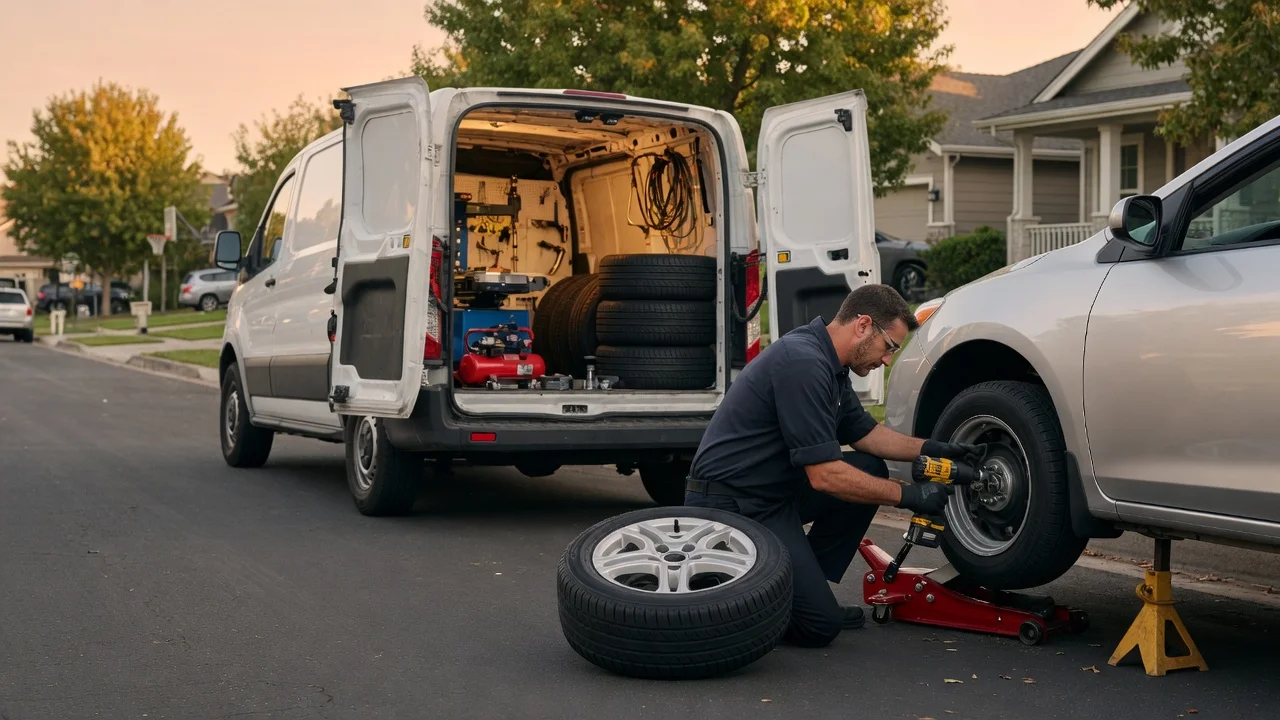
What mobile tire replacement means
Mobile tire replacement is a service in which a technician travels to your vehicle and installs replacement tires on site, rather than requiring you to drive the vehicle to a fixed tire or automotive service location. The service typically covers removing the existing wheels and tires, fitting and mounting the replacement tires on the wheels, balancing the assemblies, and reinstalling them on the vehicle. The central decision is whether the condition of the tire, wheel, and surrounding suspension equipment allows safe work in a driveway, parking area, or roadside location. A vehicle with intact wheels and usable lug hardware is generally a candidate; a damaged wheel, seized fastener, badly corroded component, or unsafe working surface may require a shop with lifting and repair equipment.
When the service is appropriate
Mobile replacement is most useful when the vehicle cannot be driven safely on the affected tire, or when the owner wants to avoid transporting the vehicle. A flat, punctured, cut, bulging, or otherwise unroadworthy tire is the clearest case. The option is less suitable when the problem may extend beyond the tire itself. If the impact that damaged the tire may also have bent the wheel or suspension parts, or if the vehicle pulls, vibrates, or makes noise after the tire change, a complete inspection on a lift may be the safer next step. The service also depends on having enough clear, level space for the technician to work around the vehicle and operate a floor jack and tools safely.
How to compare service options
Compare providers on the same practical criteria rather than on price alone. Confirm whether the quoted price includes the full process of dismounting the old tire, mounting and balancing the replacement, and reinstalling the wheel assembly, or whether balancing, valve stems, disposal, and travel are separate charges. Ask whether the provider can service your wheel diameter, tire speed rating, and vehicle weight class, and whether the replacement tire matches the size, load index, and speed rating required for your vehicle. For run-flat tires, low-profile tires, or vehicles with tire-pressure monitoring sensors, confirm that the technician has the right mounting equipment and is prepared for the specific hardware. A lower quote that omits balancing or uses a mismatched tire is not a true comparison.
What to confirm before booking
Have the tire size and vehicle information available when you book. The size is molded into the tire sidewall as a sequence such as 225/50R17, and the vehicle's required pressure is usually listed on the driver's door jamb label. Confirm the exact service address, where the vehicle will be parked, and whether the technician will have enough clearance to lift the vehicle and access all four wheels if more than one tire is being replaced. For a spare-tire situation, state whether the vehicle is on a full-size spare, a temporary spare, or the affected flat tire. A temporary spare is usually limited in speed and distance and may affect how the vehicle should be driven until the repair is complete.
What happens during the service
The technician should support the vehicle on a suitable jack and, where practical, a jack stand, then remove the wheel assembly. The old tire is separated from the wheel, the wheel and valve area are inspected for damage or corrosion, and the replacement tire is mounted using equipment and techniques appropriate to the tire and wheel type. The assembly is balanced and reinstalled, and the lug hardware is tightened in the correct pattern and to the specified torque. After the work, the technician should verify tire pressure and make sure the tire is seated properly. You should receive a clear statement of what was replaced and whether any wheel, valve, sensor, or hardware issue needs follow-up.
Completion check and follow-up
After the service, check that the tire pressure matches the vehicle specification, that the new tire is correctly installed with no visible sidewall damage, and that the lug hardware is present and secure. If the vehicle has a tire-pressure monitoring system, confirm that the system is reading correctly or follow the reset procedure for the specific vehicle. A gentle initial drive can reveal whether the assembly is balanced properly and whether the vehicle tracks straight. Recheck the pressure when the tire is cold. If the vehicle vibrates, pulls, shows a warning light, or the tire loses pressure, return the problem to the provider or take the vehicle to a qualified service location for inspection.
Limits to recognize
Not every tire problem can be correctly handled at the roadside. A vehicle involved in a severe impact, a wheel that will not turn or release, a damaged mounting surface, or a suspected suspension fault needs more than a tire swap. Mobile service also has practical boundaries for heavy commercial vehicles, specialty wheels, and some high-performance tire and wheel combinations. If the provider cannot confirm that the replacement tire matches the vehicle's required specifications, or if the working area is unsafe, stop the process and arrange a qualified shop visit instead. The goal is a replacement that is safe to drive, not merely a tire that is physically installed.