Mini Fire Extinguisher for Your Car: How to Choose, Mount and Use One
The short answer
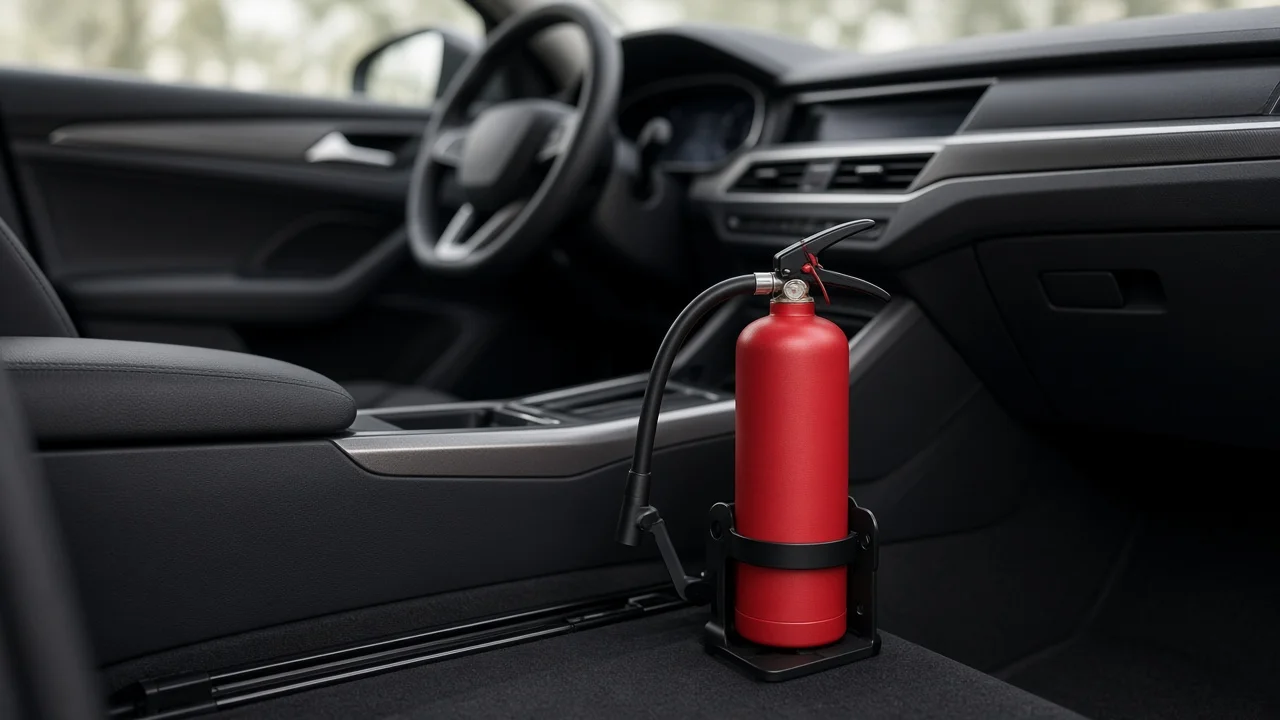
A mini fire extinguisher is a compact, handheld unit small enough to carry in a vehicle. For a car, choose a listed (certified) dry chemical extinguisher rated at least for Class B and Class C fires, preferably labeled ABC, and mount it in a secure bracket within reach of the driver. It is meant for a small fire that has just started, such as a smoldering wire or a small fuel or oil flare-up. It is not a tool for fighting a fire that has spread through the engine bay or cabin, and it is not effective against a burning electric vehicle battery. In those cases, the right action is to get everyone out, move away and call 911.
Two conditions change this answer. First, if the vehicle is an electric or plug-in hybrid model and the fire involves the high-voltage battery, a small extinguisher should not be relied on at all. Second, if the vehicle is used commercially, federal or state rules may require a specific type and rating of extinguisher, so the choice is no longer purely personal.
Are there different types of fire extinguishers?
Yes. In the US, extinguishers are labeled by the classes of fire they are designed to fight. The class letters describe the fuel that is burning, and an extinguisher may carry one letter or several.
Class | What is burning | Relevance in a car; A | Ordinary combustibles such as paper, fabric, plastics | Seat upholstery, carpet, trim, cargo; B | Flammable liquids and gases such as gasoline, diesel, oil | Fuel leaks, oil on hot exhaust parts; C | Energized electrical equipment | Wiring, fuses, 12-volt accessories; D | Combustible metals | Not a typical choice for passenger vehicles; K | Cooking oils and fats | Not relevant to vehicles
Because a vehicle fire can involve liquids, wiring and interior materials at the same time, a multipurpose ABC unit covers the most likely situations. A BC unit handles fuel and electrical fires but is not rated for burning upholstery or trim.
The most common type of fire extinguisher
The most common type found in homes, offices and vehicles is the dry chemical extinguisher, usually in its multipurpose ABC form. It works by coating the fuel and interrupting the chemical reaction of the fire. Its drawbacks are that the powder spreads widely, is messy and can be corrosive to electrical parts if not cleaned up, so a vehicle that has been sprayed should be inspected afterward.
Other agents exist, such as clean agents and carbon dioxide, which leave less residue. However, carbon dioxide disperses quickly outdoors and in wind, which limits its usefulness at the roadside, and clean agent units of a given size are generally more expensive. No product-specific evidence on prices or performance was available for this guide, so compare options using the label rating rather than marketing claims.
How to choose a handheld extinguisher for a car, step by step
1) Confirm the class rating on the label. Look for at least B and C, and preferably A, B and C. 2) Check for a listing mark from a recognized testing laboratory. A listed extinguisher has been tested to a published standard; an unlisted product has no verified rating. 3) Read the numbers in front of the letters. On US labels, a number before A or B indicates relative capacity, and a higher number means more firefighting capacity for that class. The C has no number; it only means the agent does not conduct electricity. 4) Make sure it comes with, or fits, a sturdy mounting bracket designed for vehicles. 5) Check the storage temperature range printed on the label. A parked car can get very hot or very cold, and the extinguisher must be rated for the conditions where you live. 6) Choose a model with a pressure gauge so you can confirm it is charged. 7) Decide between rechargeable and disposable. A rechargeable unit can be serviced and refilled after use; a disposable unit is replaced once used or once it loses pressure. 8) Pick the largest unit you can mount securely and reach quickly. A very small unit discharges in a short time, so size is a trade-off between capacity and fit.
Aerosol-can style fire suppression sprays are sold as compact alternatives. Some carry no class rating or laboratory listing. If a product does not state a recognized rating, treat its performance as unverified and do not count on it as your only extinguisher.
Where and how to mount it
An extinguisher must be secured. A loose metal cylinder can become a dangerous projectile in a collision or hard stop, and it can roll under the pedals. Mount it with a bracket in a place the driver can reach after stepping out of the vehicle, such as under or beside a front seat or in an accessible spot in the cargo area. Avoid locations where it would be buried under luggage or trapped if the trunk lid cannot be opened. Make sure the bracket does not interfere with seat movement, airbags or seat belt anchors; the vehicle owner's manual may restrict where accessories can be attached.
When to use it and when to leave
Use the extinguisher only if the fire is small, everyone is already out of the vehicle, you have a clear way to retreat, and someone has called 911 or is calling. If smoke or flames are coming from the engine bay, do not open the hood fully; the inrush of air can make the fire flare. If the fire grows, spreads, or does not go out quickly, stop and move well away from the vehicle and from traffic.
Do not try to fight a fire that involves the fuel tank area, a fire that is spreading quickly, or any fire in an electric or hybrid vehicle's high-voltage battery. Battery fires can reignite and release toxic gases, and they require firefighters with suitable resources. Tell the 911 dispatcher if the vehicle is electric or hybrid.
Most extinguishers are operated with the PASS method:
Pull the pin. Aim the nozzle at the base of the fire, not at the flames. Squeeze the handle. Sweep the nozzle from side to side across the base of the fire.
Read the instructions on your specific unit before you need it, because operation can differ between models.
Checking a new fire extinguisher and keeping it ready
When it arrives, check that the gauge needle is in the charged zone, the pin and tamper seal are in place, and the hose or nozzle is not cracked or blocked. Recheck the gauge, seal and body regularly; a common practice is monthly. Look for dents, rust or leaks, which mean the unit should be serviced or replaced. For dry chemical units, the powder can settle and pack over time; follow the manufacturer's guidance on maintenance. After any use, even a short burst, recharge a rechargeable unit or replace a disposable one. A partly used extinguisher may lose pressure. Follow the manufacturer's stated service life and replacement guidance, which varies by model.
Is a car fire extinguisher legally required in the US?
For private passenger cars, carrying an extinguisher is generally a personal safety choice rather than a nationwide requirement. Commercial motor vehicles are a different case: federal motor carrier safety regulations require certain vehicles to carry a properly rated, securely mounted extinguisher, and some states and local authorities add their own rules, for example for vehicles carrying hazardous materials or passengers. Organized motorsport events often set their own requirements as well. No jurisdiction-specific evidence was supplied for this guide, so check the current rules that apply to your vehicle type and state before relying on any compliance assumption.
Gaps in this guide
No verified product data, prices, test results or brand comparisons were available, so this guide does not recommend a specific model or state exact sizes and discharge times. Use the label rating, laboratory listing, temperature range and mounting hardware as the basis for comparing products.