When Using a Fire Extinguisher on a Vehicle Fire: Where to Aim and What to Do
The Short Answer
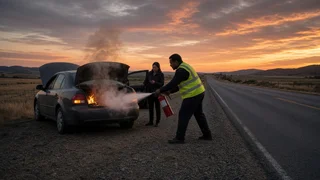
When you use a fire extinguisher, aim at the base of the fire, not at the flames or smoke. The base is where the fuel is burning, so that is where the extinguishing agent can work. Most instructions summarize the technique as PASS: Pull the pin, Aim low at the base, Squeeze the handle, and Sweep side to side until the fire is out.
One condition changes everything: an extinguisher is only for a small fire that you can approach safely with a clear escape route. In a vehicle fire, getting everyone out and away from the car comes first. If the fire is growing, involves a fuel leak, fills the cabin with smoke or comes from an electric vehicle's high-voltage battery, do not try to fight it. Move well away and call 911.
Decide First: Fight the Fire or Walk Away
A car contains fuel, plastics, rubber, upholstery and electrical systems. These materials can burn quickly and give off toxic smoke. A portable extinguisher carries a limited amount of agent and may empty in seconds. Use these checks before you act.
Pull over as soon as it is safe, stop the vehicle and turn off the ignition. Turning off the ignition cuts the fuel pump and most electrical circuits, so it is the practical form of electrical isolation available at the roadside. Get every passenger out and move them well away from the vehicle and traffic, ideally upwind and behind a barrier. Do not go back for belongings. Call 911. Give your location and the vehicle type, and say whether it is gasoline, diesel, hybrid or electric. Fight the fire only if it is small, such as smoke or flames limited to one area. You also need the right extinguisher, an escape route behind you and a way to stay out of traffic. Do not fight it if flames are spreading, if fuel is leaking or pooling under the car, if the passenger compartment is involved or if you feel any doubt. Safe evacuation is the correct outcome in those cases, not a failure.
How to Use an Extinguisher: The PASS Method Step by Step
Position yourself upwind of the fire, a few feet back, with your exit behind you. Many extinguisher labels state a recommended operating distance. Start at that distance. Pull the pin. It usually breaks a small tamper seal. Hold the extinguisher upright. Aim the nozzle or hose low, at the base of the fire, where the combustible material is burning. Squeeze the handle slowly and evenly to release the agent. Sweep the nozzle side to side across the base of the fire. Move closer only as the flames shrink. Keep watching after the flames disappear. Hot materials can reignite, so be ready to discharge again or to move away.
Where to Aim in Common Vehicle Fire Situations
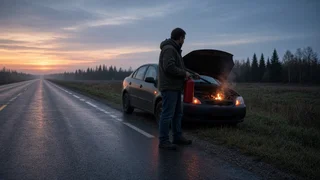
Engine compartment: Do not fully open the hood. A rush of fresh air can make the fire flare up toward your face and hands, and the hood and latch may be very hot. If the hood is closed, discharge the agent through the gaps you can reach, such as the grille or the space around the wheel wells or under the front of the car. If the hood is already slightly open, aim through the gap toward the base of the flames. Do not lean over the engine bay.
Interior or cabin: If a small item is smoldering, aim at the burning material itself. Once smoke builds up inside the cabin, stay out. Smoke from burning interior plastics is hazardous to breathe.
Under the vehicle or near the fuel system: Fires involving dripping or pooled fuel are dangerous and can spread fast. Burning fuel can flow along the ground. Do not stand in or near liquid on the ground. In most cases the right move is to back away and wait for emergency services.
Choosing the Right Extinguisher for a Vehicle
In the US, a fire extinguisher rating uses letters to show the classes of fire it is designed for. Many extinguishers also carry numbers that indicate relative capacity. Vehicle fires usually involve flammable liquids and energized electrical components, and sometimes ordinary solids. For that reason, multipurpose units rated for classes A, B and C, or at least B and C, are the usual choice for cars and trucks.
Class | Fire type | Relevance to vehicles; A | Ordinary combustibles such as fabric, paper, some plastics | Seats, carpets, interior trim; B | Flammable liquids such as gasoline, diesel, oil | Engine oil, fuel and other fluid leaks; C | Energized electrical equipment | Wiring, starter, alternator, accessories; D | Combustible metals | Not a typical roadside choice; K | Cooking oils and fats | Not intended for vehicles
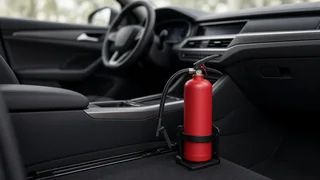
Mount the extinguisher securely so it cannot roll around or become a projectile in a crash, and keep it within reach of the driver. Check the pressure gauge and condition periodically, following the instructions on the label. Replace or recharge it after any use, even a short one.
Electric and Hybrid Vehicles
A fire in a lithium-ion traction battery behaves differently from a typical fuel fire. It can keep producing heat internally, release toxic gases and reignite long after the flames appear to be out. A portable extinguisher is not suited to a battery fire. If you suspect the high-voltage battery is involved, get everyone out, move well away and tell the 911 dispatcher that the vehicle is electric or hybrid. A small fire clearly limited to something else, such as a burning floor mat, can be treated like any other small fire, but only with the same safety checks.
After the Fire Appears to Be Out
Stay back and watch for renewed smoke, flames or hissing. Reignition is common once hot surfaces meet unburned material. Let emergency services check the vehicle, even if the fire seemed minor. Do not restart or drive the vehicle. Have it towed and inspected so the ignition source, such as a fluid leak, wiring fault or overheated component, can be found and repaired. Replace or recharge the extinguisher before your next trip. If anyone breathed in smoke or was burned, get medical attention.
Common Mistakes to Avoid
Aiming at the tops of the flames or the smoke instead of the base of the fire. Opening the hood wide to get a better look. Standing downwind, where smoke and agent blow back at you. Letting the fire get between you and your escape route. Staying with the vehicle to save possessions. Turning your back on the vehicle as soon as the flames disappear. Carrying an extinguisher that is not rated for flammable liquid and electrical fires.