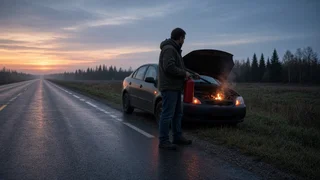
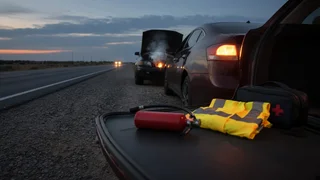
How to Use a Fire Extinguisher During a Roadside Vehicle Fire
The short answer
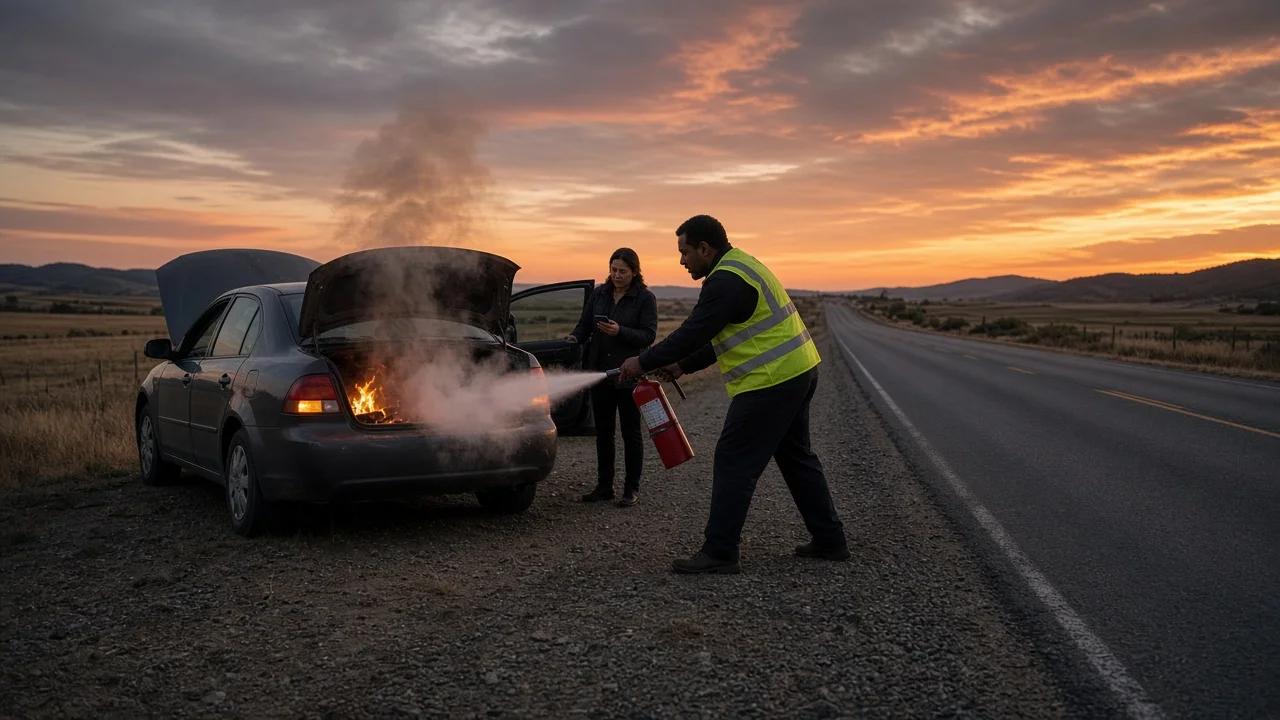
Use a fire extinguisher on a roadside vehicle fire only if everyone is already out of the vehicle, emergency services have been called, the fire is small and not spreading, and you have a clear path to retreat. If those conditions are met, use the four-step PASS method: Pull the pin, Aim low at the base of the fire, Squeeze the handle, and Sweep from side to side. If the fire is large, spreading, near the fuel tank, inside the passenger compartment, or involves an electric or hybrid vehicle's high-voltage battery, do not fight it. Move well away and wait for firefighters.
Your safety and the safety of passengers always come before saving the vehicle. A car can be replaced; people cannot.
What you need before you start
A working fire extinguisher rated for the type of fire. Vehicle fires usually involve flammable liquids such as fuel and oil (Class B) and energized electrical wiring (Class C). A multipurpose ABC or a BC extinguisher covers these classes. Check the label on your extinguisher to confirm its rating. An extinguisher that is charged and ready. Many extinguishers have a pressure gauge; the needle should sit in the marked operating range. All occupants out of the vehicle and moved to a safe location away from traffic. A phone to call 911 or your local emergency number.
Read the instructions printed on your own extinguisher before you ever need it. Effective range, discharge time and operating details vary by model, and no model-specific specifications were available for this guide.
Step-by-step: responding to a roadside vehicle fire
Step 1: Pull over and shut off the engine
At the first sign of smoke, flames or a burning smell, signal and pull over to a safe spot as quickly as you can. Turn off the ignition. Shutting off the engine stops the fuel pump on most conventional vehicles and reduces the fuel feeding a fire.
Step 2: Get everyone out and away
Get all passengers out and move them well away from the vehicle and away from traffic. Do not go back for personal belongings. If you can, keep people upwind so smoke blows away from them; vehicle fire smoke contains toxic combustion products.
Step 3: Call emergency services
Call 911 before attempting to fight the fire. Tell the dispatcher your location, that a vehicle is on fire, and whether the vehicle is electric or hybrid, since that changes how firefighters respond. Small vehicle fires can grow very quickly, so make the call even if you expect to put the fire out yourself.
Step 4: Decide whether it is safe to fight the fire
Stop and do not attempt to extinguish the fire if any of the following apply:
The fire is large, growing or spreading. Flames are in the passenger compartment or near the fuel tank, or you can see or smell leaking fuel. The vehicle is electric or hybrid and the fire may involve the high-voltage battery. Lithium-ion battery fires can burn intensely, reignite and release toxic gases, and a portable extinguisher is generally not suitable for them. The smoke is thick or you cannot see the source of the fire. You do not have a clear path to retreat, or traffic makes the area unsafe. Your extinguisher is not rated for the fire, or you are unsure how to use it.
If any of these apply, stay away from the vehicle and wait for firefighters.
Step 5: Do not open the hood
If the fire is in the engine compartment, do not raise the hood. Opening it lets in a rush of oxygen that can make the fire flare up suddenly toward you. Instead, aim the extinguisher through any available openings, such as the grille, the gap at the edge of the hood, or the wheel wells.
Step 6: Position yourself
Stand back from the fire at the distance recommended on your extinguisher's label, with your back toward your escape route. Keep the wind at your back if possible so the extinguishing agent carries toward the fire and the smoke blows away from you. Never let the fire get between you and your way out.
Step 7: Use the PASS technique
These are the four steps to using a fire extinguisher:
Pull: Pull the safety pin from the handle. This breaks the tamper seal and unlocks the operating lever. Aim: Aim the nozzle or hose low, at the base of the fire where the fuel is burning, not at the flames or smoke. Squeeze: Squeeze the handle slowly and evenly to release the extinguishing agent. Releasing the handle stops the discharge. Sweep: Sweep the nozzle from side to side across the base of the fire until it appears to be out.
Portable extinguishers empty quickly. If the extinguisher runs out and the fire is still burning, or if the fire flares up or grows while you are working, stop and move away immediately.
Step 8: Back away and watch for reignition
Once the flames appear out, back away while still facing the vehicle. Vehicle fires can reignite from hot components, leaking fluids or damaged wiring. Keep watching the area and be ready to use any remaining agent or retreat further if flames return.
How to confirm the situation is resolved
No visible flames and no smoke continuing to build. Emergency responders have arrived and confirmed the fire is fully out. Let them make this call; they can check for hidden heat and hazards. The vehicle is not restarted or driven. Fire damage can affect wiring, fuel lines, brake components and other systems, so arrange for the vehicle to be towed and inspected by a qualified technician or handled through your insurer.
After the fire
Replace or professionally recharge your extinguisher after any use, even a partial discharge, because it may not hold pressure afterward. If you plan to carry an extinguisher in your vehicle, keep it secured so it cannot become a projectile in a crash, and store it where you can reach it quickly after getting out.
Learning the technique beforehand
Watching a fire extinguisher demonstration video can help you picture the PASS motion, but no specific video was supplied for this guide. Hands-on training from a local fire department or a certified safety course is more useful than video alone, and your extinguisher manufacturer's printed instructions remain the authoritative source for your particular unit.
Limits of this guidance
This guide covers general fire safety principles for roadside vehicle fires in the US. It does not replace your extinguisher manufacturer's instructions, your vehicle owner's manual, or directions from emergency responders. Electric and hybrid vehicles in particular may carry specific emergency guidance from their manufacturer; check your owner's manual for it.