Fire extinguisher sticks for roadside emergencies
The short answer
A fire extinguisher stick can be a reasonable compact backup for a small fire that has just started in a car, such as smoldering upholstery or a minor electrical flare-up. It is not a substitute for getting everyone out of the vehicle, calling emergency services, or carrying a conventional extinguisher with a recognized class rating. Three conditions change this answer. First, whether the stick has a listing and class rating from a recognized testing laboratory. Second, whether your vehicle is electric or hybrid. Third, whether you drive a commercial vehicle that falls under federal equipment rules.
What a fire extinguisher stick is
Most products sold as extinguisher sticks are handheld aerosol devices. Many use condensed aerosol: once activated, a solid compound inside reacts and releases a fine particle cloud that interrupts the chemical reaction of the fire. This differs from a conventional portable extinguisher, which stores dry chemical or another agent under pressure and releases it through a nozzle you control. Their appeal is size. They fit in a door pocket or glovebox where a cylinder extinguisher might not.
Where a stick fits in a vehicle fire response
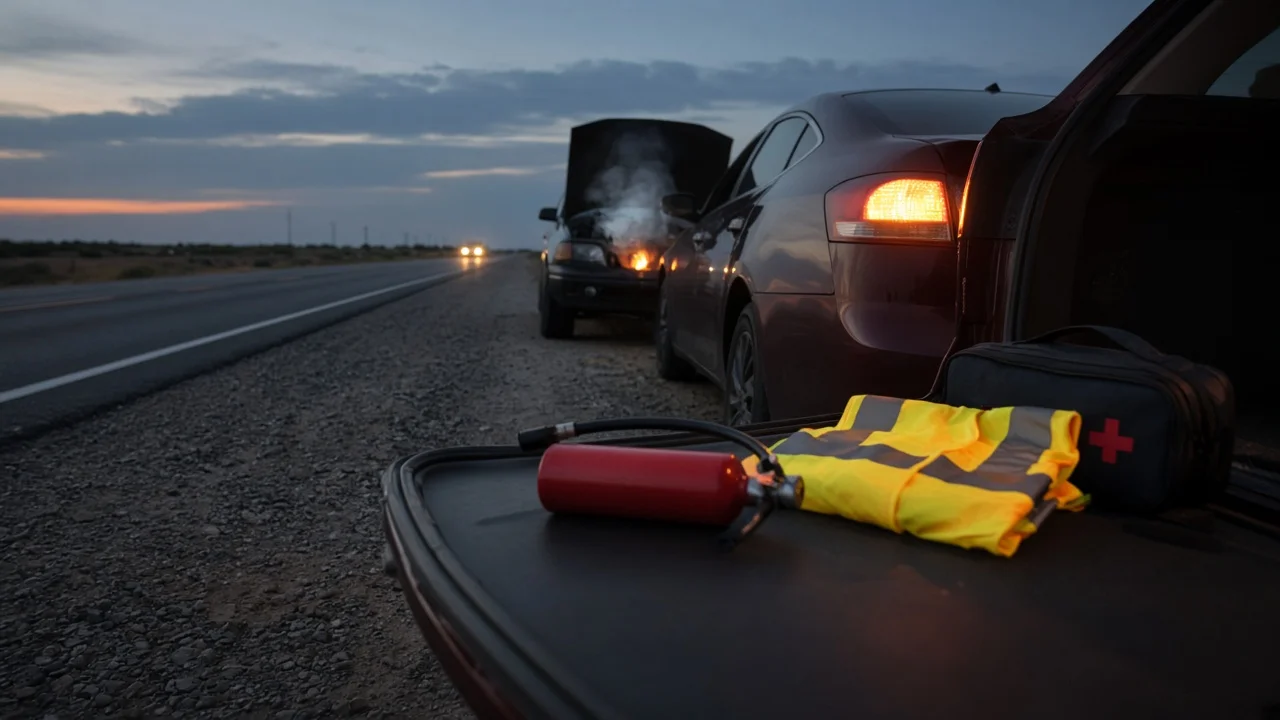
In a vehicle fire, protecting people comes first and protecting the car comes second. A stick only helps in the narrow window when a fire is small, you can reach it safely, and you have a clear exit behind you.
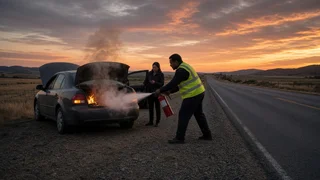
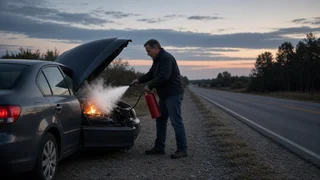
Signal, pull over somewhere safe and away from traffic, and turn off the engine. Get every occupant out and move well away from the vehicle, upwind if possible. Call 911 and give your location. Only try to fight the fire if it is small, you are not trapped, and you can back away at any moment. If smoke or flames come from under the hood, do not open it fully, because extra air can feed the fire. Aim through gaps such as the grille or the edge of the hood only if it is safe to stand there. If the fire grows or doesn't go out quickly, stop trying and move away.
Electric and hybrid vehicles
If the traction battery of an electric or hybrid vehicle is involved, treat a handheld device of any type as ineffective. Battery fires can reignite and usually need large volumes of water applied by firefighters. In that situation, evacuate, keep your distance, and tell the 911 dispatcher that the vehicle is electric or hybrid. A stick may still be useful for a small cabin fire that has nothing to do with the battery, but the same safety limits apply.
Commercial vehicles
Federal rules set fire extinguisher requirements for many commercial motor vehicles, including the rating and mounting. If you drive a vehicle covered by these rules, check that a specific stick product is accepted under the current regulation before relying on it. If it isn't, carry it only as an extra alongside the required extinguisher.
What to check before you buy
Check | Why it matters; Listing from a recognized testing laboratory, such as UL | In the US, portable extinguishers are tested and rated against recognized standards. A listing tells you the product's claims were independently tested. Without one, its performance is unverified. Stated fire classes | Class A covers ordinary combustibles such as seats and carpet. Class B covers flammable liquids such as fuel and oil. Class C covers energized electrical equipment. A car fire can involve all three, so look for clear class markings rather than general claims. Discharge behavior | Many aerosol sticks can't be stopped once activated and discharge for only a short time. Know this before you need it. Heat and residue | Some devices get hot during use or leave residue. Check the instructions for safe handling, ventilation and cleanup. Storage temperature range | A parked car can get very hot or very cold. Make sure the rated storage range suits your climate. Expiry or service date | Aerosol sticks usually have no pressure gauge, so the printed date is your main indication that the device is still usable. Replace it when it expires. Single-use or rechargeable | Most sticks are single-use. Plan to replace one after any activation. Mounting | A loose device can become a projectile in a crash. Use a secure bracket within reach of the driver.
Stick or conventional extinguisher?
If you have room for only one device, a listed, class-rated conventional extinguisher is the more verifiable choice, because its rating is printed on the label and you can control the discharge. A stick makes the most sense as a second device kept within reach of the front seats, or in a vehicle where a cylinder truly won't fit. Either way, read the instructions when you install it, not during an emergency.
Limits of this guide
This guide does not compare specific products, prices, discharge times or test results, because no verified product data was available. Treat performance figures on packaging or in listings as claims until you have confirmed them on the product's certification label or in the manufacturer's documentation.