Jogoswall Fire Extinguisher for Cars: What It Can and Can't Do, and What to Check Before Buying
The short answer
No verified specifications for the Jogoswall fire extinguisher were available for this article. That means there is no confirmed agent type, fire class rating, capacity, discharge time, certification or price to report. Whether it suits your car depends on what is printed on the unit itself. Read the label, and treat the product as a vehicle extinguisher only if that label shows a recognized rating for the fire types common in vehicles.
For most US drivers, that means a listing from a recognized testing laboratory, such as UL, and a rating that includes Class B (flammable liquids such as fuel and oil) and Class C (energized electrical equipment). If the product carries only marketing claims, or is sold as a spray or aerosol without a listed rating, consider it a supplementary tool at best, not a substitute for a rated extinguisher.
Two conditions change this answer significantly. First, if you operate a commercial motor vehicle, federal rules set minimum extinguisher ratings, and a product must meet them to count. Second, no small handheld extinguisher is designed to put out a burning electric vehicle traction battery. In that situation, the right response is to get away from the vehicle and call 911.
What to check on the label before you buy
Since there is no confirmed data on this product, the label and listing details are your evidence. Check each of the following on the actual unit or in clear photos of its label, not only in the product description.
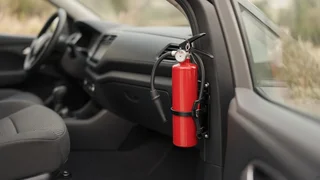
Testing laboratory listing: look for a mark from a recognized lab, such as UL, along with the standard it was tested to. Fire class rating: a rating such as 1-A:10-B:C or 5-B:C. The letters show which fire types it is rated for, and the numbers indicate relative capacity within each class. Extinguishing agent: dry chemical, clean agent or another type. The agent affects how much residue it leaves and which fires it handles. Operating temperature range: car interiors can get very hot in summer and very cold in winter, so the stated range should cover your climate. Pressure gauge or indicator: rechargeable and many disposable units have a gauge that shows whether the unit is charged. Mounting bracket: an extinguisher should be secured, not loose in the cabin where it can become a projectile in a crash. Manufacturer and contact details: a traceable manufacturer matters for recalls, warranty and instructions.
How fire class ratings apply to vehicles
US extinguisher ratings use letter classes. Class A covers ordinary combustibles such as upholstery, paper and some plastics. Class B covers flammable liquids such as gasoline, diesel and oil. Class C indicates the agent is safe to use on energized electrical equipment. Engine compartment fires often involve fuel, oil and wiring, which is why a B:C rating is the usual baseline for vehicles. An A:B:C rating adds coverage for interior materials.
Products marketed as fire suppression sprays or aerosol extinguishers may not carry these ratings at all. If a listing describes a product as suitable for cars but no class rating appears on the unit, the claim is unverified.
If you drive a commercial vehicle
Federal Motor Carrier Safety Regulations require power units of commercial motor vehicles to carry a properly filled, securely mounted fire extinguisher that is readily accessible. They set minimum ratings, with higher requirements for vehicles transporting placarded hazardous materials. The extinguisher must also be listed by a recognized testing laboratory. A product without a laboratory listing and a qualifying rating would not satisfy this requirement. Confirm the current rule text, or ask your carrier's safety department, before relying on any particular unit.
Limits of any small car extinguisher
A compact extinguisher is meant for a small fire caught early, such as a minor fire you can see that has not spread. It is not meant for a fully involved engine bay or cabin. Vehicle fires can grow quickly and produce toxic smoke, so safety comes first.
Stop, switch off the engine and get all occupants out and well away from the vehicle. Call 911 before attempting anything. Do not fully open the hood on an engine fire. A sudden rush of air can make the fire flare up. Only use an extinguisher if the fire is small, you have a clear escape route and you are not alone in danger. If the fire does not shrink immediately, stop and move away. For a hybrid or electric vehicle with a suspected battery fire, do not try to fight it. Traction battery fires can reignite and need fire department response.
Gaps in the available information
Without confirmed evidence, this article cannot state the Jogoswall unit's agent, rating, size, certifications, shelf life, temperature range, price or availability. It also cannot cite test results or reviews. If you are comparing it with other options, ask the seller for a clear photo of the full label and any certification documents. Then compare those details against the checklist above. If the rating and listing cannot be confirmed, choose a vehicle extinguisher that clearly displays them.