Lifeline Fire Extinguisher for Your Car: What to Check Before You Buy
The short answer
A Lifeline fire extinguisher can suit a vehicle if the specific model you buy is rated for the fire types a car can produce, carries certification recognized where you will use it, and can be mounted securely within reach of the driver. Which model fits depends mainly on how you use the vehicle. For a daily driver on US roads, the priority is a handheld unit that is listed for flammable liquid and electrical fires and comes with a crash-resistant bracket. For a race or track car, your sanctioning body's rulebook decides what is acceptable, and it may require a plumbed-in suppression system rather than, or in addition to, a handheld extinguisher.
No confirmed product data was supplied for this article: no model list, capacities, agent types, certifications, prices or availability. Treat everything below as a checklist for confirming those details with the seller, the product label and your rulebook, not as a statement of what any particular Lifeline unit offers.
Two different products that share one name
The Lifeline name is widely associated with motorsport fire safety. Buyers searching for it may find two different kinds of equipment, and mixing them up is the most common way to buy the wrong thing.
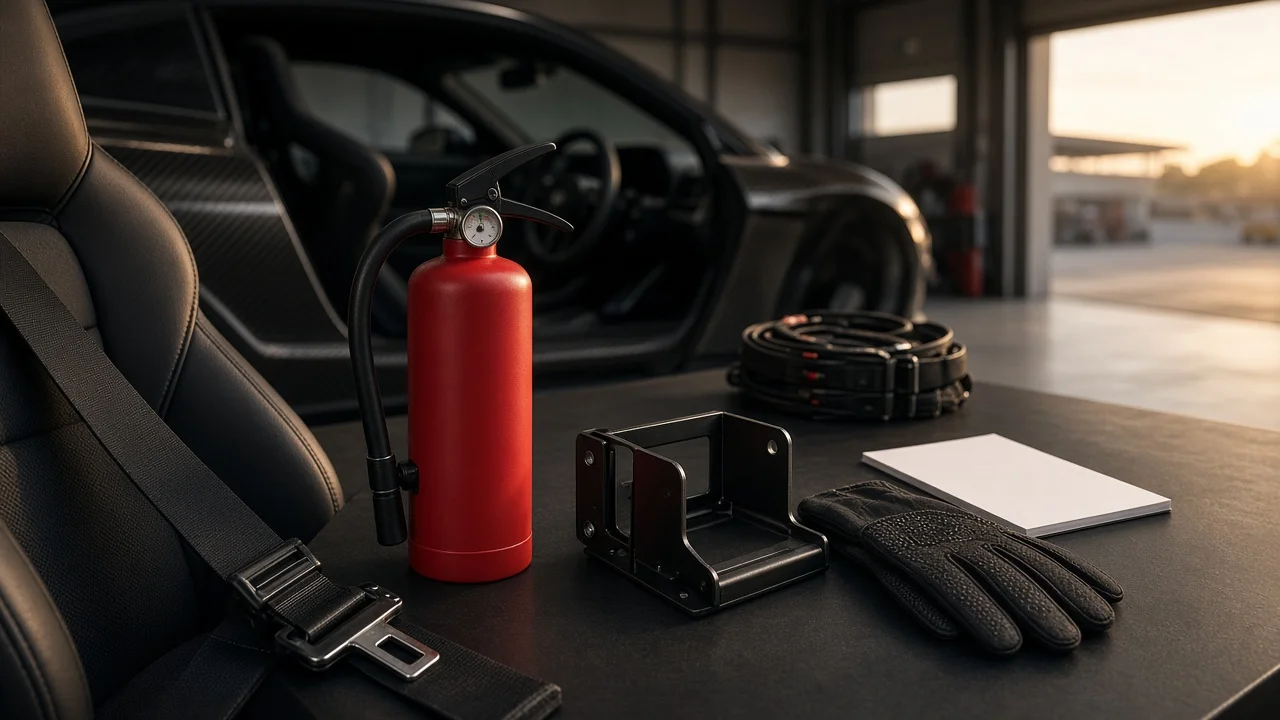
Handheld extinguisher: a portable cylinder that you remove from its bracket and aim at the fire. It suits road cars and serves as a backup in race cars. Plumbed-in (onboard) suppression system: a fixed bottle that feeds nozzles aimed at the cockpit and engine bay. It is triggered by a pull cable or electrically, and the driver can discharge it while still strapped in. It is mainly used in competition vehicles and is far more involved to install.
If you only want something for emergencies in a road car, a handheld unit is the relevant category. If you are building a car for competition, read your series regulations first and then shop.
What to check when choosing
Fire class rating
In the US, extinguisher labels use letter classes. Class A covers ordinary combustibles such as upholstery and paper. Class B covers flammable liquids such as fuel, oil and some coolants. Class C means the agent is safe to use on energized electrical equipment. Vehicle fires usually involve Class B and C hazards, so check the label for at least a B:C rating. An A:B:C rating also covers interior materials. A number before a letter, such as the 5 in 5-B:C, indicates relative extinguishing capacity, and a higher number means more capacity.
Certification for your use case
Road use in the US: look for a listing from a recognized testing laboratory, such as UL, on the label. Some motorsport-oriented products are certified to European or FIA standards instead. Confirm what the label actually states rather than assuming US listing. Competition use: sanctioning bodies may require FIA homologation, SFI certification for onboard systems, or a specific minimum agent quantity. Requirements vary by organization and class, so check the current rulebook for your event. Commercial vehicles: federal and state rules may set minimum ratings for certain vehicle types. Confirm the requirement that applies to your vehicle before buying.
Extinguishing agent
Motorsport extinguishers use several agent types, and each involves trade-offs. Confirm on the label which agent a given model uses.
Agent type | General strengths | General trade-offs; Dry chemical powder | Broad ratings, often A:B:C; widely available | Leaves corrosive, messy residue that can harm electronics and engines; reduces visibility in a cabin; Foam (AFFF or similar) | Effective on fuel fires and helps prevent reignition | May not be rated for electrical fires; can freeze in cold climates unless formulated for it; Clean agent (gaseous) | Leaves little or no residue; suits cockpits and electronics | Typically costs more for the same rating; some formulations are being phased out, which can affect future refill availability
Size, mounting and access
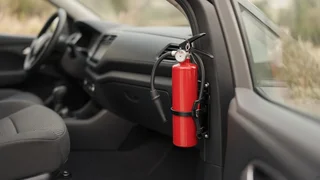
An extinguisher rolling loose in the cabin is a projectile in a crash and is hard to find in a hurry. Choose a model that comes with, or accepts, a metal quick-release bracket. Plan a mounting point within the driver's reach, bolted to a solid structure rather than to trim. Measure your space before ordering, because larger cylinders hold more agent but may not fit under a seat or on a transmission tunnel. The supplied evidence does not include cylinder dimensions or weights for any Lifeline model, so confirm them with the seller.
Gauge, service and refills
Check whether the unit has a pressure gauge you can read at a glance, whether it can be recharged or is disposable, and who can service it in your area. Refill and inspection requirements for motorsport units can be stricter than for household extinguishers, and some series require a valid service date on the label. This article has no confirmed service intervals or refill costs, so ask the seller or an authorized service agent.
Buying from a legitimate source
Safety equipment is sometimes counterfeited or sold past its service life. Buy from an established motorsport or safety retailer, check that the labeling and certification marks are intact, and confirm the manufacture or service date before installing the unit. No pricing or retailer information was supplied for this article.
Using an extinguisher in a vehicle fire
An extinguisher is for small, early-stage fires and for helping people escape. It does not replace getting clear of the vehicle. A general sequence for road vehicles:
Pull over as soon as it is safe, turn off the ignition and get everyone out and well away from the vehicle and traffic. Call 911. Only attempt to fight the fire if it is small, you have a clear escape route and you are not alone with the hazard. Do not fully open a hood that has smoke or flames coming from under it, because the inrush of air can intensify the fire. Discharge through the grille, the wheel wells or a slightly opened gap. Use the PASS method: Pull the pin, Aim at the base of the flames, Squeeze the handle, Sweep side to side. If the fire does not shrink quickly, or the extinguisher runs out, back away and wait for firefighters.
Electric and hybrid vehicles need extra caution. A high-voltage battery in thermal runaway, where damaged cells keep heating themselves, can reignite and release toxic gases, and a handheld extinguisher is unlikely to stop it. If smoke or fire involves the battery area, evacuate, keep your distance and tell the 911 dispatcher that the vehicle is electric or hybrid.
Gaps to resolve before you buy
Which Lifeline handheld models and onboard systems are currently sold in the US. The extinguishing agent, fire class rating and agent capacity of each model. Whether a given model carries a US laboratory listing, FIA homologation, SFI certification or another mark, and whether that mark meets your requirement. Cylinder dimensions, weight and the bracket included. Service intervals, refill availability and costs. Current prices and authorized sellers.