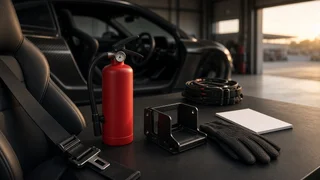
Choosing a Small Portable Fire Extinguisher for a Car
The short answer
For most private cars in the US, a good choice is a compact extinguisher that carries a recognized testing-laboratory listing and a rating for at least Class B (flammable liquids such as fuel and oil) and Class C (energized electrical equipment). Many buyers choose a multipurpose ABC dry chemical unit because it also covers Class A fires involving ordinary materials such as upholstery, paper and fabric. Buy one that comes with a sturdy mounting bracket, has a pressure gauge you can read at a glance, and is labeled for the temperature range your car's interior will reach.
Two conditions change this answer. First, if you drive an electric vehicle or a hybrid, a small handheld extinguisher is not a realistic tool for a fire in the high-voltage battery pack; it is useful only for minor fires elsewhere, such as in the cabin, and the main response to a battery fire is to get everyone away and call 911. Second, if the vehicle is used commercially, there may be regulatory requirements for extinguisher type, rating and mounting that override personal preference, so check the rules that apply to your vehicle class before buying.
Whatever you buy, a car extinguisher is for small, early-stage fires and for helping you get people out safely. It does not replace leaving the vehicle and calling emergency services.
What to check before you buy
Fire class rating and listing
Extinguisher labels in the US use letter classes and, for Classes A and B, a number in front of the letter, for example a format such as 1-A:10-B:C. The letters tell you which types of fire the unit is tested for. The number in front of A or B indicates relative fire-fighting capacity within that class: a higher number means the unit was able to handle a larger test fire. Class C has no number because it only confirms that the agent does not conduct electricity.
Class A: ordinary combustibles such as seat fabric, carpet, paper and plastics. Class B: flammable liquids and gases, including gasoline, diesel, oil and some fluids. Class C: fires involving energized electrical equipment, such as wiring and electrical components. Class D and Class K: metal fires and cooking-oil fires; these are specialist ratings not normally needed for a passenger car.
Look for a listing mark from a recognized testing laboratory and a printed class rating on the label. Some small aerosol-style fire suppression sprays are sold for cars without a formal class rating. They may be convenient, but without a rating you have no standardized way to compare what they can actually put out. If a product's packaging uses vague terms like "fire safe" or "for all fires" without a printed rating, treat that as a reason to look elsewhere.
Extinguishing agent
The agent is the substance the extinguisher discharges. For cars, the common options are dry chemical and clean agent.
Multipurpose dry chemical (ABC): covers the three fire classes most relevant to a car and is widely available. The powder leaves a residue that can damage electronics and interior surfaces and needs prompt cleanup after use. BC dry chemical: covers fuel and electrical fires but not ordinary combustibles, so it is less complete for cabin fires. Clean agent: discharges a gas or vaporizing liquid that leaves little or no residue, which appeals to owners of cars with sensitive electronics or valuable interiors. Clean agent units are generally more expensive and often carry a lower rating than a dry chemical unit of similar size, so compare the printed ratings rather than the physical size.
Water-based extinguishers are not suitable for fuel or electrical fires and are not a good fit for general car use.
Size and where it will fit
Smaller units are easier to store but hold less agent and discharge for a shorter time. Handheld extinguishers empty quickly, so a unit that is too small may run out before a fire is controlled. Decide where it will be mounted before choosing a size, then pick the largest rated unit that fits that location securely and that you can lift and aim comfortably. Measure the space rather than relying on how compact a product looks in photos.
Mounting
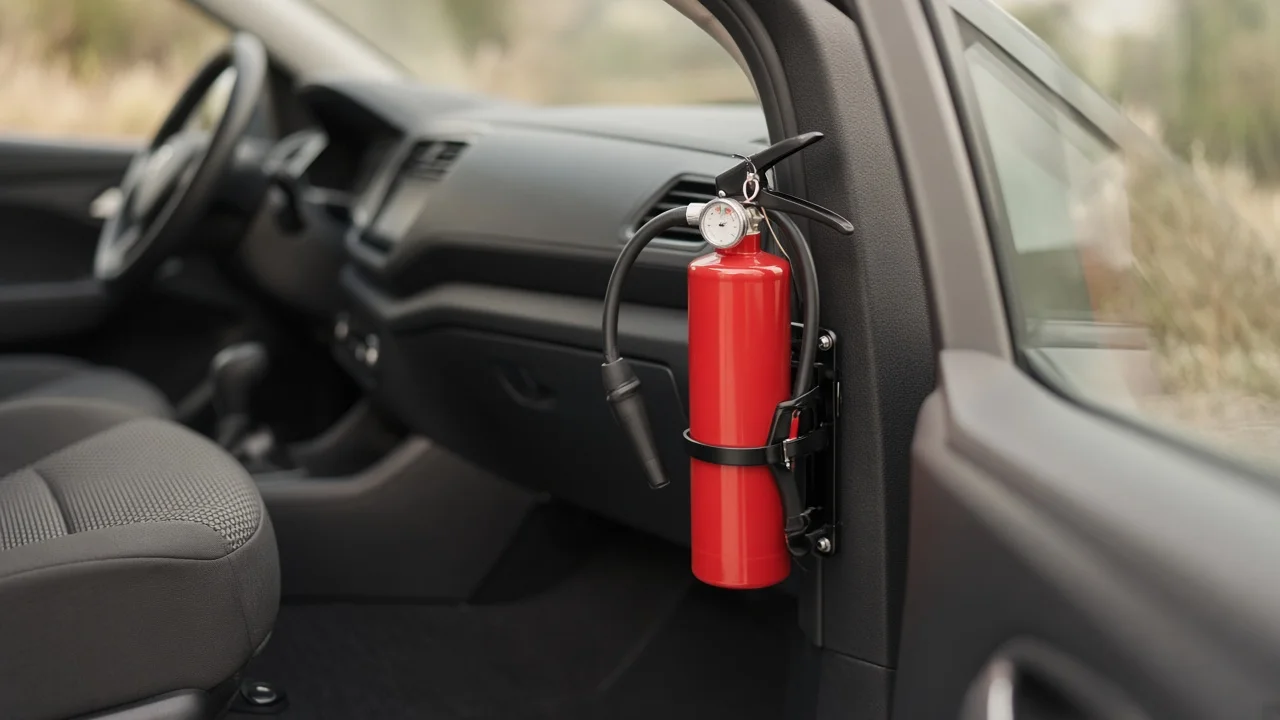
An extinguisher rolling loose in the cabin can become a dangerous projectile in a crash or hard stop, and it may be out of reach when you need it. Choose a model with a secure bracket, ideally one designed for vehicles, and check how it attaches. Common locations include under or beside a front seat, on a seat-base rail or in the cargo area within easy reach. Avoid any mounting that requires drilling near fuel lines, wiring or airbag components; if you are unsure, a professional installer can advise on a safe location for your specific vehicle.
Seat-mounting brackets are vehicle-specific. Fit can vary by model year, trim and seat type, including powered seats, so confirm that any vehicle-specific bracket lists your exact vehicle rather than just the make or model name.
Temperature tolerance
A parked car can get very hot in summer and very cold in winter. Extinguisher labels state an operating or storage temperature range. Check that it suits your climate and where the unit will sit, as heat can affect pressure and some agents perform poorly in extreme cold. Keeping the unit out of direct sunlight, for example under a seat rather than on the rear parcel shelf, helps.
Build quality, gauge and serviceability
Pressure gauge: lets you confirm at a glance that the unit is charged. Valve and handle: metal components are generally more durable than plastic, which matters for a unit exposed to vibration and temperature swings. Rechargeable or disposable: rechargeable units can be serviced and refilled by a qualified technician; disposable units must be replaced after use or once they lose pressure. Manufacture date and service life: check the date marked on the unit when you buy it and the manufacturer's stated service life or replacement interval. Clear instructions: the operating steps should be printed legibly on the label so anyone in the car can use it under stress.
Total cost of ownership
The purchase price is only part of the cost. Factor in a bracket if one is not included, any installation, periodic inspection or professional servicing for rechargeable units, recharging after any discharge, and eventual replacement when the unit reaches the end of its service life. Even a brief test spray can cause a loss of pressure, so assume any use means recharging or replacing it. No price data was supplied for this guide, so compare current listed prices yourself and note which costs each listing includes; advertised prices may not reflect what you will actually pay once a bracket, shipping or servicing are added.
Vehicle-specific considerations
Electric and hybrid vehicles: a lithium-ion traction battery can enter thermal runaway, a self-sustaining chemical reaction that a small handheld extinguisher cannot stop and that can reignite after appearing to go out. A rated extinguisher can still be useful for a small cabin fire that does not involve the battery, but the priority with any suspected battery fire is to get out, move well away and call 911, telling the dispatcher that the vehicle is electric or hybrid.
Commercial, rental-fleet and specialty vehicles: rules for extinguisher type, rating and mounting may apply depending on the vehicle and how it is used. Confirm the requirements for your situation before buying, since a unit that suits a private car may not satisfy them.
Using it safely
Buying the right extinguisher matters less than knowing when not to use it. If a fire is spreading, if smoke is filling the cabin, or if the fire involves the fuel tank or an EV battery, leave the vehicle, move a safe distance away and call 911.
Stop, turn off the engine and get everyone out of the vehicle first. Call 911 before attempting to fight the fire. For a fire under the hood, avoid opening the hood fully, because the extra air can make the fire grow suddenly. Keep a clear escape path behind you and stay upwind of smoke. Use the common PASS method: Pull the pin, Aim at the base of the fire, Squeeze the handle, Sweep side to side. If the fire does not go down quickly, stop and move away.
Ongoing checks
Check the gauge regularly to confirm it is still in the charged range. Inspect the bracket, pin, seal and hose or nozzle for damage or looseness. For dry chemical units, follow the manufacturer's guidance on whether and how to agitate the powder to prevent it from compacting. Recharge or replace after any use or if the gauge shows low pressure. Replace the unit when it reaches the end of the manufacturer's stated service life.
Gaps in this guide
This guide is based on general fire-safety principles rather than product testing. No specific products, prices, discharge times, capacities or independent test results were available, so it does not rank models or recommend a particular weight or rating level. When comparing products, check the printed class rating, listing, temperature range and service requirements on each unit, and confirm any bracket fit against your exact vehicle model year and trim.