Find an independent pre-purchase vehicle inspection service
The short answer
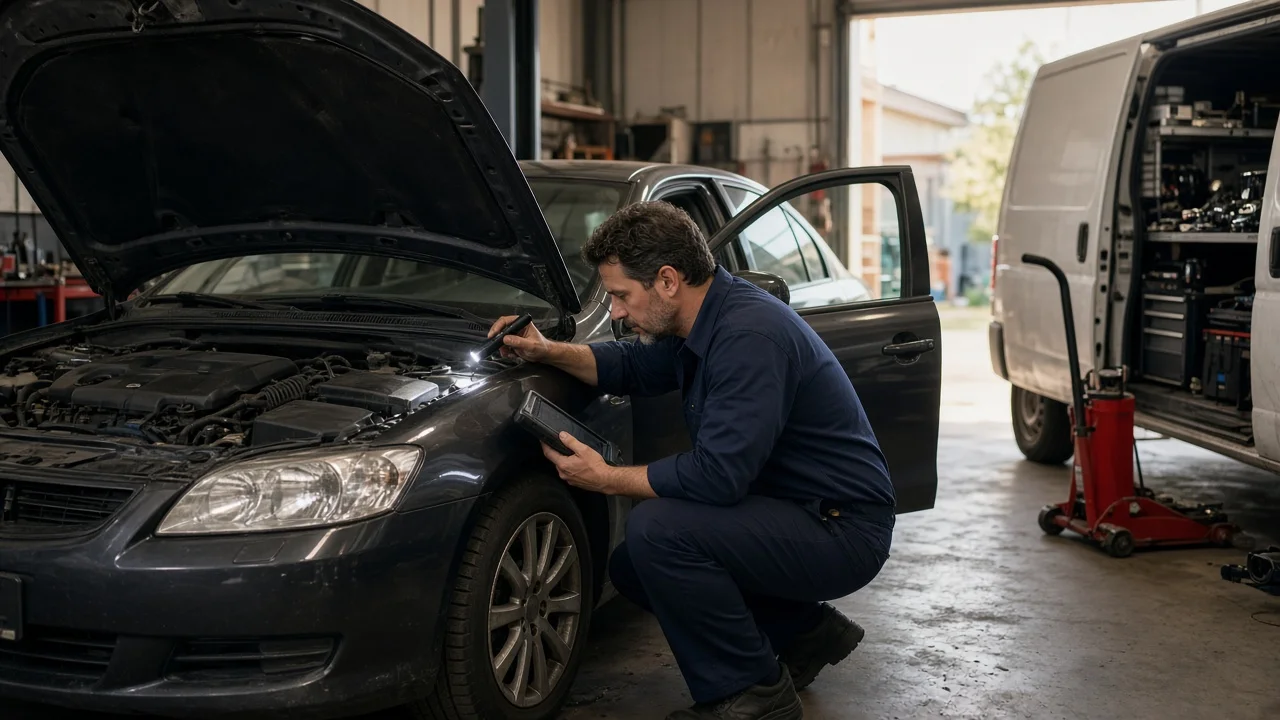
Choose an inspector with no connection to the seller. That can be an independent repair shop, a mobile inspection service that comes to the car, or a specialist who works on that make or powertrain. Before you book, confirm what the inspection includes, whether you get a written report, and whether the seller will allow the car to be inspected. Compare services by scope and independence, not only by price.
Three situations change the choice. If the car is far from you, a mobile inspector near the car is usually the practical option. If the vehicle is a hybrid, electric, diesel, performance, classic or less common import, look for someone who knows that type of vehicle. If the seller is a dealer, keep the inspection separate from the dealer's own service department.
No verified local providers, prices or contact details were available for this guide. It explains how to evaluate services, but it does not recommend specific businesses or quote fees.
Where to look for an inspector
Independent general repair shops near where the car is located. Many will perform a pre-purchase inspection if you ask, even if they don't advertise it. Mobile pre-purchase inspection services that travel to a private seller's driveway or a dealer's lot. These help when you can't see the car in person. Make or powertrain specialists, such as shops that focus on a particular brand, on diesel engines, or on hybrid and electric vehicles. Franchised dealers for the same brand, but not the dealer selling the car. They may have factory diagnostic tools and service records access that general shops lack.
Avoid using a mechanic the seller recommends or arranges. Even a competent inspector has a conflict of interest when the seller picked them.
How to vet an inspection service before booking
Ask each candidate the same questions so the answers are easy to compare.
Independence: Do you have any business relationship with this seller or dealership? Qualifications: Are your technicians ASE-certified? ASE is the National Institute for Automotive Service Excellence, a common US credential for mechanics. Do you have experience with this make, model and powertrain? Scope: Do you put the car on a lift? Do you road-test it? Do you scan the onboard computer for stored fault codes? Report: Will I get a written report, ideally with photos, and can I talk to the inspector afterward? Logistics: Do you inspect at your shop, at the seller's location, or both? How soon can you do it? Fees: What does the quoted fee include, and what would cost extra, such as travel, specialized tests or partial disassembly?
Check recent reviews and see whether they describe pre-purchase inspections specifically, rather than general repair work. A shop that does good repairs may still produce a thin inspection report.
What a thorough inspection should cover
Services package inspections differently. Use this list to judge whether one service covers more than another.
Diagnostic scan: The inspector reads the OBD-II system, the standardized onboard diagnostics port on US cars from the 1996 model year onward. This shows stored or pending fault codes, and readiness monitors can reveal codes that were recently cleared. Engine and transmission: Leaks, fluid level and condition, unusual noises, warning lights, shifting quality and cold-start behavior where possible. Underbody on a lift: Rust, frame or subframe damage, suspension and steering wear, exhaust condition, and signs of past collision repair. Brakes and tires: Remaining pad and rotor life, tire tread depth and uneven wear that may point to alignment or suspension problems. Body and paint: Panel gaps, mismatched paint and overspray that suggest prior repairs. Electrical and interior: Lights, climate control, windows, infotainment, and signs of water intrusion. Road test: Steering, braking, vibration, noise and transmission behavior at varied speeds.
Some vehicles need additional checks. A hybrid or electric car needs an assessment of high-voltage battery health, and not every general shop can do this. A turbocharged, diesel or high-performance engine may warrant a compression or leak-down test, which measures how well the cylinders seal. These tests take more time and usually cost more, so ask about them in advance.
Checks to do alongside the inspection
A mechanical inspection does not verify the car's paperwork or history. Handle these items separately because any of them can change the decision.
Match the VIN, the 17-character vehicle identification number, on the dashboard, the driver's door jamb and the title. Run a vehicle history report to look for reported accidents, title brands such as salvage or flood, and odometer inconsistencies. Check for open safety recalls using the VIN through the manufacturer or the federal recall lookup. Confirm that the seller has the title in hand and that any lien has been resolved. Ask for maintenance records and compare them with the manufacturer's service schedule for that model year and powertrain.
Comparing inspection prices
No verified fee data was available, and prices vary by region, provider type and vehicle. When you compare quotes, confirm the date of the quote, exactly what it covers, and whether travel or add-on tests are extra. An advertised starting price may not match what you pay for the car you're considering. A cheaper inspection that skips the lift or the road test may miss the problems most likely to affect your decision.
Arranging the inspection with the seller
Ask the seller for permission before booking, and agree on where and when the inspection will happen. A seller who refuses any independent inspection, or allows it only at a shop they choose, is giving you information worth weighing. For a long-distance purchase, a mobile inspector near the car can report back before you travel or arrange shipping.
Understanding the limits
An inspection describes the car's condition on the day it was examined. It does not guarantee future reliability. Without disassembly, an inspector cannot see inside the engine or transmission, and an intermittent fault may not appear during a short road test. Read the report for both confirmed problems and items the inspector could not check.
Using the report to decide
Sort the findings into three groups: Safety-critical problems that must be fixed before driving. Near-term costs, such as tires, brakes or overdue maintenance. Signs of hidden or serious trouble, such as frame damage, flood exposure or major powertrain faults. Ask a shop for written repair estimates on the first two groups and use them to negotiate or to ask the seller to make repairs. Findings in the third group are often reasons to walk away rather than negotiate.