What an Independent Vehicle Inspection Involves
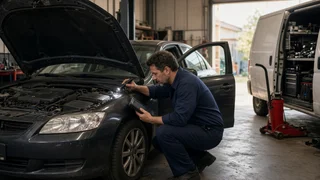
An independent vehicle inspection is an evaluation of a used car's condition by a mechanic or inspection service that has no stake in the sale. The buyer usually arranges it before purchase, though the buyer or seller may pay. The inspector examines the body, mechanical systems, electronics and documents, usually drives the car, and gives the buyer a written report. Its purpose is to reveal problems the seller may not have disclosed or may not know about, so the buyer can negotiate, ask for repairs or walk away. It is a separate service from the safety or emissions inspection some states require for registration, even though both are often called vehicle inspections.
Vehicle inspection meaning: the main types
In general use, a vehicle inspection is a structured check of a vehicle against a set of inspection criteria. What those criteria are depends on who is doing the inspection and why. In the US, the phrase usually refers to one of three things.
State safety inspection: a mandatory check, required in some states, that confirms a vehicle meets minimum roadworthiness standards for items such as brakes, lights, steering, tires and glass. Emissions test: a mandatory check, required in some states or regions, that confirms the vehicle's emissions-control system is working. On many newer vehicles this is done by reading the onboard diagnostic system rather than measuring exhaust directly. Independent or pre-purchase inspection: a voluntary, broader assessment ordered by a buyer, or sometimes offered by a seller, to judge a specific vehicle's overall condition and likely upcoming costs.
Requirements for safety and emissions inspections vary widely by state, and sometimes by county. Some states require neither. Others require one or both on a set schedule, at registration or when ownership transfers. Check your state's motor vehicle agency for the rules that apply to you.
How an independent inspection differs from a state inspection
Aspect | State safety or emissions inspection | Independent pre-purchase inspection; Purpose | Confirm legal minimum standards for registration | Assess overall condition and hidden problems before buying; Required? | Mandatory where the state requires it | Voluntary; Who performs it | Stations licensed or authorized by the state | A mechanic, dealership service department or mobile inspection service chosen by the buyer; Scope | Fixed list of items set by regulation | Usually broader; varies by provider and package; Outcome | Pass or fail; a sticker, record or test certificate where issued | A written condition report with findings and, often, photos; If problems are found | Repair the issue, then return for a retest | Buyer decides whether to negotiate, request repairs or decline the purchase
A car can pass a state inspection and still have expensive problems. A worn transmission, an oil leak, early rust or a fault in a comfort feature may fall outside the state's checklist. Likewise, a recent passing sticker shows only that the car met the minimum standard on that date. It is not a full condition assessment.
What an independent inspection typically covers
Providers set their own checklists, so scope varies with the service, the package and the type of vehicle. Most thorough pre-purchase inspections include the areas below.
Vehicle identification and paperwork
The inspector confirms the vehicle identification number (VIN) and checks that it matches the title, registration and the VIN labels found in several places on the car. A mismatch, a damaged VIN plate or replaced labels can point to serious repairs or a title problem. Some services also note open safety recalls or review a vehicle history report. Others leave that to the buyer.
Body, frame and exterior
The inspector looks for signs of past collision repair, such as uneven panel gaps, paint that doesn't match, overspray on trim or seals, and replaced or welded structural parts. They also check for rust, flood indicators, glass damage and working exterior lights. Some inspectors use a paint thickness gauge to find refinished panels.
Engine bay and fluids
This part covers fluid levels and condition, leaks, belts and hoses, the cooling system, the battery and terminals, and visible wiring. Contaminated or burnt fluids, evidence of overheating, and makeshift repairs are common findings.
Underside, suspension, steering and brakes
With the car on a lift or viewed from below, the inspector checks the exhaust system, suspension components, steering linkage, CV joints and boots, driveline parts, and any frame or subframe damage. Brake pads, rotors, lines and calipers are checked for wear and leaks. Tires are checked for tread depth, uneven wear that can indicate alignment or suspension problems, damage and age.
Interior, electronics and features
Interior checks cover warning lights at startup, climate control, windows, locks, seats, infotainment, cameras and driver-assistance features where fitted, along with seat belts and airbag indicators. Odors, water stains or corrosion under carpets can point to leaks or flood exposure.
Diagnostic scan
Many inspectors connect a scan tool to the onboard diagnostic port to read stored and pending fault codes and check emissions readiness monitors. If the monitors show not ready, the codes may have been cleared recently, possibly to hide a warning light. Treat any fault code as a lead for further diagnosis rather than proof that a specific part has failed.
Road test
Where the seller allows it, the inspector drives the car to check cold-start behavior, engine performance, transmission shifting, braking, steering feel, alignment, noises and vibrations. A road test often turns up issues a stationary check cannot.
Hybrids, EVs and specialty vehicles
Electrified vehicles need extra attention to the high-voltage battery and charging system. Depending on the vehicle and the tools available, this can include reading battery health data, checking charging operation and looking for high-voltage system faults. Not every general inspection service is equipped for this, so confirm before booking. The same applies to diesel trucks, performance cars, classics and modified vehicles. These often benefit from an inspector who knows that specific type.
What an inspection cannot tell you
An independent inspection is a snapshot of the car's visible and testable condition on one day. It is usually non-invasive. The inspector generally does not remove major components or open up the engine or transmission, so internal wear may go undetected unless it shows symptoms. Intermittent faults may not appear during the visit. The report also does not replace a title check or vehicle history report, and it is not a warranty. A clean report lowers your risk but does not remove it.
How the process usually works
1) Choose an inspector with no connection to the seller, such as an independent repair shop, a brand specialist or a mobile inspection service. Avoid relying only on an inspection arranged by the seller. 2) Ask what the package includes. Check whether it includes a lift inspection, a diagnostic scan, a road test, photos and any checks specific to your vehicle type. 3) Get the seller's agreement. Arrange a time and place, and confirm the inspector may road test the car. A seller's refusal to allow an independent inspection is itself useful information. 4) Provide the VIN and listing details in advance so the inspector can prepare for model-specific weak points. 5) Attend if you can, or ask for a call afterward to go over the findings. 6) Review the written report and ask the inspector to separate safety-critical items, near-term repairs and minor or cosmetic issues. 7) Get repair estimates for significant findings before you decide.
Shop-based versus mobile inspections
A shop inspection usually allows a full lift inspection and more specialized equipment. That suits higher-value cars or vehicles where underbody condition matters most. A mobile inspector comes to the seller's location, which helps when the car is far away or the seller won't move it. Mobile inspections may have a more limited view of the underside. Either can be worthwhile. Ask each provider exactly what they can and cannot check at the location.
Using the report: next steps
How you act on the report depends on how serious the findings are and how much they would cost to fix.
Minor or expected wear items, such as tires, brakes or fluids due soon: factor them into your offer or ask the seller to address them. Significant but repairable faults: use repair estimates to negotiate the price, or ask the seller to complete repairs before sale and consider having the work rechecked. Structural damage, flood signs, VIN or title inconsistencies, or major powertrain problems: these usually justify walking away unless you understand and accept the risk. Safety or emissions items that would fail your state's required inspection: confirm who will fix them before the transfer. If the vehicle fails a state test after purchase, it will typically need repair and a retest before it can be registered.
Who benefits most from an independent inspection
An inspection is most valuable in private-party sales, out-of-state or remote purchases, older or higher-mileage vehicles, cars with incomplete service records, and models known for costly failures. It can still be worthwhile when buying from a dealer, including certified pre-owned vehicles, because the dealer's own checks are not independent. For sellers, a recent independent report shared with buyers can build trust and speed up a sale. For any buyer, the cost of an inspection is usually small compared with the cost of an undiscovered major repair.