Identifying a Ford Transmission Shift Solenoid
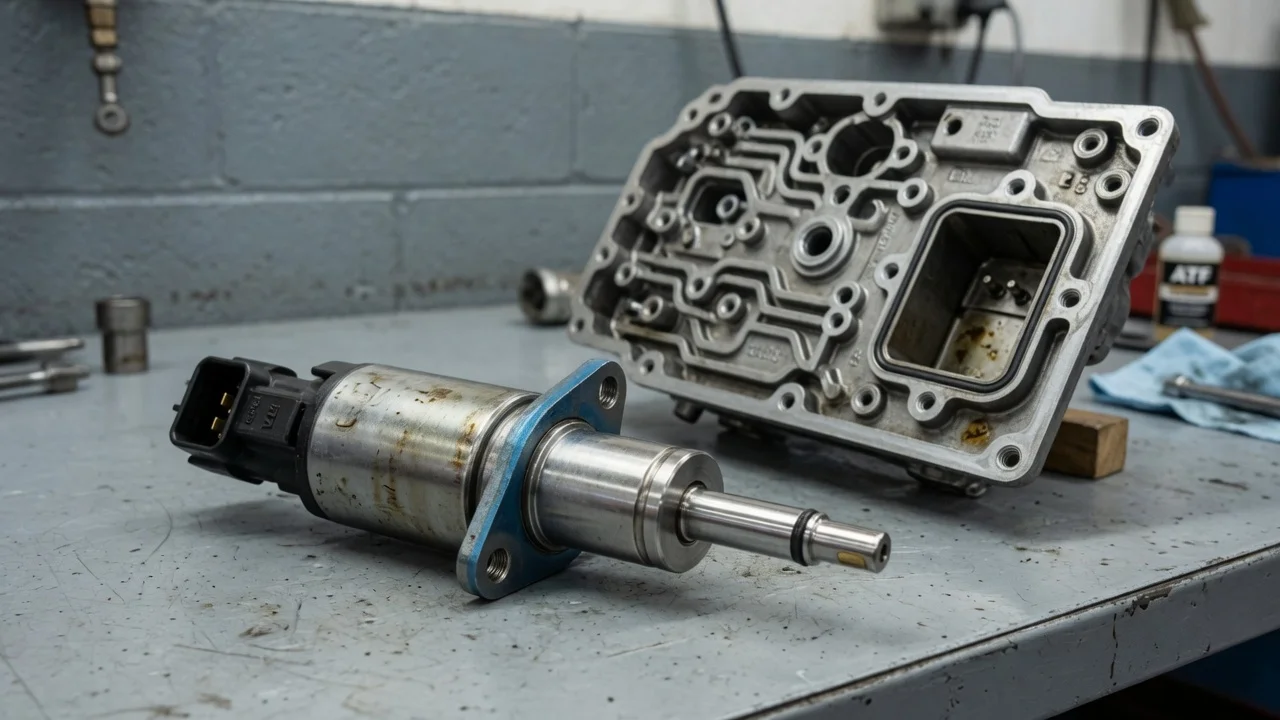
When a Ford automatic shifts late, flares between gears or sets a transmission code, the shift solenoid often comes under suspicion. Identifying the right solenoid starts with identifying the transmission itself. Ford has used many automatic designs, and each has its own solenoid layout, naming and service method. This guide explains how to work out which solenoid a code or symptom points to. That identification is where diagnosis starts. It does not prove that a part has failed.
Identifying the right shift solenoid
To identify a shift solenoid on a Ford, you need three things: the exact transmission model, the solenoid designation used for that transmission, and any stored diagnostic codes. Ford and the generic OBD-II code set label shift solenoids by letter, such as shift solenoid A, B, C and onward. Codes in the P0750 to P0770 range refer to those lettered circuits. The letters do not match the same physical part or the same gear on every transmission. A letter only becomes meaningful once you know which unit is in the vehicle.
On many Ford automatics, the solenoids sit on or in the valve body inside the transmission pan. On several designs they are sold as a solenoid body or pack rather than as individual parts. A code that names a solenoid tells you which circuit or commanded function the control module flagged. It does not confirm that the solenoid itself has failed.
How shift solenoids control gear changes
A shift solenoid is an electrically controlled valve. The powertrain or transmission control module switches or modulates it, and the solenoid sends hydraulic pressure either to shift valves or directly to clutch circuits. Each gear corresponds to a particular combination of solenoid states, so the module selects a gear by energizing some solenoids and releasing others. Older designs typically used simple on/off solenoids. Many newer Ford transmissions use variable force or pulse-width-modulated solenoids, which control clutch apply pressure more precisely and help produce smooth modern shifts.
The module also checks the result. It monitors solenoid circuit resistance or current, and on many applications it compares input and output shaft speeds against the commanded gear. As a result, a single fault can show up in different ways. An electrical problem may set a circuit code. A hydraulic or mechanical problem may instead set a ratio or performance code that names the gear rather than the solenoid. Harsh engagement, slipping or a missing gear can come from the solenoid, the wiring, the valve body, low or degraded fluid, worn clutches or the module's adaptive settings.
What changes the answer
Transmission type matters most. Ford has used four-, five-, six-, eight- and ten-speed automatics, including transaxles in front-drive vehicles and longitudinal units in trucks and rear-drive cars. Some small cars also used a dual-clutch automated transmission, which works on a different principle from a conventional planetary automatic. Solenoid count, location and connector layout vary by design, as does whether the control module is mounted inside the transmission. On units with an internal module, replacing a solenoid may mean replacing the module assembly and programming it.
Fluid specification also differs by transmission and model year, and the Mercon grades are not interchangeable in every application. The wrong fluid or an incorrect fill level can mimic solenoid trouble, so confirm the specification in the owner's manual or on the dipstick or fill area where one is marked. Service history matters as well. A recent fluid change, valve body repair, software update or battery disconnect that cleared shift adaptations can each change what the symptoms mean. Parts fitment also depends on more than model and year, because the same model can be built with more than one transmission.
What the owner can do
Start by confirming the transmission. On many Ford vehicles, the certification label on the driver's door jamb includes a transmission code. The transmission case usually carries an identification tag or stamping. The owner's manual, the original window sticker or a dealer VIN lookup can also confirm the exact unit. Write down the transmission name, engine and drive type before you shop for parts or look up service information.
Next, read the diagnostic codes with a scan tool that can access transmission data, not just generic engine codes. Note every code, whether it is current or stored, and any freeze-frame data. Record when the shift problem happens: cold or hot, light or heavy throttle, which gear change, and whether the vehicle drops into a limp mode with a fixed gear. Check fluid level and condition using the procedure for your transmission. Some Ford units have no dipstick and are checked through a plug at a specified temperature. Where you can reach them safely, inspect visible wiring and connectors for damage, oil intrusion or corrosion.
With that information, the repair options become clearer. A circuit code caused by a wiring fault may be fixed without opening the transmission. If a code persists after the wiring checks out, the next step is usually to test the solenoid's resistance and operation following the factory procedure. The individual solenoid or the whole solenoid body is then replaced, depending on what the design allows. Ratio or slip codes may point to hydraulic problems or internal wear, which a solenoid alone is unlikely to fix. Before approving parts, ask the shop which test confirmed the fault.
Limitations and when to get help
This overview cannot tell you which lettered solenoid controls which gear on your vehicle, what the correct resistance values are or how to do the replacement. Those details are specific to each transmission and sometimes to the model year. Get them from factory service information or a qualified transmission technician. Many modern Ford transmissions need a scan tool to reset adaptive learning after solenoid or valve body work, and some also need module programming. Skip that step and shift quality can stay poor even with the correct part installed.
If the vehicle is in limp mode, slips under load or has burnt-smelling or contaminated fluid, limit driving and have it inspected promptly. Continued driving can turn a control problem into internal damage. Bring your transmission identification, code list, symptom notes and service history to the appointment. That record shortens diagnosis and helps you judge whether a recommended shift solenoid replacement fits the evidence.