Identifying a 6L80 Transmission Shift Solenoid
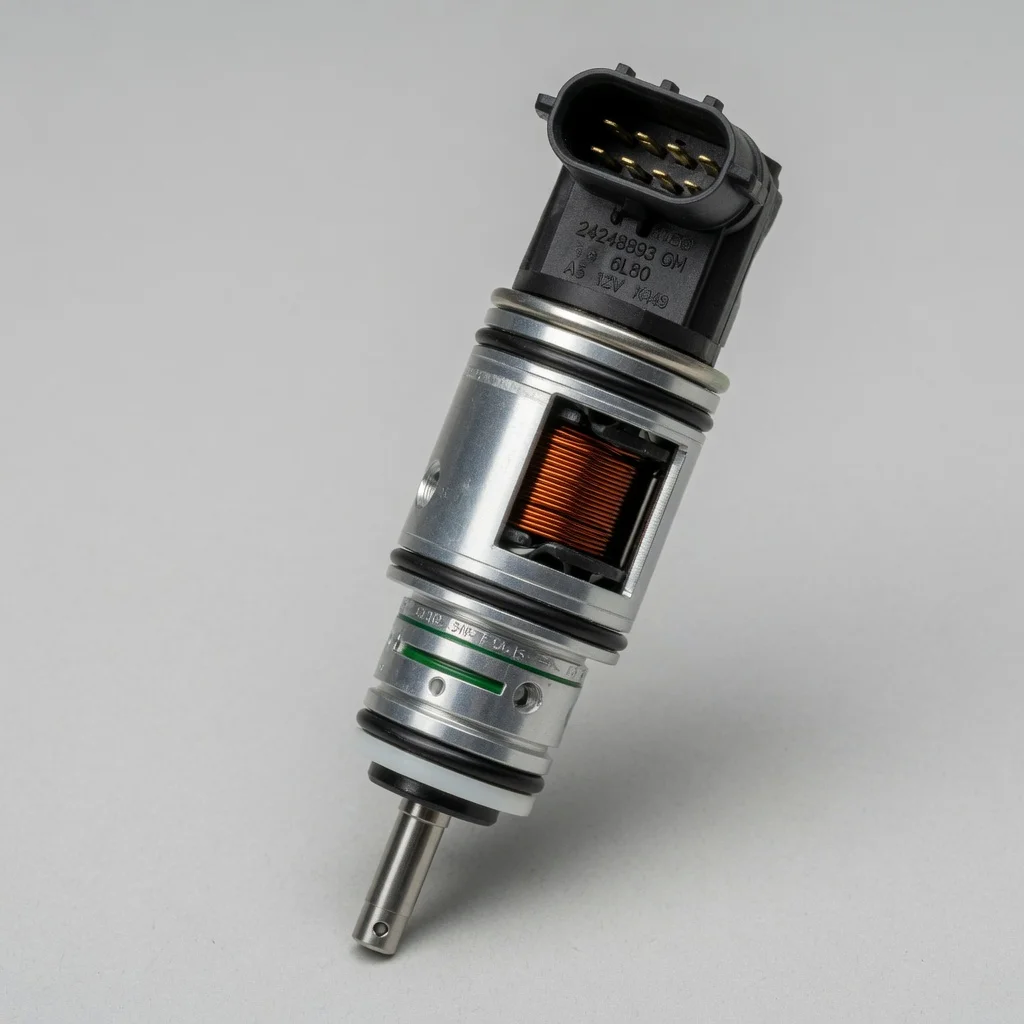
The 6L80 is GM's six-speed rear-wheel-drive automatic, used in many trucks, SUVs and performance cars. Owners looking for a shift solenoid usually find that it is not a separate part bolted to the case. It is one element of an electro-hydraulic control assembly inside the oil pan. This guide covers how to identify the solenoids, what changes the answer for your vehicle, and how to approach a solenoid-related diagnosis without guessing.
Short answer: where the 6L80 solenoids live
Many older four-speed units used loose shift solenoids that were listed and sold individually. The 6L80 does not. Its solenoids are mounted on the transmission electro-hydraulic control module, often abbreviated TEHCM. That assembly combines the transmission control electronics, the solenoid body and several internal sensors, and it bolts to the valve body under the oil pan. Identifying a 6L80 transmission shift solenoid therefore usually means identifying the correct control module assembly for your transmission and vehicle, not a single plug-in valve.
The assembly carries an on/off shift solenoid along with several pressure control solenoids. Those include a line pressure control solenoid, clutch pressure control solenoids that apply and release individual clutches, and a torque converter clutch control solenoid. In factory service terms, GM generally supplies the complete assembly rather than individual solenoids. A replacement module normally has to be programmed to the vehicle before it will operate correctly.
How the solenoids control shifting
Most 6L80 shifts are clutch-to-clutch: one clutch releases while another applies, and the timing between them decides whether the shift feels smooth, harsh or slipping. The control module reads input and output shaft speed, throttle position, engine torque and fluid temperature. It then commands the pressure control solenoids to meter fluid pressure to each clutch circuit. The on/off shift solenoid positions valves in the valve body that route oil for certain gear ranges, so the pressure control circuits reach the right clutches.
The module varies pressure rather than simply switching it on and off, and it learns adaptive values as clutches wear and conditions change. As a result, a solenoid or pressure problem often shows up as a harsh, flared or delayed shift rather than a complete loss of a gear. Fluid condition matters as well. The solenoids have small passages, and debris or degraded fluid can make a valve respond slowly or stick. The factory fluid specification for the 6L80 is Dexron VI or an approved equivalent. Using the wrong fluid can change shift feel and how the module adapts.
What changes the answer for your vehicle
Confirm the transmission type first. The 6L80 shares its basic layout with the heavier-duty 6L90 and the lighter 6L45 and 6L50, but control modules and internal parts are not automatically interchangeable between them. The regular production option code on the vehicle's service parts label is the most reliable way to check. MYC is commonly the 6L80 and MYD the 6L90. Model year, engine, cab or body style, and two- or four-wheel drive can all affect the calibration and the module part number.
GM revised the module, connectors and software over the production run, so fitment should be checked by VIN rather than by appearance. A module from another year may not plug in, may not accept programming, or may behave differently once installed. Used modules from salvage vehicles are sometimes sold as a cheap fix. Whether one can be reprogrammed to your vehicle depends on its year and on the tools the installer has, so confirm this with the supplier before buying.
Operating conditions also change shift behavior. Cold fluid, heavy towing, an engine modified to make more torque, or aftermarket tuning software can all produce firm or delayed shifts that a properly working solenoid would not correct.
What the owner can do
Start by recording the symptom precisely. Note which shift is affected, whether it happens cold or hot, under light or heavy throttle, and whether it is constant or intermittent. Then read the diagnostic codes with a scan tool that can access the transmission module, because a basic engine code reader may miss transmission-specific data. Pay attention to the code wording. Circuit codes, such as low, high or open circuit, point toward an electrical fault in the solenoid, module or wiring. Performance or stuck codes, such as P0751 for shift solenoid performance, can also come from fluid, valve body or clutch problems. Gear ratio codes, such as an incorrect sixth gear ratio, describe slipping rather than naming a failed solenoid.
Check the fluid level and condition using the correct procedure. Many 6L80 applications have no dipstick. The level is checked at a check plug with the engine running and the fluid within a specified temperature range, usually read on a scan tool. Inspect the external transmission connector and harness for damage or oil intrusion, and confirm battery voltage is healthy, since low system voltage can set misleading codes. Review the service history for fluid changes, earlier module replacement and software updates.
Repair options depend on what testing shows. They include a software update or adaptive relearn, a fluid service, wiring or connector repair, control module replacement with programming, valve body repair, or an overhaul when clutches or other internal parts are worn. Choose the repair that matches confirmed evidence, not the cheapest part associated with the symptom.
Limitations and next step
A shift complaint or a stored code does not prove a solenoid has failed. The same harsh or flared shift can come from worn clutches, valve body wear, torque converter issues or fluid problems, and replacing the control module in those cases spends money without fixing the cause. If the pan contains heavy clutch material or metal debris, a new solenoid assembly alone is unlikely to cure the transmission and may itself be contaminated.
Module replacement also involves more than bolting in a part. It requires programming, usually followed by an adaptive learn procedure, and those steps need appropriate software access. For anything beyond reading codes and checking fluid and wiring, use the factory service information for your exact VIN. A transmission shop able to program GM modules can confirm the cause before parts are ordered.