6L80 Transmission Valve Body Identification
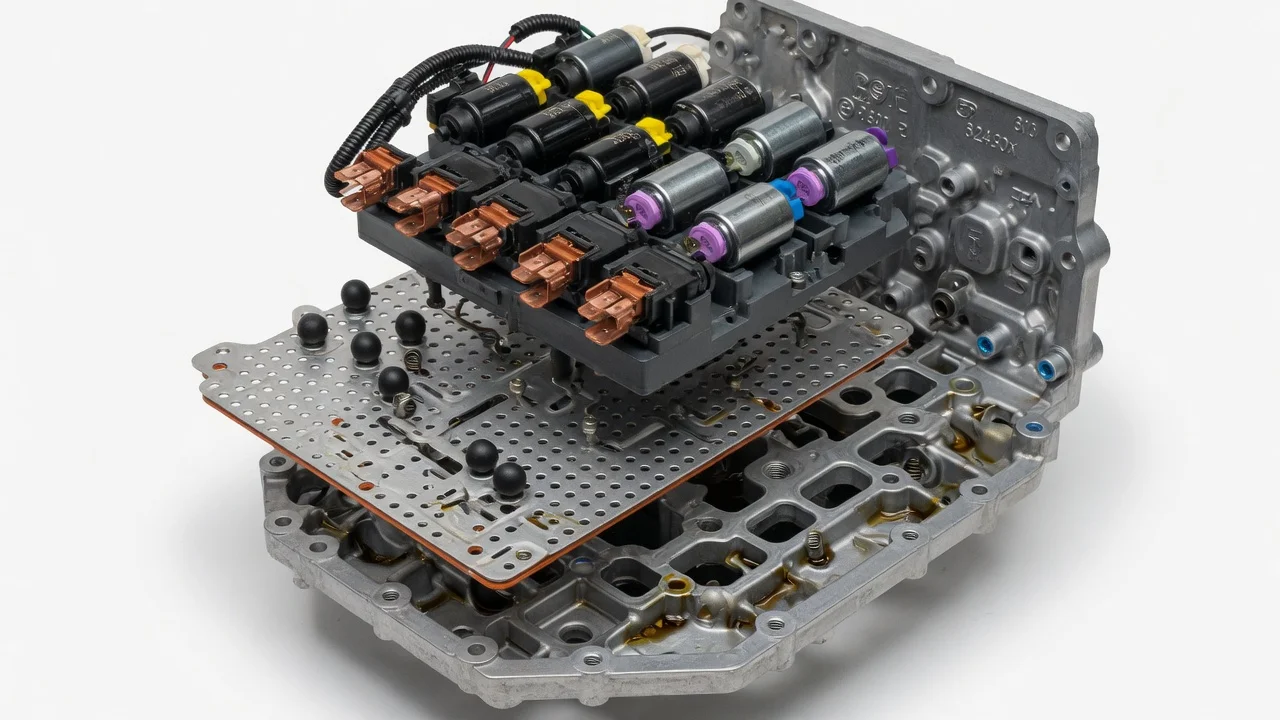
The valve body in a GM 6L80 automatic transmission is the hydraulic control center that directs fluid to the clutches. On this unit it is closely tied to an electronic control module mounted on it. You need to identify which valve body and control assembly your vehicle uses before you order parts, swap in a used unit or plan a repair. This guide explains how to confirm the transmission type and read the identifying information. It also explains why a shifting problem does not automatically mean the valve body has failed.
The Short Answer on Valve Body Identification
Start by confirming that the vehicle actually has a 6L80 and not a related six-speed such as the 6L90, 6L50 or 6L45. The most reliable sources are the Regular Production Option codes on the vehicle's service parts identification label and the identification information on the transmission case. Depending on the model, the label is usually in the glove box, on a door jamb or on the trunk lid. A dealer or parts counter can decode the VIN to find the original transmission. If the transmission was replaced at some point, it may not match the factory records.
Once the transmission type is confirmed, you identify the valve body and its control module from the part numbers and labels on the components themselves. These are read with the pan removed. On the 6L80, the transmission control module is built into the control solenoid valve assembly that bolts to the valve body. That means identification usually covers two related items: the hydraulic valve body casting and the electronic module with its solenoids. Matching the model year range alone does not guarantee fitment, because calibrations and component revisions changed over the production run.
How the Valve Body and Control Module Work Together
The valve body is a precision-machined casting filled with spool valves, springs, check balls and fluid passages. A separator plate and gaskets sit between it and the mating surface. Pressurized fluid from the pump passes through the valve body, and the valves route that fluid to apply or release the clutch packs that create each gear. Worn valve bores, sticking valves or a damaged plate can change pressure and timing, which shows up as altered shift behavior.
On the 6L80 the electronics sit directly on top of this hydraulic assembly. The control module reads input from sensors and switches, then commands the pressure control and shift solenoids that regulate the valves below them. Because the module and solenoids are combined in one assembly, an electrical fault and a hydraulic fault can produce similar symptoms. The module also stores adaptive shift values that compensate for wear. For that reason, a replacement assembly typically has to be programmed to the vehicle, and the adaptive values relearned, before shift quality can be judged fairly.
What Changes the Answer
GM used the 6L80 in many rear-wheel-drive and four-wheel-drive vehicles, including full-size trucks, SUVs and performance cars, so the correct parts depend on the application. The engine pairing, drivetrain, model year and original calibration all affect which control assembly and software are correct. The heavier-duty 6L90 shares the general design but is a different unit. The lighter 6L50 and 6L45 are not the same transmission either. Do not assume that parts listed for one of these families will fit another.
Service history also changes the picture. A transmission that was rebuilt or exchanged, or that received an aftermarket or remanufactured valve body, may carry different components than the vehicle had originally. Some repairs use modified or upgraded hydraulic parts, and some vehicles have had their software updated. If the physical parts, the labels and the vehicle records disagree, go by what is actually installed and confirm compatibility with the supplier before buying.
What the Owner Can Do
Gather the identifying information before you talk to a shop or parts supplier. That means the full VIN, the RPO codes from the parts label, the engine and drivetrain, and any known service history such as fluid changes, rebuilds or module replacements. If the pan is already off, photograph the labels on the control assembly and any numbers cast into the valve body without disturbing the wiring or connectors. Note the fluid specification as well. The 6L80 is factory filled with a Dexron VI type fluid. Confirm the correct fluid and level check procedure in your vehicle's service information. On many applications the level is checked at a specified fluid temperature through a check plug rather than with a dipstick.
For symptoms, record what the vehicle does and when it happens. Examples include harsh or delayed engagement, flares between gears, slipping, shudder, failure to shift or a reduced-function mode. Have the codes read from the transmission module with a scan tool that can communicate with it, because a basic engine code reader may not show everything. The codes and live data, such as commanded pressure, slip speeds and fluid temperature, help separate four possible causes: an electrical issue, a hydraulic issue, low or degraded fluid, or a torque converter concern. A shudder, for example, can come from the converter or the fluid condition rather than the valve body itself.
When you compare repair options, ask the shop three things: how they reached the diagnosis, whether the replacement part needs programming and a relearn, and what is covered if the symptom remains. A new or remanufactured assembly that has not been programmed for the vehicle may not work correctly. Judging a repair before the adaptive values have settled can also be misleading.
Limitations and Next Step
These general identification steps cannot replace the factory service information and parts catalog for your specific VIN. Label locations, part numbers, software levels and procedures vary by vehicle and year. A symptom alone does not confirm a failed valve body or control module, and pressure testing, electrical checks and scan data interpretation usually need professional equipment. If the vehicle is in a reduced-function mode, shifts erratically or is losing fluid, have a transmission specialist or dealer inspect it before you keep driving it. Bring the identification details you collected so they can confirm the correct parts and procedures.