How to Prepare a Car for a Weekend Away
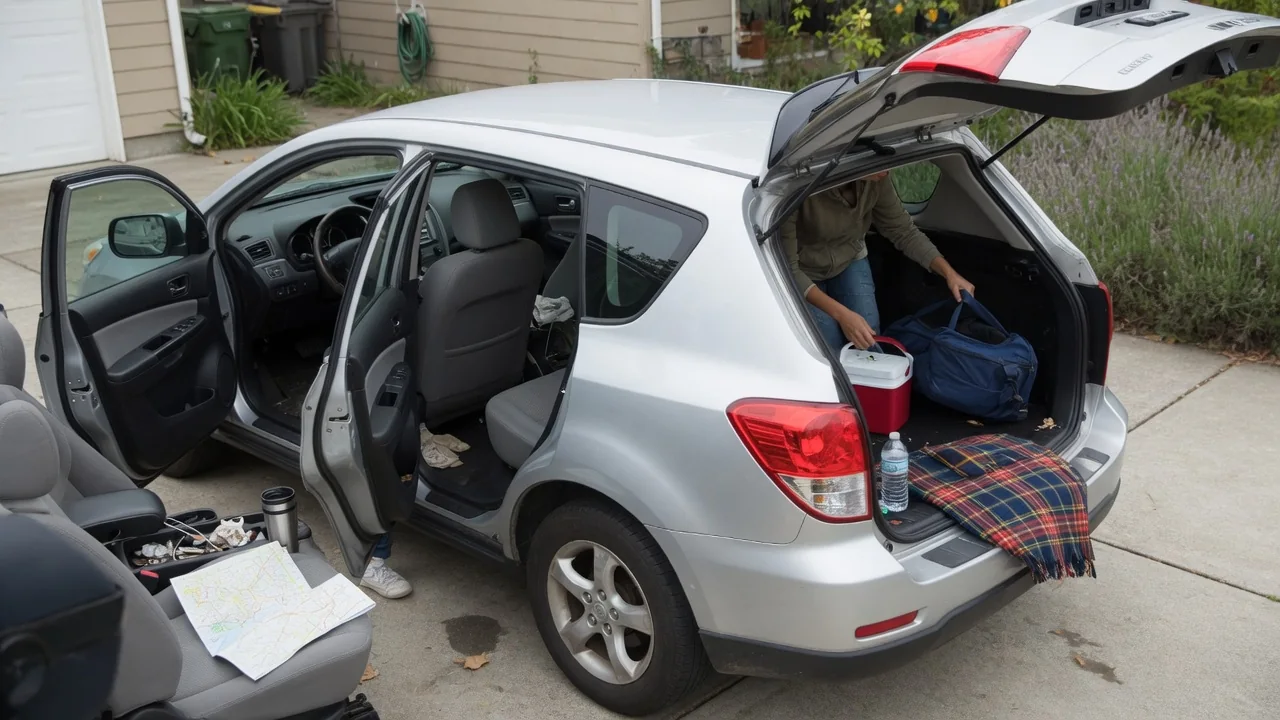
Knowing how to prepare a car for a weekend away is mostly about catching small problems in the driveway rather than on the shoulder of a highway. Even a short trip means sustained speeds, a heavier load and unfamiliar roads. The checks below take well under an hour, need no special tools, and show when a professional look is the wiser choice.
Tires and fluids
Start with the tires while they are cold, ideally before the car has moved that day, because driving warms the air inside and raises the reading. Compare each one against the pressures on the placard, usually found on the driver's door jamb or in the owner's manual, and note that some vehicles list a higher figure for a full load. Look across the tread for uneven wear, embedded nails and sidewall bulges or cracks, and remember the spare or the sealant kit if your car carries one instead.
Fluids come next, with the car parked level. Engine oil is read on a dipstick in many cars, though some newer models report the level only through the instrument display. Coolant should sit between the marks on the translucent expansion tank, checked visually with the engine cold and the cap left closed. Brake fluid has a similar marked reservoir, and a level that has dropped noticeably deserves a professional look rather than a simple top-off. Fill the washer bottle, since bugs and road spray build quickly at highway speed.
Cargo
How luggage is loaded changes how the car brakes, steers and rides. Place the heaviest bags low and as far forward in the trunk as possible, against the rear seatbacks, so the weight sits between the axles instead of hanging behind the rear one. In hatchbacks, wagons and SUVs, keep items below the top of the seatbacks or use the cargo cover or net, because loose objects become projectiles in hard braking. Keep the rear window view clear enough to use the inside mirror.
Every vehicle has a payload limit covering passengers and luggage together, typically printed on the same placard as the tire pressures. Four adults and a full trunk can approach that figure sooner than many drivers expect, particularly in smaller cars. Roof boxes and bike racks add their own limits, set by the vehicle and rack manufacturers, and they raise wind noise, fuel use and sensitivity to crosswinds. A loaded rear end can also tilt the headlights upward; some cars have a manual leveling dial, while others adjust automatically.
Navigation
Set the route before the wheels turn. Enter the destination while parked, glance over the whole route for toll roads, construction zones and long stretches without services, and choose a fuel or charging stop in advance rather than hunting for one when the gauge is low. Rural and mountain areas often have patchy cell coverage, so downloading offline maps to a phone keeps guidance working when the signal drops. Built-in systems vary; some update maps over the air, while older units may hold outdated road data.
Hardware matters as much as the map. A phone used for guidance should sit in a secure mount within the driver's natural line of sight, not in a cupholder or on a lap, and it needs a charging cable that actually works with the car's ports, which differ between older and newer models. Check that phone mirroring or Bluetooth connects reliably before departure day. Electric vehicle drivers should confirm that planned chargers suit their car's connector and have a backup location in mind.
Everyday Use and Observations
The days before departure are a useful test drive. On an ordinary commute, pay attention to how the car behaves: a steering wheel that pulls to one side, a vibration that appears at highway speed, a brake pedal that feels softer or pulses underfoot, or a squeal when stopping. Such symptoms can have several causes, so treat them as reasons to have the car inspected rather than as a diagnosis. Fresh spots on the driveway under the engine or near a wheel deserve the same attention.
A quick walk-around completes the picture. With a helper or a reflective garage door, confirm that headlights, brake lights, turn signals and reverse lights all work. Wiper blades that streak or chatter will be worse in a sustained downpour. Watch the instrument cluster at startup; warning lights should illuminate briefly and go out. A light that stays on, or a stored fault code, is evidence to interpret, not proof that a specific part has failed, and its meaning can depend on the manufacturer.
Limits and Next Steps
These checks are observations, not a mechanical inspection. They cannot reveal a worn suspension joint, a weakening battery or brake pads nearing the end of their life behind a closed wheel design. If scheduled maintenance is due soon according to the owner's manual or the service reminder, having it done before the trip makes more sense than after. Anything involving brakes, steering, a persistent warning light or a fluid level that keeps falling belongs with a qualified technician, ideally several days before leaving so parts can be sourced.
Finish by preparing for what cannot be predicted. Confirm that roadside assistance coverage is active and the contact number is saved, and keep the registration and insurance documents in the car. A small kit with a flashlight, reflective triangle, phone power bank, water and a first aid pouch suits most trips, with an ice scraper or blanket added in cold weather. Leave with a full tank or a well-charged battery, and repeat the tire and cargo glance before the drive home, since loads often change.