How to Prepare a Car for an Early-Morning Departure
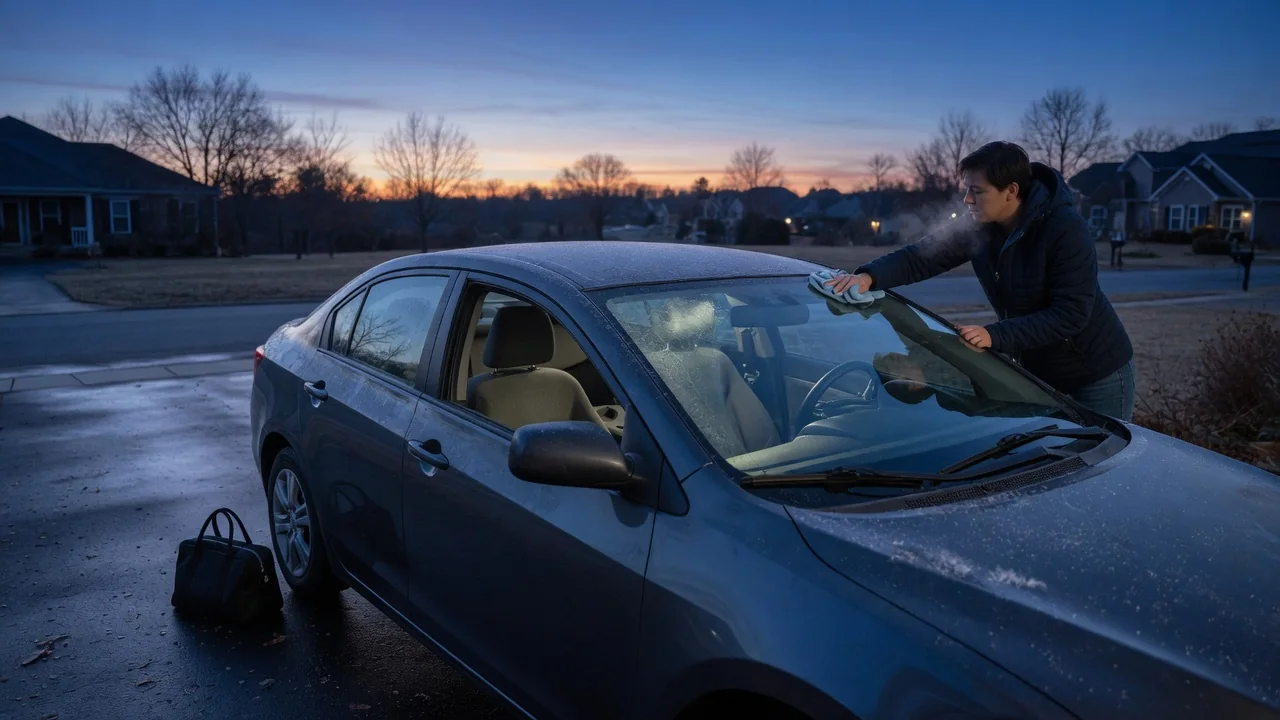
Knowing how to prepare a car for an early morning departure comes down to moving decisions out of the dark, hurried minutes before you leave and into the calmer evening before. With luggage loaded, lights and glass checked, and the route already set, the morning becomes a short routine instead of a scramble with cold hands and fogged windows.
Pack ahead
Loading the car the evening before removes the biggest source of morning delay and lets you see how the cargo actually sits. Place heavy bags low and against the rear seatback so they cannot slide forward under braking, and keep the stack below the top of the seats so the interior mirror still shows the road behind. In daylight or under a garage light it is easy to notice a bag blocking the rear window; at five in the morning that same obstruction usually goes unnoticed.
Keep the items you will need first within reach of the front seats: a charging cable, sunglasses for the low sunrise, a water bottle, toll payment and any documents. Vehicles differ in how much load they tolerate, so the tire pressure placard, often on the driver's door jamb, and the owner's manual are the right references when the car is heavily packed. A loaded rear end can also tilt headlights upward, and some cars provide a manual leveling control on the dashboard while others adjust automatically.
Check lights and glass
An early start usually means driving in darkness, so walk around the car the night before with the lights on. Check low beams, high beams, turn signals, tail lights and the license plate lamp, and use a wall or garage door reflection, or a helper, to confirm the brake lights. Cloudy or dirty headlight lenses scatter light and shorten the distance you can see, and a wipe with a damp cloth often makes a visible difference. A dashboard bulb warning, where fitted, deserves a look before morning rather than during it.
Glass matters as much as lamps. A film builds up on the inside of the windshield over time and it turns oncoming headlights and the rising sun into glare, so clean the inner surface with a fresh microfiber cloth. Outside, clear the windshield, rear window, side glass and mirrors, check that the wiper blades sweep without streaks, and top up washer fluid suited to the season. If frost is forecast, a windshield cover or a scraper left on the passenger seat saves several minutes, and camera lenses and sensors need the same wipe.
Set navigation
Entering the destination while parked in the evening avoids typing on a screen with the engine running and the clock ticking. Review the whole route rather than just the first turn: note overnight roadworks, toll sections, and where fuel or charging stops fall, since some stations are closed or unstaffed before dawn. Saving the trip as a favorite or sending it from a phone app to the car, where the system supports it, means the morning step is a single tap. Downloading offline maps covers stretches with weak signal.
Check connections too. Confirm the phone pairs with the car, the cable works for wired phone projection, and the mount holds the device without blocking the view through the windshield. Screen brightness is worth setting in advance, because a display left at daytime levels is harsh on dark-adapted eyes; many cars switch to a night mode automatically, while others need the dimmer adjusted by hand. Setting voice guidance volume, and choosing audio for the first hour, keeps your attention on the road once you pull away.
Everyday Use and Observations
The first minutes of a cold, dark start reveal things a daytime drive hides. Windows mist on the inside when moist cabin air meets cold glass, and they clear fastest with the defrost setting, air conditioning on and fresh air rather than recirculation selected. Heated rear windows and mirrors take a few minutes to work, so switch them on early. Do not drive off looking through a small cleared patch; waiting until every window is clear costs little time and restores the side vision needed at junctions.
Watch the instrument cluster when you start. Warning lamps should illuminate briefly and then go out, and one that stays on merits a look in the manual before a long drive. A tire pressure warning on a cold morning may simply reflect lower temperatures, yet it still calls for a gauge check rather than an assumption. Slow cranking can hint at a weak battery, which cold weather exposes. Fuel level or battery charge is best handled the evening before, and electric vehicles often allow the cabin to be preconditioned while plugged in.
Limits and Next Steps
Evening preparation reduces rushed checks, but it cannot fix a fault. A lamp that stays dark after a bulb is replaced, a windshield crack in the driver's line of sight, wipers that smear with new blades, or a persistent warning light are jobs for a qualified technician, ideally days before the trip rather than hours. Bulb access, fuse locations and lighting technology vary widely between vehicles, and sealed LED units in particular are often not intended for owner replacement, so the manual should guide what you attempt yourself.
The driver has limits as well. Fatigue affects reaction time and judgment no matter how well the car is prepared, so plan sleep as deliberately as the packing, and schedule a break early in the route. Check the forecast again before bed, because fog, ice or heavy rain may justify leaving later or allowing more time. After the trip, note what slowed you down, such as a missing scraper or a cable that failed, and add it to the routine so the next early departure runs more smoothly.