How to Prepare a Car for a Cold Morning Drive
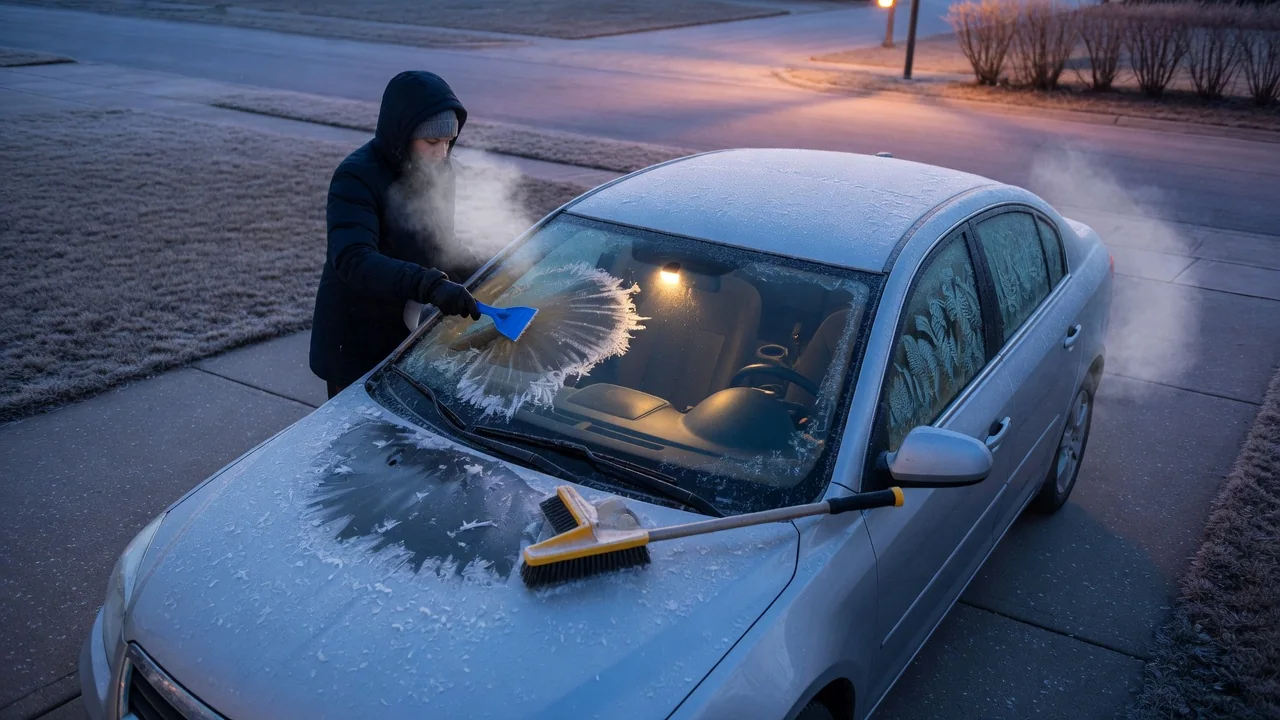
Knowing how to prepare a car for a cold morning drive comes down to a few deliberate checks before the wheels turn. Frost hides the road, low temperatures sap battery output, and tire pressure falls as the air inside contracts. A short routine covering glass, electrical health and tires makes the first miles safer and far less stressful for both the driver and the vehicle.
Clear all glass
Frost, ice and interior fog all cut visibility, so every pane deserves attention, not just a small patch in front of the driver. Clear the windshield, rear window, side glass and both exterior mirrors, because lane changes and backing out of a driveway depend on what you can see to the sides and behind. Brush loose snow off the roof and hood as well, since it can slide onto the windshield under braking or blow back toward following traffic.
A plastic scraper and the car's defroster work well together: the scraper removes the bulk while warm air loosens what remains. Avoid pouring hot water on frozen glass, because the sudden temperature change can crack it. Check that wiper blades are not frozen to the windshield before switching them on, as a stuck blade can tear or strain the wiper motor. Heated windshields, heated mirrors and rear defroster grids vary between vehicles, so learn which controls your car actually has.
Check warnings
When the ignition is switched on, the instrument cluster lights briefly and most indicators should go out once the engine runs. A cold morning is when marginal components reveal themselves, so watch what stays lit. A battery or charging system light, a tire pressure warning or an engine light all deserve a moment of thought before pulling away. Slow, labored cranking is itself a warning, since chemical reactions inside a battery slow down in the cold while thick oil makes the engine harder to turn.
A tire pressure warning on a frosty morning often reflects air contracting overnight rather than a puncture, but the light alone cannot tell you which, so check each tire with a gauge and compare against the placard, usually found on the driver's door jamb. Likewise, a stored fault code or warning lamp is evidence to interpret, not proof that a particular part has failed. Symbols, colors and messages differ between manufacturers, so the owner's manual is the right reference for what your specific cluster is saying.
Allow extra time
Rushing is what turns a frosty morning into a risky one. Building a cushion into the schedule lets you clear the glass completely, check the tires and let the defroster do its work instead of driving off while peering through a small hole in the frost. Many modern engines do not need long idling; gentle driving generally warms them more effectively, though the manual gives guidance for your vehicle. The real time cost is visibility and inspection, not warm-up.
Extra time also matters once you are moving. Cold tires grip less, bridges and shaded stretches can hold ice after the rest of the road has thawed, and stopping distances grow on slick surfaces. Leaving earlier means you can accelerate gently, brake sooner and keep a wider gap without feeling pressure from the clock. If the battery proves too weak to start the engine, that margin is also what lets you arrange a jump start or another ride calmly.
Everyday Use and Observations
Cold-weather preparation works best as a habit rather than a one-time event. Walking around the car each morning takes very little time and shows a lot: a tire that looks flatter than the others, ice packed in a wheel well, a cracked wiper blade or a fogged headlight lens. Inside, notice how quickly the engine cranks compared with last week and whether the defroster clears the windshield as fast as it used to. Gradual changes are easier to catch when you look regularly.
Small routines the evening before pay off too. Parking in a garage or facing away from the prevailing wind reduces frost buildup, and lifting or covering the wipers can keep them from freezing down where the design allows it. Keeping washer fluid rated for freezing temperatures topped up helps clear road salt spray during the drive. Vehicles differ here: some offer remote start or scheduled cabin preconditioning, and electric vehicles may show reduced range in the cold, which is worth factoring into the morning plan.
Limits and Next Steps
A driveway check has limits. A visual look and a pressure gauge reveal obvious tire problems, but they cannot measure internal damage, and tread that looks acceptable may still perform poorly on ice compared with a winter tire. Similarly, a battery that starts the car today may be close to the end of its service life; only a proper load or conductance test at a shop or parts store gives a meaningful picture of its condition and of the charging system behind it.
If the same warning returns morning after morning, a tire keeps losing pressure, or cranking grows weaker as temperatures fall, treat it as a pattern worth having professionally diagnosed rather than something to work around. A technician can confirm whether the cause is the battery, a connection, the alternator or something else entirely. Until then, carrying a scraper, gloves, a flashlight and a charged phone covers the gaps that preparation cannot, and postponing a trip remains a sound choice when conditions exceed what the car or driver can handle.