How to Check That an EV Finished Charging Overnight
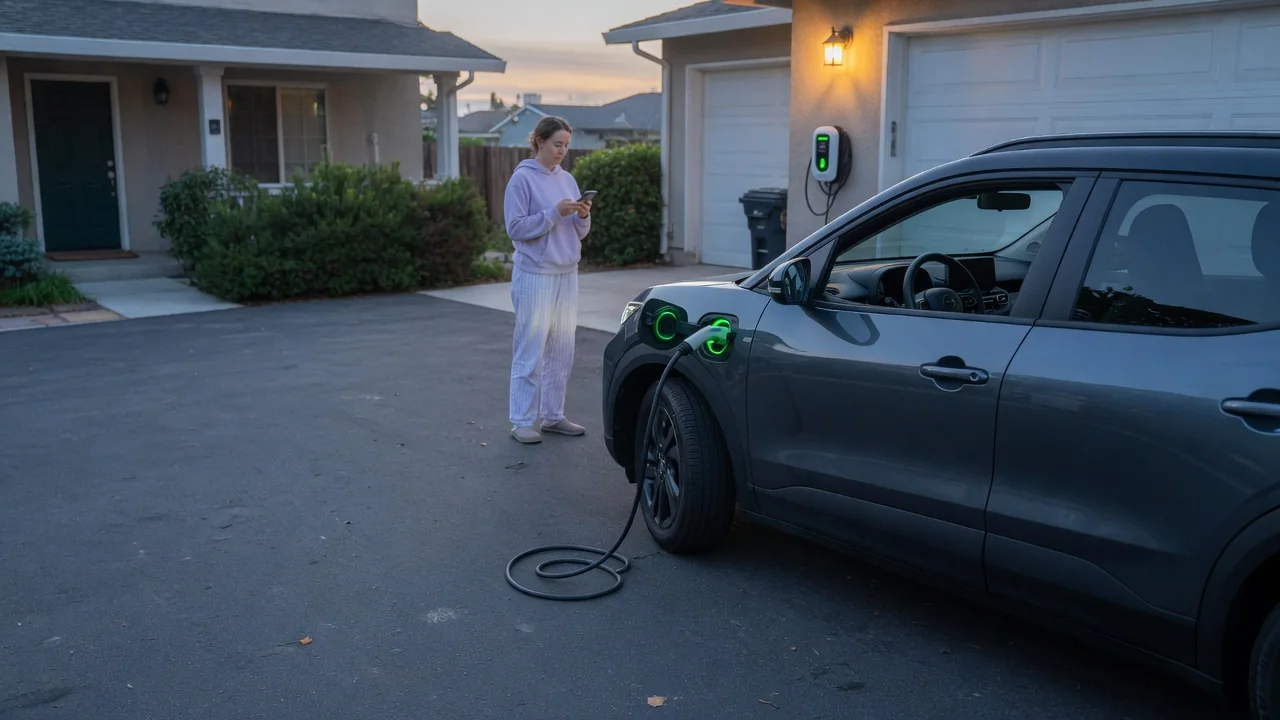
Waking up to a car that did not charge is an avoidable surprise. Knowing how to check that an EV finished charging overnight takes about a minute and relies on three pieces of evidence: what the vehicle reports, what the charging equipment shows, and whether the range figure matches what you expected. Together they confirm the session completed rather than stopped early.
Vehicle status
The vehicle itself is the most direct source. Most electric cars show the battery state of charge as a percentage on the instrument cluster or central screen as soon as the car wakes, and many repeat it in a phone app. Compare that number with the charge limit you set. If the limit was eighty percent and the display reads eighty, the session reached its target. A reading several points below the limit suggests the charge stopped early or is still in progress.
Look beyond the percentage for a status message. Many cars state plainly whether charging is complete, scheduled, in progress, or interrupted, and some keep a short history showing when the session started and ended. Indicator lights near the charge port often change color or stop pulsing when the battery reaches its target, although the colors and patterns differ between manufacturers. The owner's manual is the reliable reference for what each signal means on your particular model.
Charger light
The wall unit or portable charging cable gives a second opinion. Home charging equipment usually carries one or more status lights that distinguish between standing by, actively delivering power, finished, and faulted. A steady light of the kind the maker assigns to a completed or idle session, seen while the connector is still latched in the port, generally agrees with a full battery. A light that is still showing active charging at breakfast means the car has not yet reached its limit.
A fault indication deserves attention even when the battery looks full. Red or flashing warning patterns can point to an interrupted supply, a ground or temperature issue, or a connector that did not seat properly, but the meaning of each pattern is specific to the equipment brand. Treat the light as a clue to interpret rather than a diagnosis. Units with a companion app often record the energy delivered and the session duration, which shows whether power flowed for hours or only minutes.
Expected range
The estimated range is a useful cross-check, provided you know what a normal morning figure looks like for your car. After a few weeks of ownership, most drivers learn the number that usually appears at their chosen charge limit. If the display shows something close to that, the session almost certainly finished. A figure well short of the usual value, paired with a lower percentage, indicates the battery did not take the energy you planned for.
Range estimates move for reasons unrelated to charging, so read them with some tolerance. The car calculates the figure from recent driving, and a week of fast highway trips or heavy heater use can lower the prediction even with the same stored energy. Cold weather reduces it further, and a cold battery may also charge more slowly overnight. For that reason the state of charge percentage is the firmer measure, with range serving as supporting evidence.
Everyday Use and Observations
In daily practice the routine becomes a quick habit. Glance at the phone app while getting ready, confirm the percentage matches the limit, then notice the charger light and the port indicator when you walk to the car. Unplugging should feel normal, with the connector releasing as it usually does. Once seated, the dashboard confirms the same percentage and a familiar range, and nothing on the screen warns of an interrupted or incomplete session.
Scheduled charging changes what you should expect to see. If the car or charger is set to use cheaper overnight electricity, the session may start late and finish close to your departure time, so an early riser might find it still running. Some cars also time the finish to a set departure, or warm the cabin and battery from the wall supply beforehand. Notifications, where available, can report completion or an interruption without a trip to the garage.
Limits and Next Steps
These checks confirm that a session ended and how much energy the battery holds, but they do not explain every shortfall. A partial charge can result from a tripped breaker, a power outage, a schedule conflict between the car and the charger, a loosely seated connector, or a low-power outlet that simply could not deliver enough energy in the available hours. Reviewing the settings in both the vehicle and the charging equipment resolves many of these without any repair.
When the problem repeats, note what each indicator showed and when the session stopped, since that record helps whoever investigates. Any fault message or stored code is evidence to interpret, not proof that a specific part has failed, and its meaning should be confirmed for the particular vehicle. Persistent warning lights, a hot or damaged connector, or a breaker that keeps tripping are reasons to stop using the equipment and have a qualified electrician or the dealer inspect it.